Vehicle ECUs are evolving into powerful computing platforms. Learn how edge computing, AI, sensor fusion, and rugged hardware are transforming mobile machinery and off-highway vehicles.

The term Vehicle ECU is no longer limited to engine control units or conventional automotive electronics. In construction equipment, agricultural vehicles, autonomous robots, and specialty vehicles, powerful Vehicle ECUs are increasingly taking on complex control and computing tasks. They process sensor data, communicate with vehicle components, and provide the interface between the machine, its sensors, and the digital infrastructure. As a result, the Vehicle ECU is evolving from a conventional control unit into an intelligent computing platform for mobile machinery.
ECU stands for Electronic Control Unit. A Vehicle ECU is an electronic control unit that performs specific functions within a vehicle or mobile machine. Traditional ECUs control engines, hydraulic systems, or individual machine functions, for example.
Modern Vehicle ECUs process data from different sensors, communicate with other control units, and connect vehicles to telematics, cloud, and fleet management systems. In demanding applications, the boundaries between Vehicle ECUs, gateways, telematics control units, and industrial edge computers are therefore becoming increasingly blurred. Powerful vehicle computing platforms can consolidate several of these functions on a single centralized hardware platform.
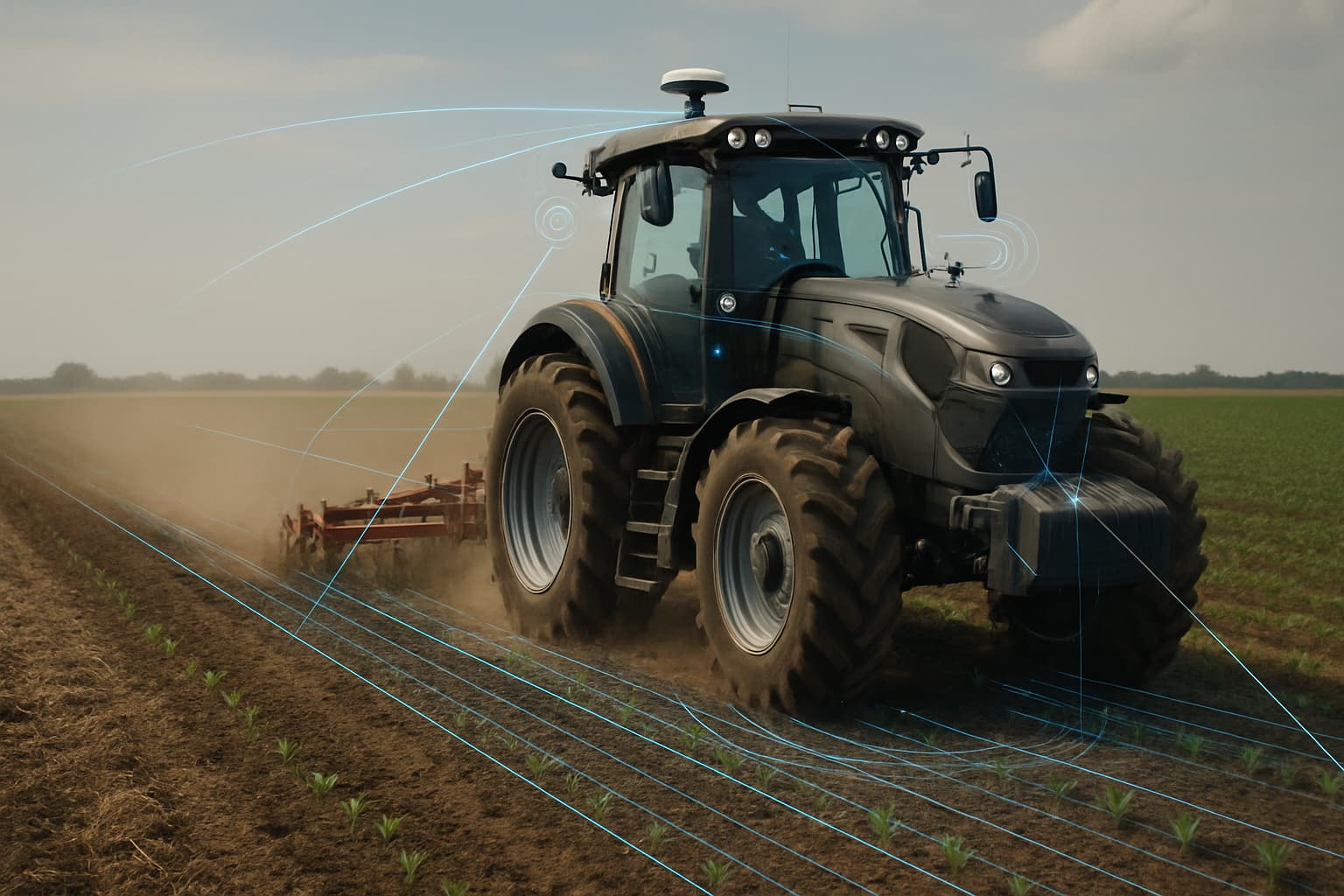
This development is particularly evident in increasingly digitalized and automated construction and agricultural machinery, mining vehicles, and municipal specialty vehicles.
Which functions are actually consolidated on a Vehicle ECU depends on the individual machine architecture. However, the trend is clearly moving toward powerful, centralized computing platforms.
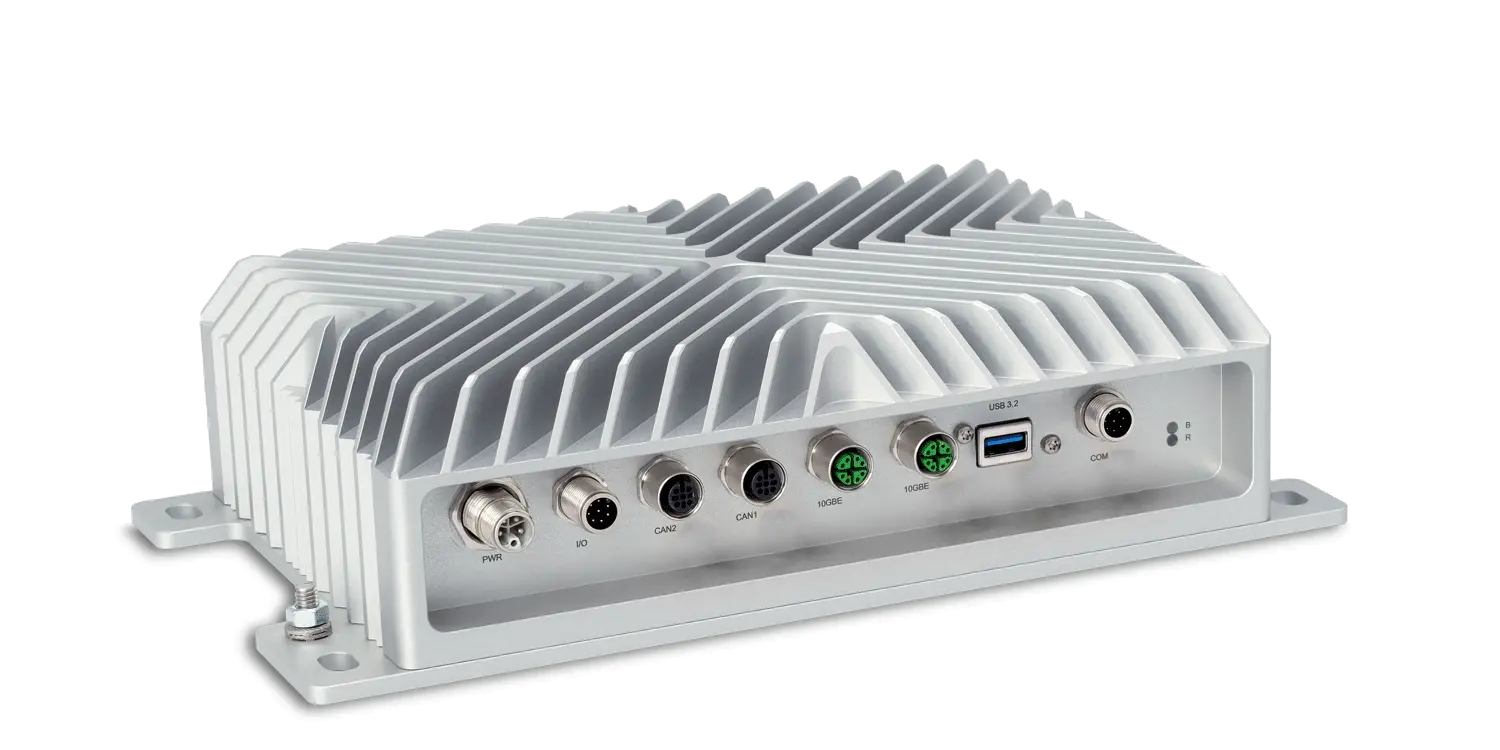
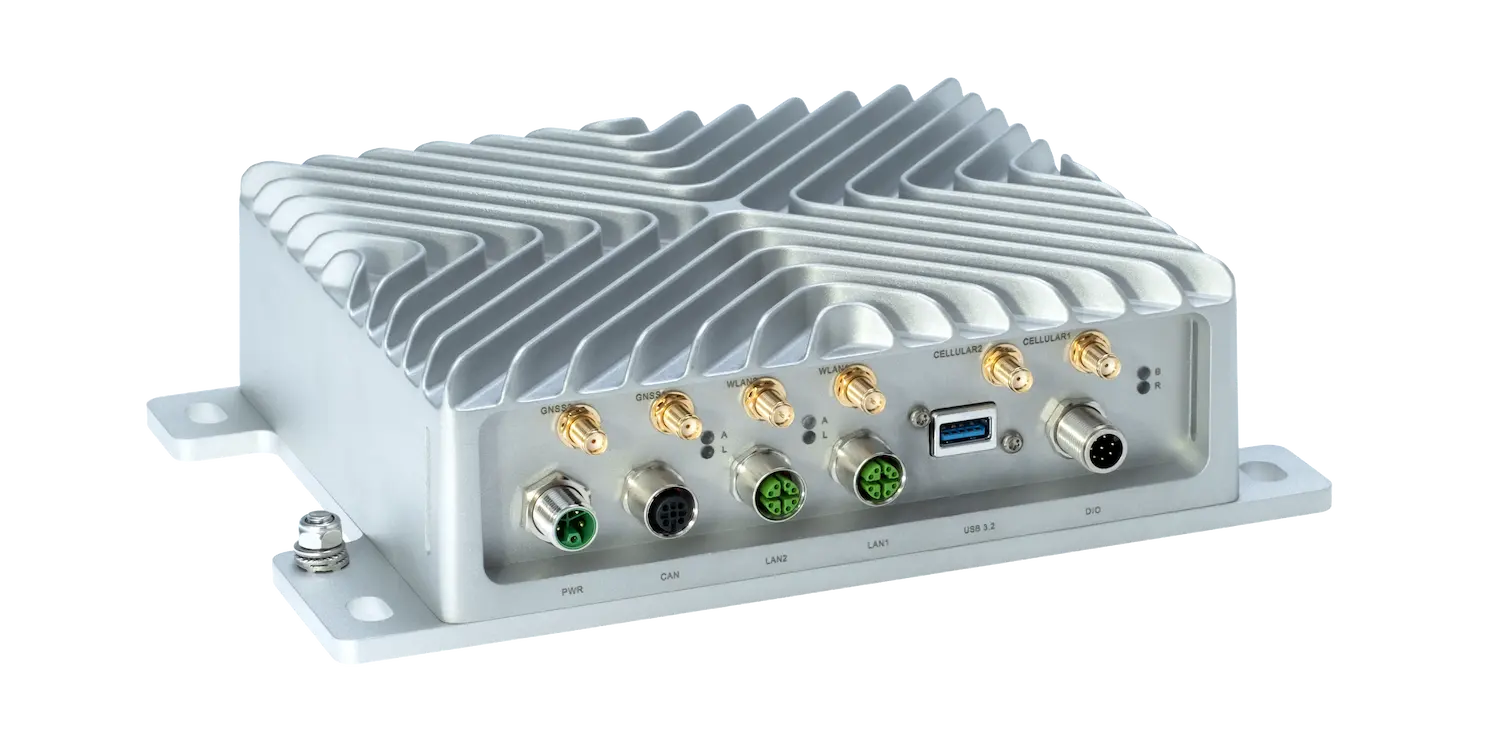
Robust communication interfaces play a key role in mobile machinery. CAN and protocols based on it, such as SAE J1939, are particularly widespread. They allow the Vehicle ECU to exchange data with other control units, sensors, and machine components. For data-intensive applications, however, conventional CAN communication is increasingly reaching its limits. Cameras, LiDAR sensors, and other intelligent sensors generate significantly larger amounts of data than a CAN system can handle. As a result, Ethernet-based interfaces are becoming increasingly important in mobile machinery.
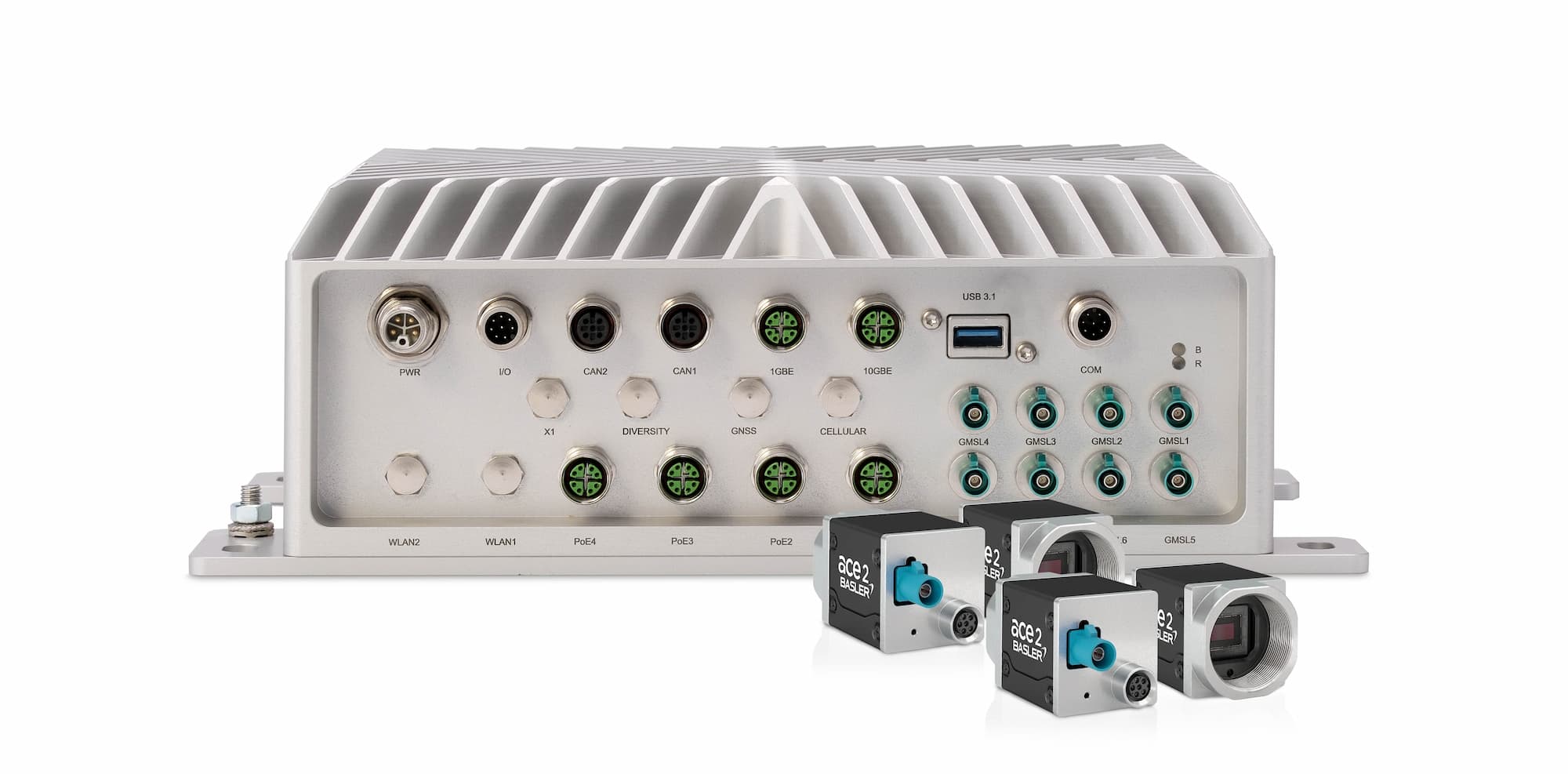
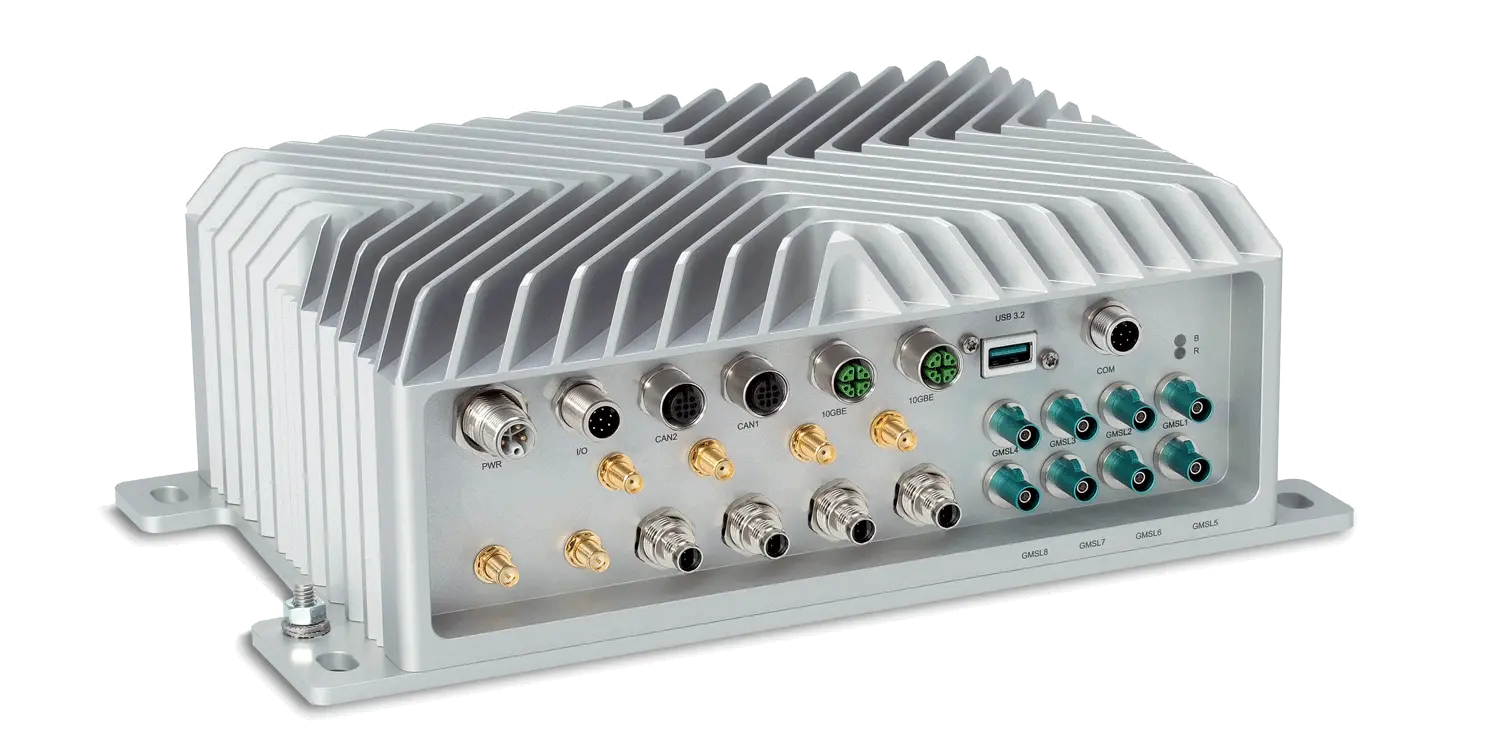
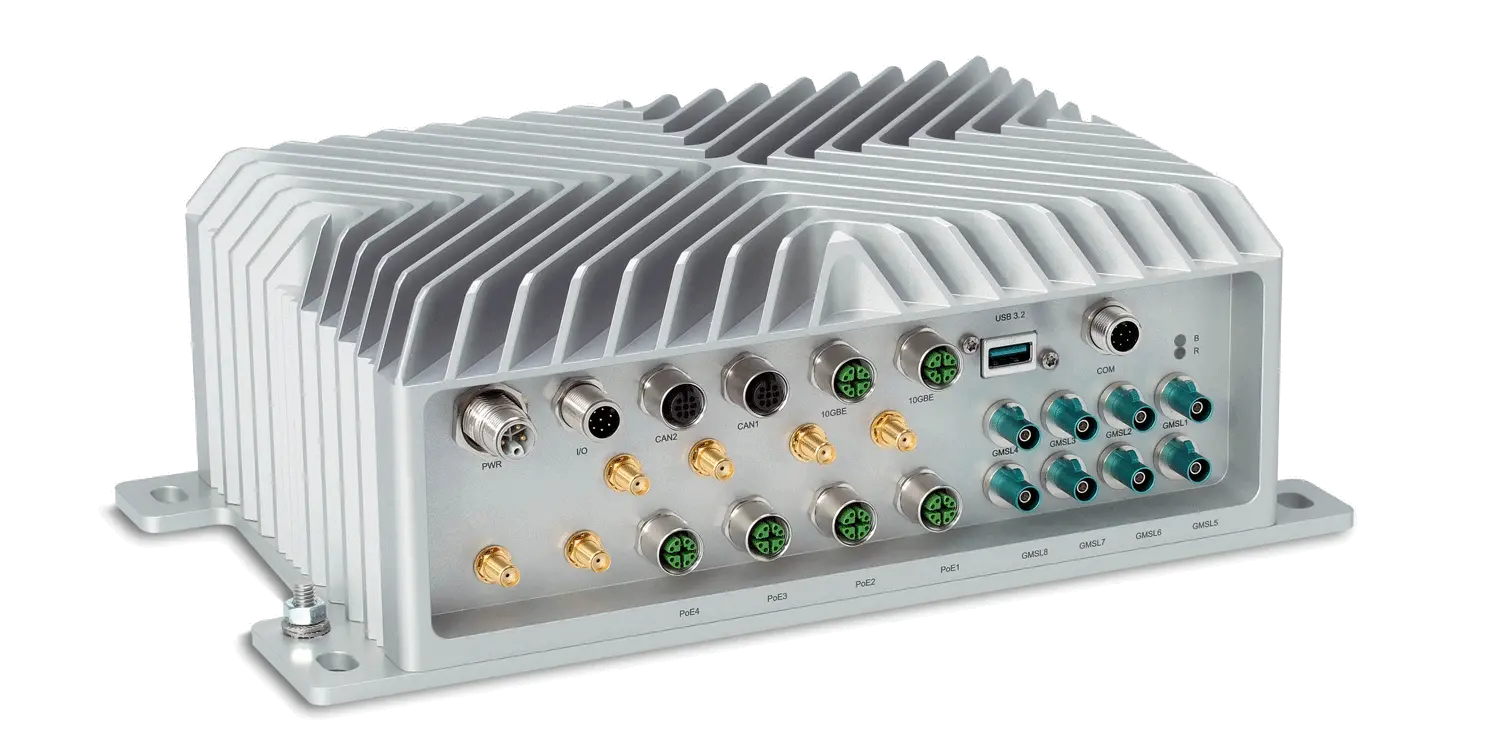
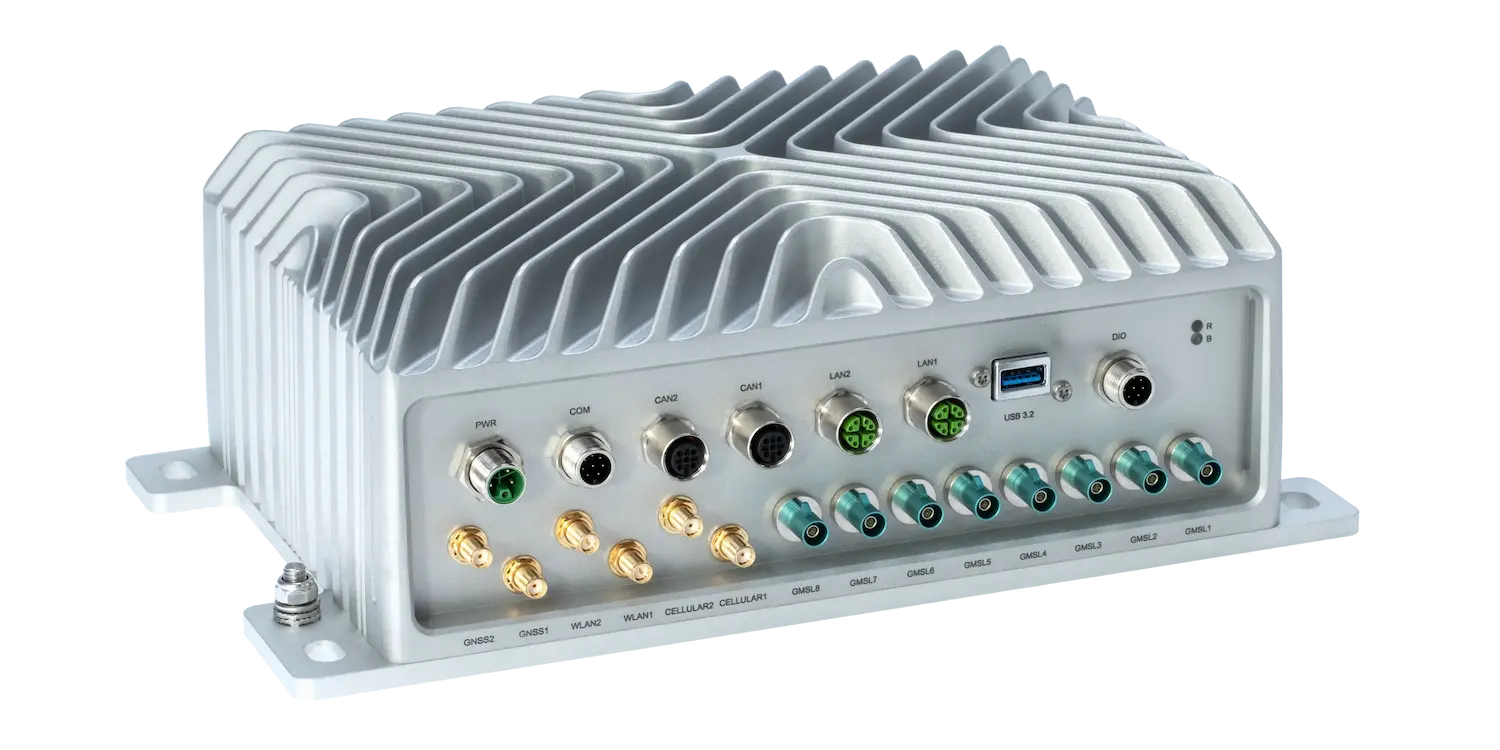
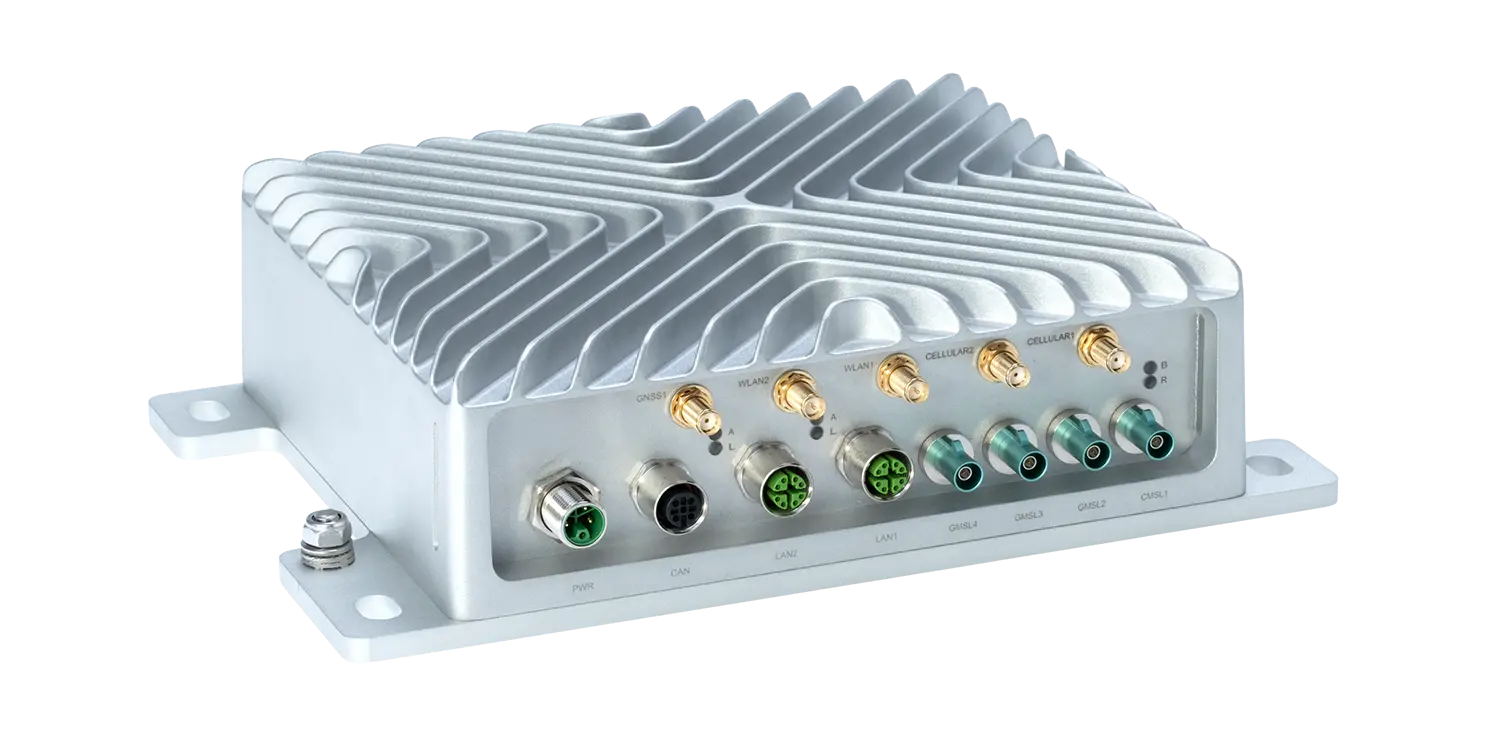
Modern vehicle computing platforms therefore combine conventional vehicle interfaces such as CAN and J1939 with Gigabit Ethernet, Single Pair Ethernet, or specialized camera interfaces such as GMSL2.
With edge computing, additional computing power moves directly into the vehicle. There is no need to transfer data to a data center or the cloud first—it can be processed immediately where it is generated.
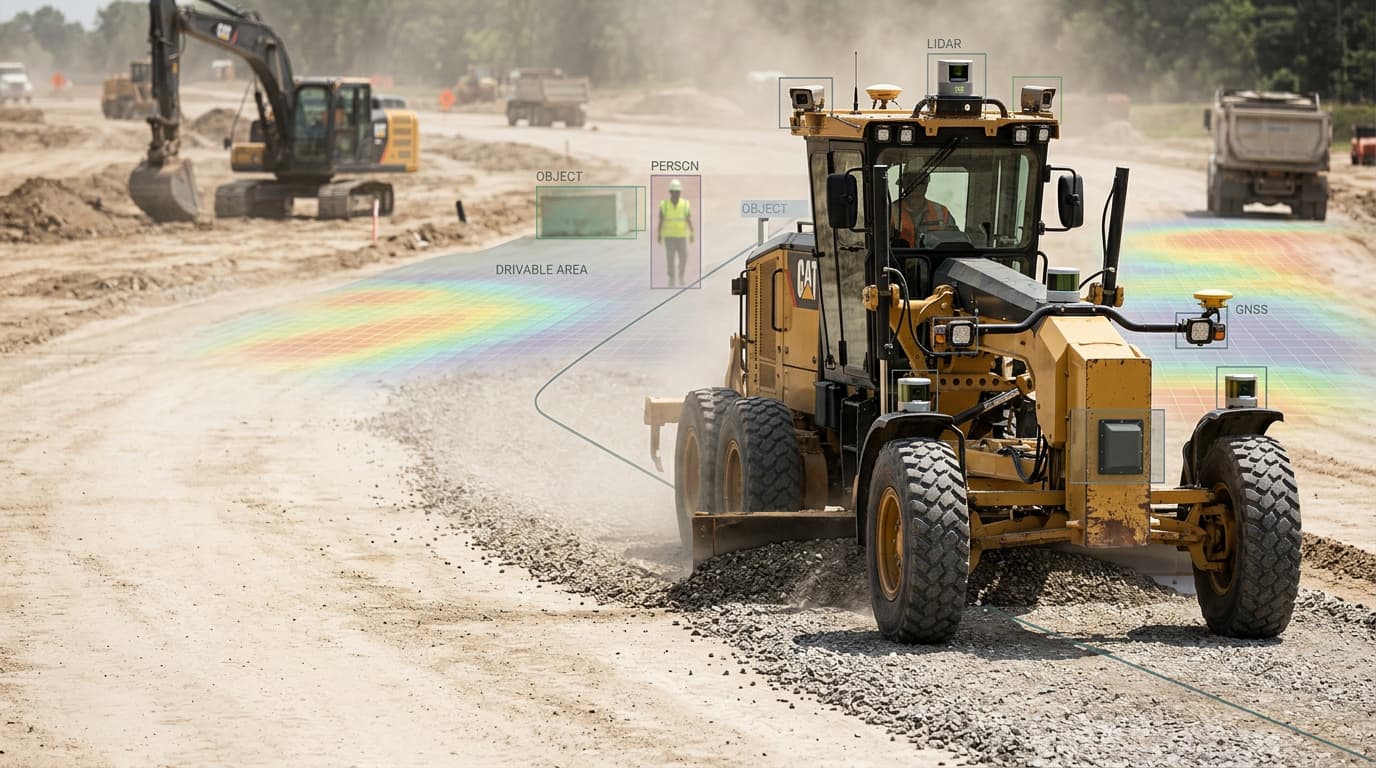
This is particularly important for semi-autonomous and autonomous machinery. A camera might, for example, detect a person within the working area of a construction machine. The corresponding image data must be evaluated within a very short time. A permanent cloud connection would be neither fast nor reliable enough for this task.
Powerful Vehicle ECUs and edge computers handle this processing locally. This makes it possible to combine perception, decision-making, and machine communication on a common platform.
As semi-autonomous and autonomous functions become more sophisticated, computing requirements increase as well. Traditional microcontroller-based control units remain indispensable for many deterministic control tasks. Computer vision, sensor fusion, and artificial intelligence, however, require more powerful computing architectures.
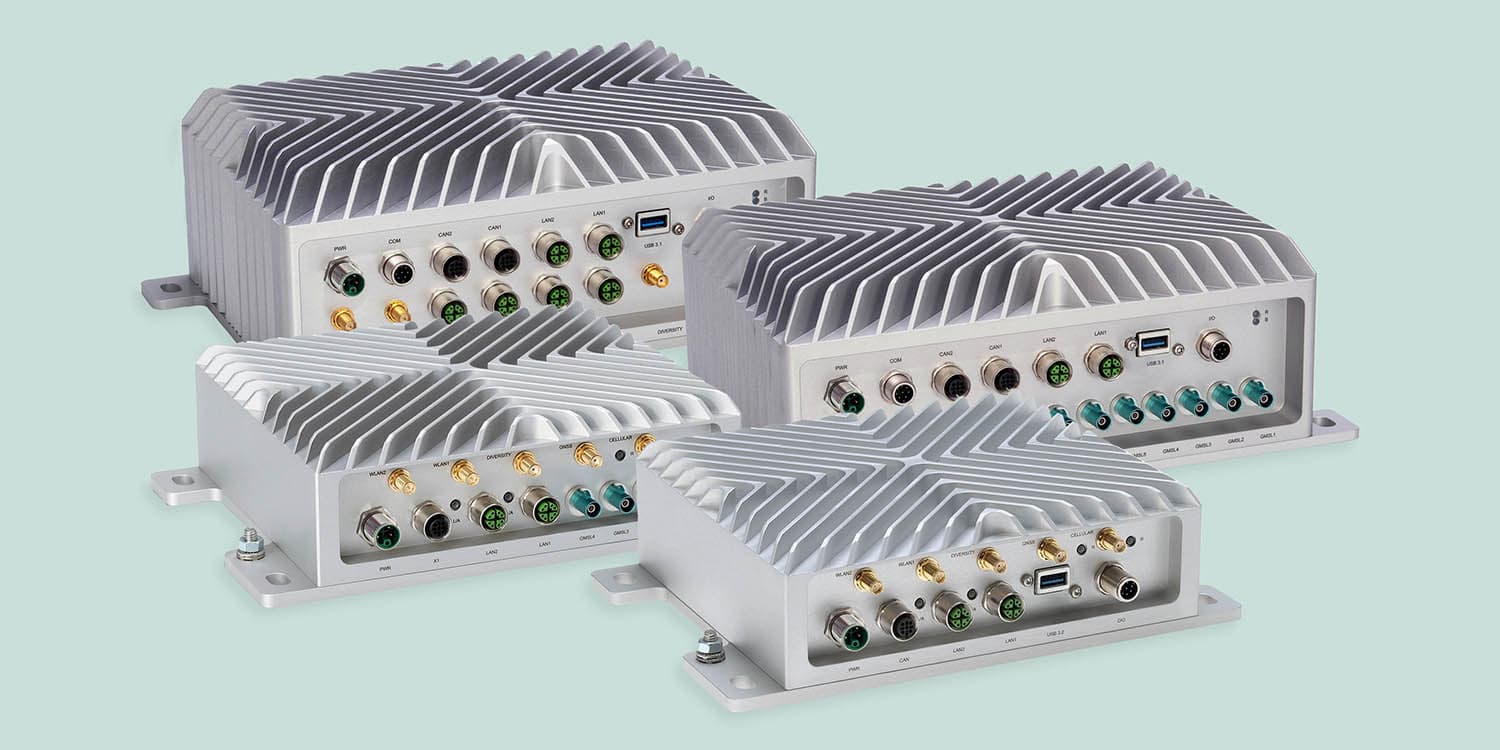
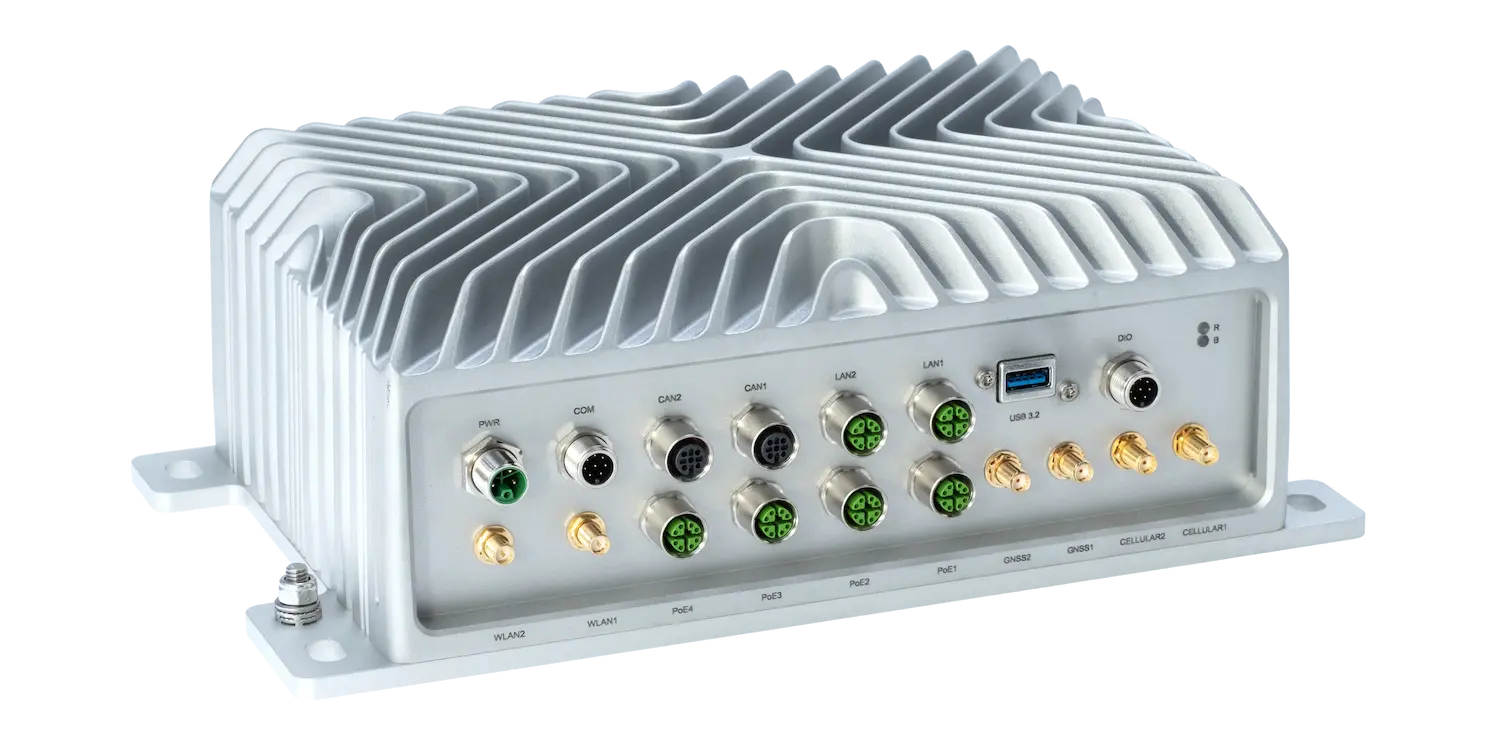
This is where GPU-accelerated platforms such as NVIDIA Jetson come into play. They enable multiple sensor streams to be processed in parallel and neural networks to run directly in the vehicle. Syslogic combines NVIDIA Jetson with a rugged, industrial-grade system design. Its AI Edge Computers are designed for use in mobile machinery and vehicles, combining high AI computing performance with vehicle interfaces and rugged mechanical design. They complement or take over tasks for which conventional Vehicle ECUs alone are not designed.
Sensor fusion is a key application for modern vehicle computing platforms. Autonomous machines need to combine information from different sensors to create a reliable overall picture of their surroundings. Cameras provide detailed visual information, LiDAR captures spatial structures and distances, while GNSS determines position. Radar and other sensors can provide additional information.
The Vehicle ECU or central AI Edge Computer processes and combines these data streams. Based on this information, algorithms can detect objects, identify drivable paths, or plan machine movements.
As the number and resolution of sensors increase, so do the requirements for both computing performance and interfaces. Syslogic Rugged Computers therefore combine powerful NVIDIA Jetson platforms with interfaces such as GMSL2 and Single Pair Ethernet for the direct integration of modern vehicle and environmental sensors.
High computing performance alone is not enough for mobile machinery. A Vehicle ECU must also operate reliably under harsh conditions. Construction equipment, agricultural machinery, and mining vehicles are exposed to severe vibration and shock, dust, moisture, and wide temperature fluctuations. At the same time, the vehicle power supply can be subject to significant voltage fluctuations.
Industrial vehicle computers for these applications are therefore specifically designed to withstand such conditions. Fanless systems reduce the number of mechanical wear components, rugged enclosures protect the electronics, and suitable power supplies enable reliable operation within the vehicle.
Long-term availability is another important consideration. While consumer and IT hardware often have short product life cycles, mobile machinery is manufactured and operated for many years. Long-term availability of hardware platforms and controlled lifecycle management are therefore essential.
The traditional Vehicle ECU is not disappearing. It remains a central component of modern machinery for many control tasks. At the same time, a new layer of powerful vehicle computers is emerging.
These systems consolidate functions, process large volumes of sensor data, and provide the computing performance required for computer vision, sensor fusion, and artificial intelligence. Individual control units are therefore increasingly becoming part of a connected computing architecture.
Syslogic develops rugged embedded and AI edge computers specifically for these applications. The systems combine industrial reliability with modern CPU and GPU technology as well as interfaces for vehicles and intelligent sensors.
This makes them powerful vehicle computing platforms for construction equipment, agricultural vehicles, autonomous mobile machinery, and specialty vehicles—wherever conventional control tasks meet edge computing and artificial intelligence.
Are you developing a new generation of construction equipment, agricultural machinery, autonomous mobile machines, or specialty vehicles? Syslogic helps you select the right computing platform for your application—from rugged embedded computers to powerful NVIDIA Jetson-based AI systems.
Talk to our experts about your project.
A Vehicle ECU (Electronic Control Unit) is an electronic control unit used in vehicles and mobile machinery. It processes input signals from sensors, communicates with other control units, and performs defined control or computing tasks. In modern construction equipment, agricultural vehicles, and specialty vehicles, Vehicle ECUs are increasingly evolving into powerful computing platforms that can also handle edge computing, telematics, and AI functions.
A Vehicle ECU can perform a wide range of tasks in off-highway vehicles. These include machine communication via CAN or J1939, sensor data processing, data logging, condition monitoring, and telematics. More powerful vehicle computers can also handle computer vision, sensor fusion, navigation, and AI inference for semi-autonomous or autonomous functions.
Typical Vehicle ECU interfaces include CAN and J1939 for communication with vehicle and machine components, as well as Ethernet for networks and high-performance sensors. Data-intensive applications may additionally use interfaces such as GMSL2 for cameras or Single Pair Ethernet. Cellular connectivity and Wi-Fi enable connections to telematics, cloud, and fleet management systems.
A traditional Vehicle ECU typically performs clearly defined control tasks within a vehicle. A powerful vehicle computer or industrial edge computer, by contrast, can consolidate multiple functions on a centralized computing platform. These can include sensor processing, computer vision, AI inference, data logging, communication, and sensor fusion. As mobile machinery becomes increasingly digitalized, the boundaries between these two system classes are becoming less distinct.
NVIDIA Jetson combines CPU and GPU computing performance with powerful AI acceleration. This makes Jetson-based vehicle computers particularly suitable for computer vision, sensor fusion, and AI inference directly within the vehicle. Rugged industrial edge systems based on NVIDIA Jetson are therefore used in applications such as autonomous agricultural machinery, construction equipment, mobile robots, and other off-highway applications.