The US forestry industry faces a shortage of skilled workers. California-based Kodama is making the profession more attractive to a new generation of operators. But what role do AI and Syslogic embedded computers play?
Kodama (木霊) means “tree spirit” in Japanese. In Japanese folklore, these spirits protect trees and forests. At first glance, then, Kodama may seem like a contradictory name for a company working in the commercial timber industry. But that very tension is at the heart of the name. Merritt Jenkins, co-founder of Kodama, explains: “It serves as a reminder that, while timber is a renewable resource, some trees should still remain untouched.” For Kodama, advancing the timber industry and forest protection are not mutually exclusive.
Kodama Is Revolutionizing Forestry
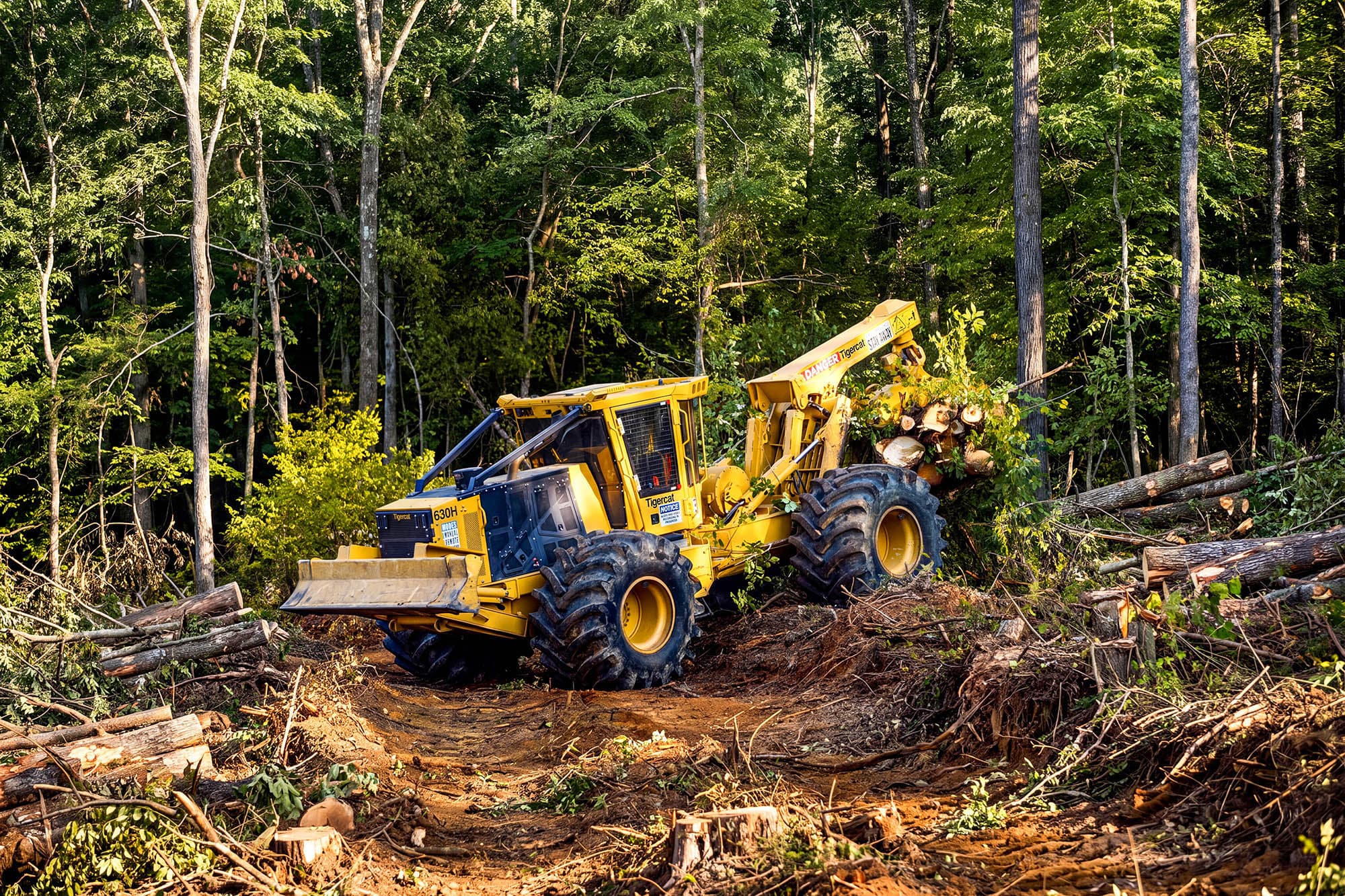
Kodama is a robotics company developing remote operation and AI-enabled autonomy for heavy forestry equipment. Its technology allows machines to be operated remotely while performing increasingly complex tasks autonomously under human supervision. Together, these capabilities address one of the forestry industry's biggest challenges: the shortage of skilled equipment operators.
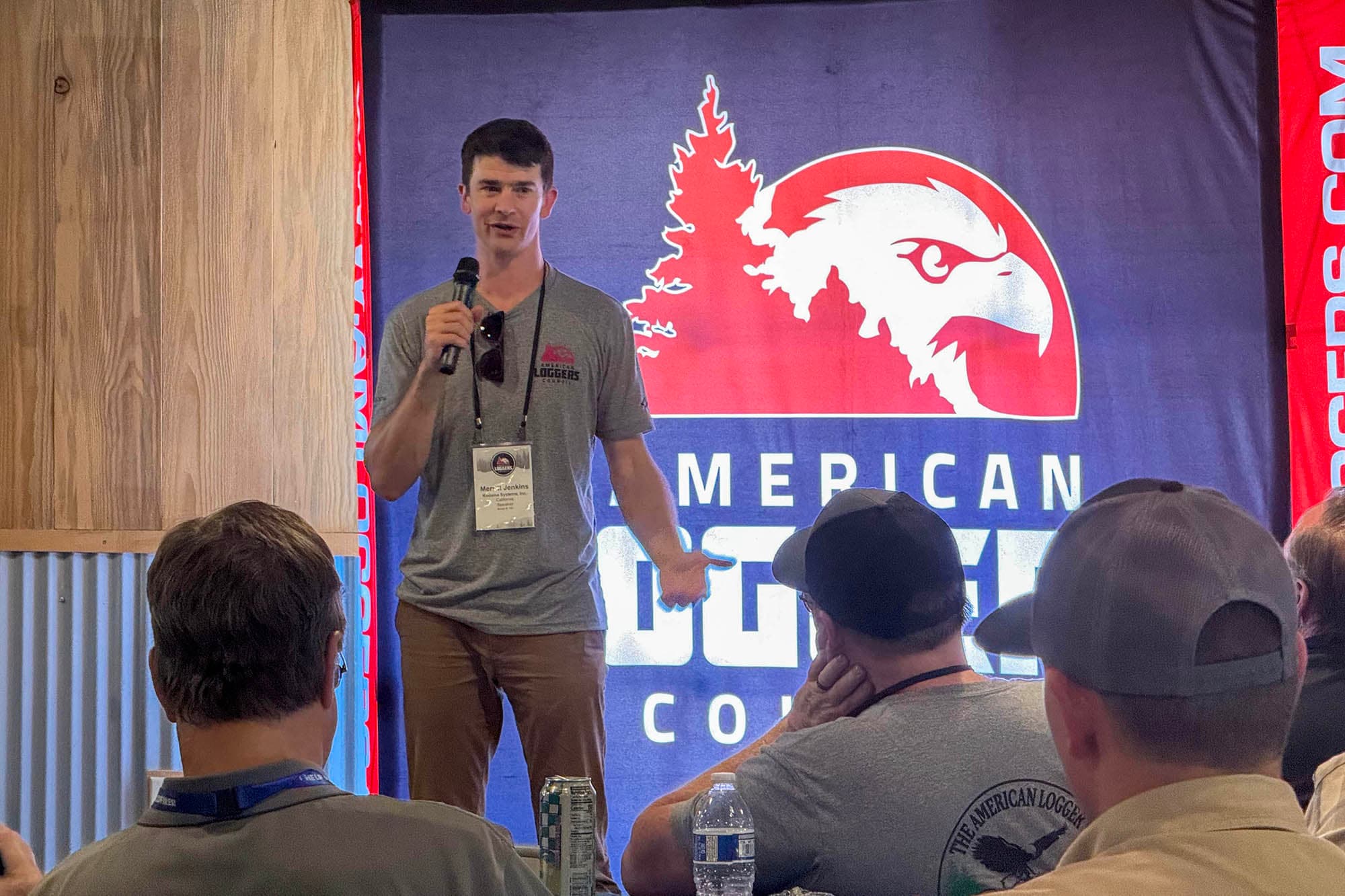
Merritt Jenkins, co-founder of Kodama
Qualified operators are becoming increasingly difficult to find in the United States. The typical machine operator is over 50 years old, and there are few younger workers entering the profession. The situation has become so severe that some logging contractors are choosing not to start additional crews, even when they have the financial resources to do so – simply because finding qualified personnel has become so difficult.
A Profession That Struggles to Attract Young Workers
Part of the problem is that the profession has more individuals retiring than young members joining. Shifts are long, often with lengthy commutes to remote sites, and the work itself is physically demanding. In the cab, machine operators are constantly exposed to vibration and shock which lead to back problems over time. It is not uncommon for operators to eventually leave the profession for health reasons.
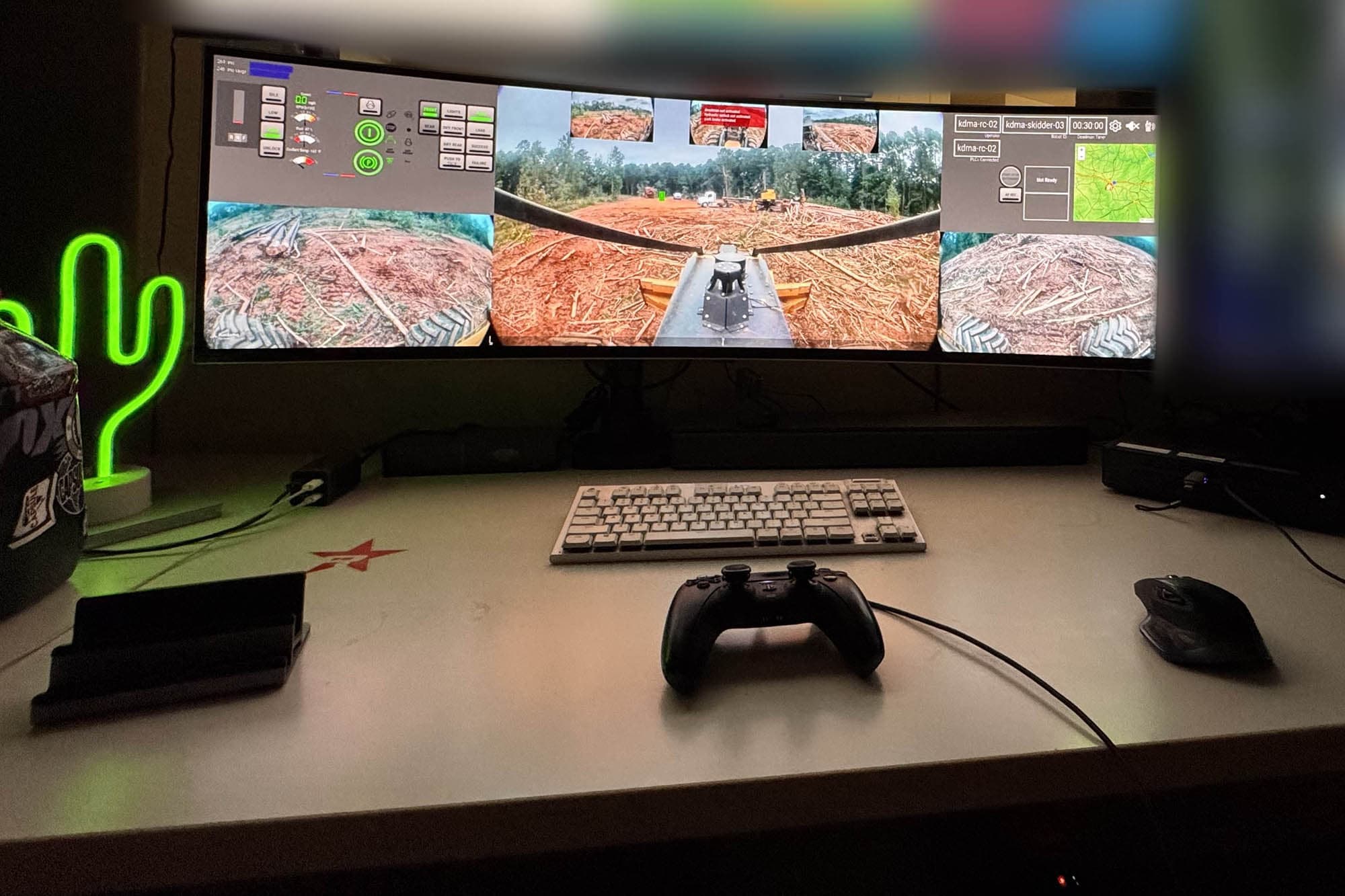
Merritt Jenkins says: “We’re making the profession attractive to a wider group of people.” Kodama retrofits existing skidders – forestry machines used to transport harvested timber from the forest to trucks – with remote-control and supervised autonomy capabilities. This allows a skidder to be operated from virtually anywhere, meaning the operator no longer needs to sit inside the vehicle to control it.
A New Way to Control Heavy Equipment
By separating the location of the operator from the machine, Kodama is expanding who can work in forestry. Operators can control machines from workstations hundreds or thousands of miles away, rather than commuting to remote logging sites. This allows logging businesses to recruit from a much larger geographic area, and opens the profession to people who might not otherwise consider a career in forestry.
Remote operation also allows experienced machine operators to remain in their jobs longer because working conditions are more comfortable and the physical strain is reduced. Even operators who are no longer physically able to spend long hours in a machine cab can potentially continue working.
Looking ahead, Kodama is developing AI capabilities that will allow machines to perform increasingly complex tasks autonomously under human supervision. As these capabilities mature, the goal is for a single operator to supervise multiple machines, further improving productivity and helping the industry address its labor shortage.
Kodama's technology is being adopted by logging companies and large timberland owners across the southeastern United States. Kodama is operating in Florida, Georgia, Tennessee, Louisiana, and Mississippi. Following its successful launch, the company plans to expand into additional states across the southeastern U.S. and western U.S.
Retrofits and Factory-Integrated Machines
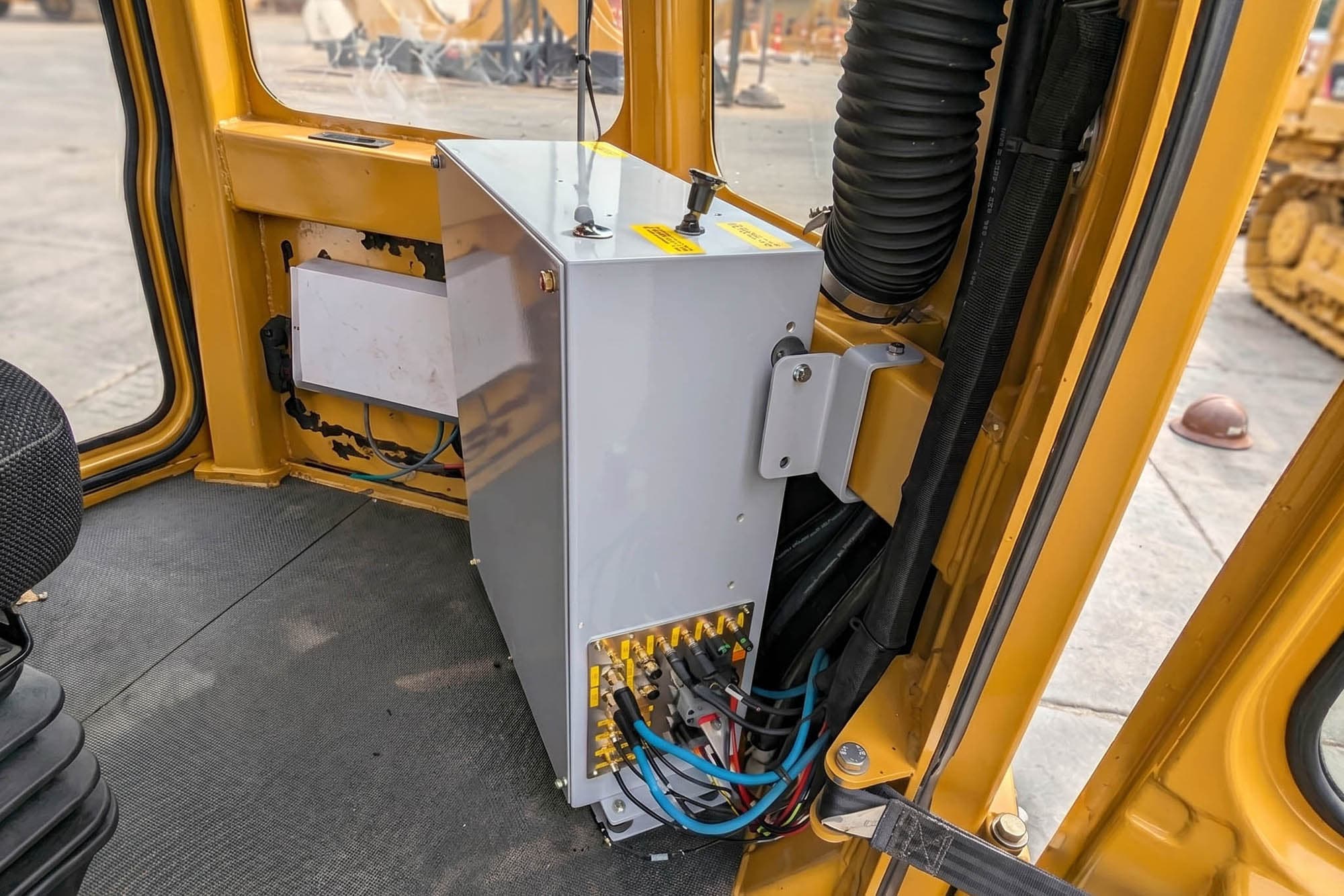
Kodama brings remote operation and autonomy capabilities to forestry equipment through two approaches: retrofitting existing machines and working with OEMs to integrate into new machines at the factory. This allows logging companies to adopt Kodama's technology both in their existing fleets and through future equipment purchases.
The hardware consists of sensors, GNSS components, and a central control computer. Six cameras and two LiDAR sensors capture the machine's surroundings. Their data is combined into a comprehensive view of the environment virtually in real time by an AI-capable embedded computer – a process known as sensor fusion.
Another key component is a high-precision GNSS module integrated into the control computer. It enables the skidder's position, orientation, and movements to be monitored with centimeter-level accuracy.
Rugged Hardware Is Essential
Working conditions in forests are harsh, with temperature fluctuations, condensation, shock, and vibration all placing considerable demands on the equipment. Kodama therefore relies exclusively on hardware components specifically designed for these conditions.
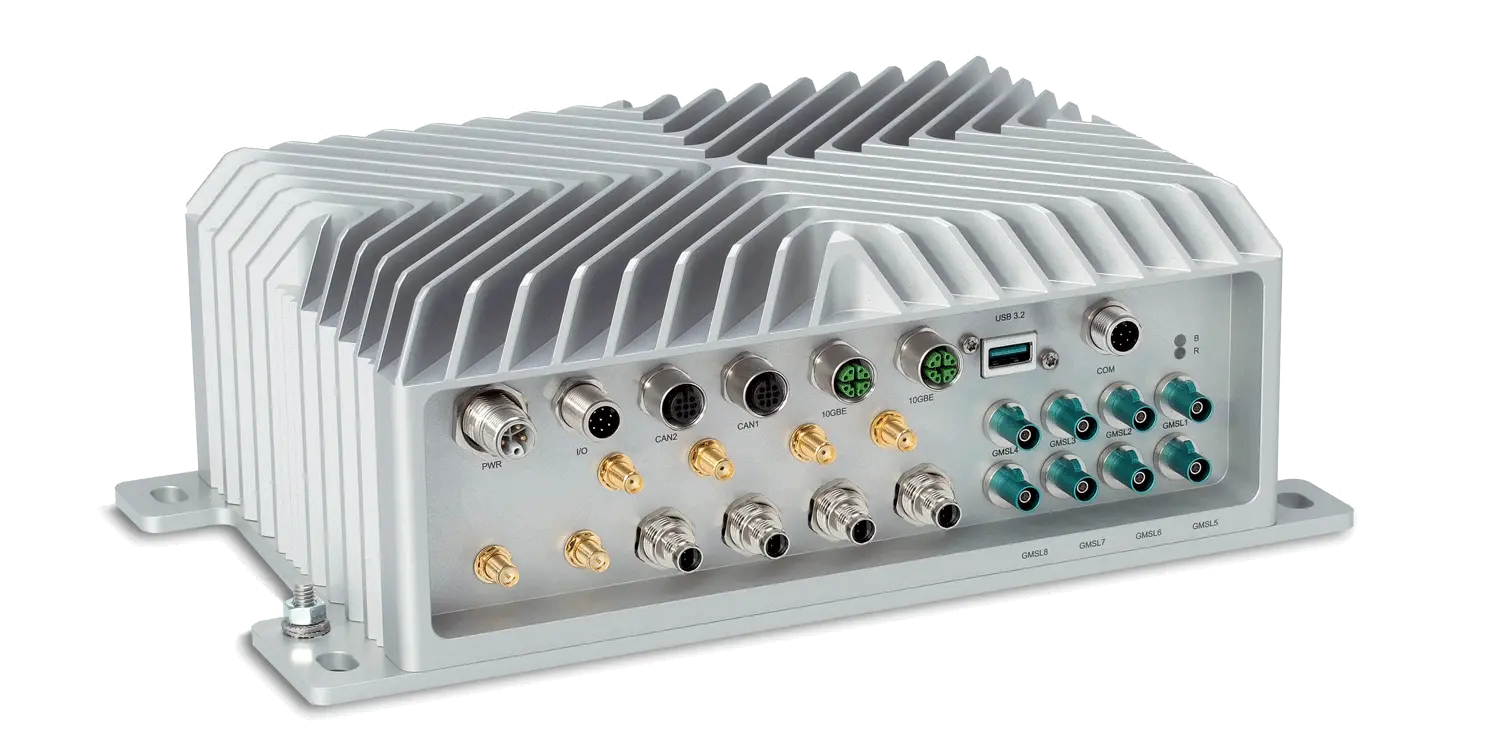
The embedded computer that serves as the central control unit is particularly important. Kodama found the right solution at Syslogic, a specialist in rugged computers. The European company has long established itself as a provider of rugged, fanless embedded systems. Its computers are used wherever operating conditions are particularly demanding – including agricultural technology, construction equipment, off-highway applications, and, of course, forestry.
For Kodama's application, having the right interfaces to connect all the sensors was essential. But sufficient computing performance was equally important. The large volumes of incoming data have to be processed immediately and combined into a comprehensive representation of the machine's surroundings.
“We aim to enable forestry machines to increasingly understand and navigate their environments autonomously,” says Jenkins. “That requires powerful onboard computing to run AI models that can interpret complex terrain and make decisions directly on the machine.” The NVIDIA Jetson technology used in Syslogic's rugged computers provides the computing power required for this work. Kodama is developing edge AI capabilities that can interpret sensor data, identify obstacles, assess terrain navigability, and support increasingly autonomous operation in complex forestry environments.
Jetson AGX Thor based Rugged Computer
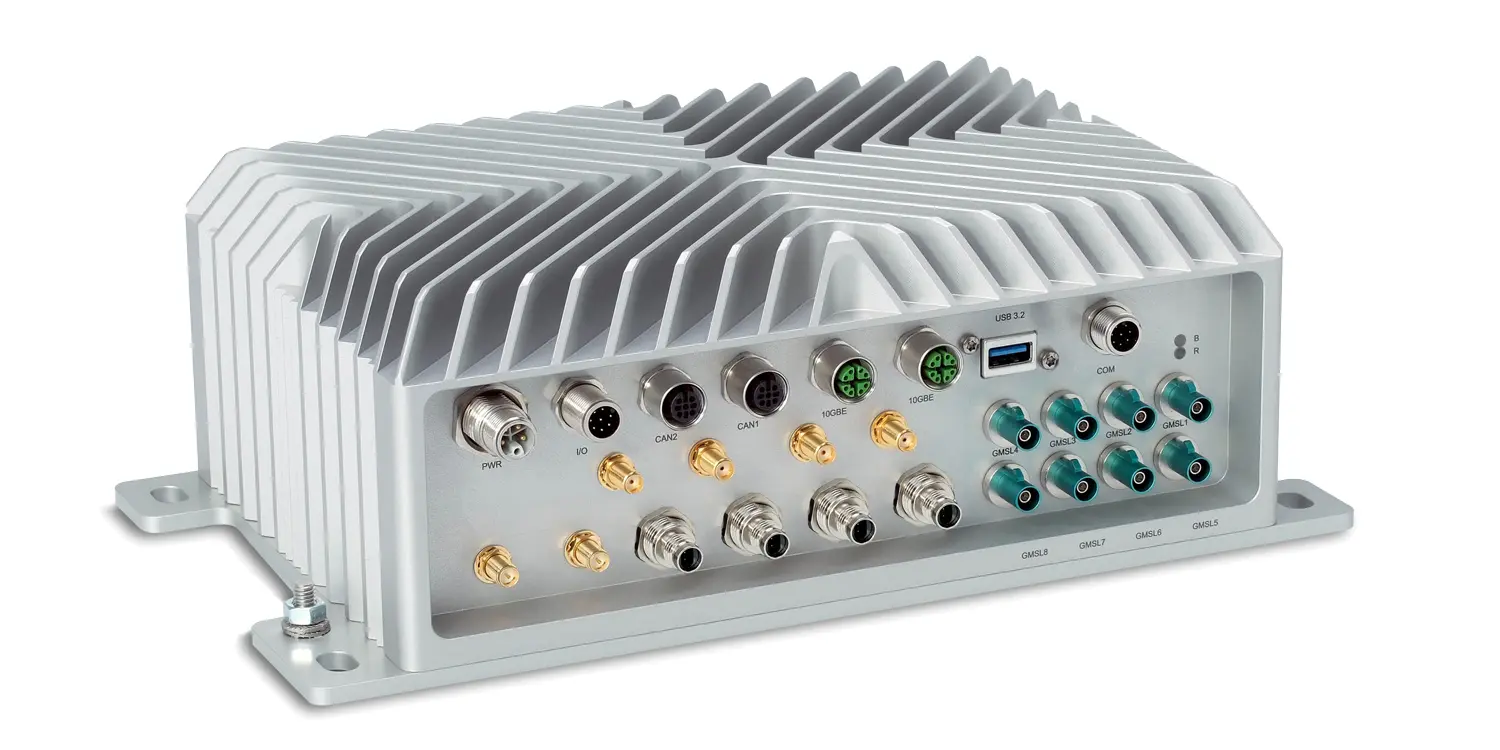
The Rugged Computer RML A5AGX used by Kodama is based on Jetson AGX Thor, NVIDIA's most powerful SoM (system on module) to date. But the Syslogic computer does more than process sensor data. It also provides the computing performance required for navigation, onboard data processing, system monitoring, and reporting.
According to Jenkins, the combination of ruggedness and NVIDIA technology was a decisive factor in Kodama's decision to use Syslogic embedded computers. “Syslogic embedded computers are used around the world under similar operating conditions,” says Jenkins. This was an important consideration for Kodama, he explains, because the devices need to operate reliably for months without direct access. Jenkins adds that Syslogic was also able to provide everything from a single source and responded quickly to Kodama's needs and requirements.
Syslogic Rugged Computers are now proving themselves in numerous skidders, and the two companies plan to further expand their partnership. Raphael Binder, CEO of Syslogic, says: “Kodama shares the same goal as Syslogic – to move the world forward, one step at a time.” He adds that Syslogic is proud to play a part in helping modernize the US forestry industry.
Frequently asked questions about this blog post
What challenges does forestry equipment pose for embedded computers?
Forestry equipment operates in harsh environments with extreme temperatures, moisture, dust, shock, and constant vibration. Embedded computers must withstand these conditions while delivering reliable performance over long operating periods.
Why are Syslogic Rugged Computers suitable for forestry applications?
Syslogic Rugged Computers combine robust, fanless designs with powerful computing technology. They are engineered for demanding off-highway applications and provide reliable operation even under severe environmental conditions.
How does Syslogic protect embedded computers against harsh environmental conditions?
Syslogic uses rugged enclosures, fanless cooling, and industrial-grade components. Extensive testing and qualification help ensure reliable operation despite temperature fluctuations, shock, and vibration.
How do Syslogic embedded computers enable autonomous forestry machines?
Powered by NVIDIA Jetson technology, Syslogic embedded computers process data from cameras, LiDAR, and other sensors directly on the machine. This enables real-time sensor fusion, obstacle detection, terrain analysis, and AI-assisted navigation.
Why is edge AI computing important for autonomous forestry equipment?
Forestry machines often operate in remote areas with limited connectivity. Edge AI allows sensor data to be processed locally, without relying on cloud connections. This reduces latency and enables fast, reliable decision-making directly on the machine.
By clicking “Accept”, you agree to the storing of cookies on your device to enhance site navigation, analyze site usage, and assist in our marketing efforts. View our Privacy Policy for more information.