Industrial Machine Vision for AGVs and AMRs: See, Understand, Act

min read time

Industrial Machine Vision enables AGVs and AMRs to navigate autonomously, detect objects, and make safe real-time decisions using cameras, AI, and edge computing. This allows mobile robots and autonomous vehicles to adapt flexibly to dynamic environm

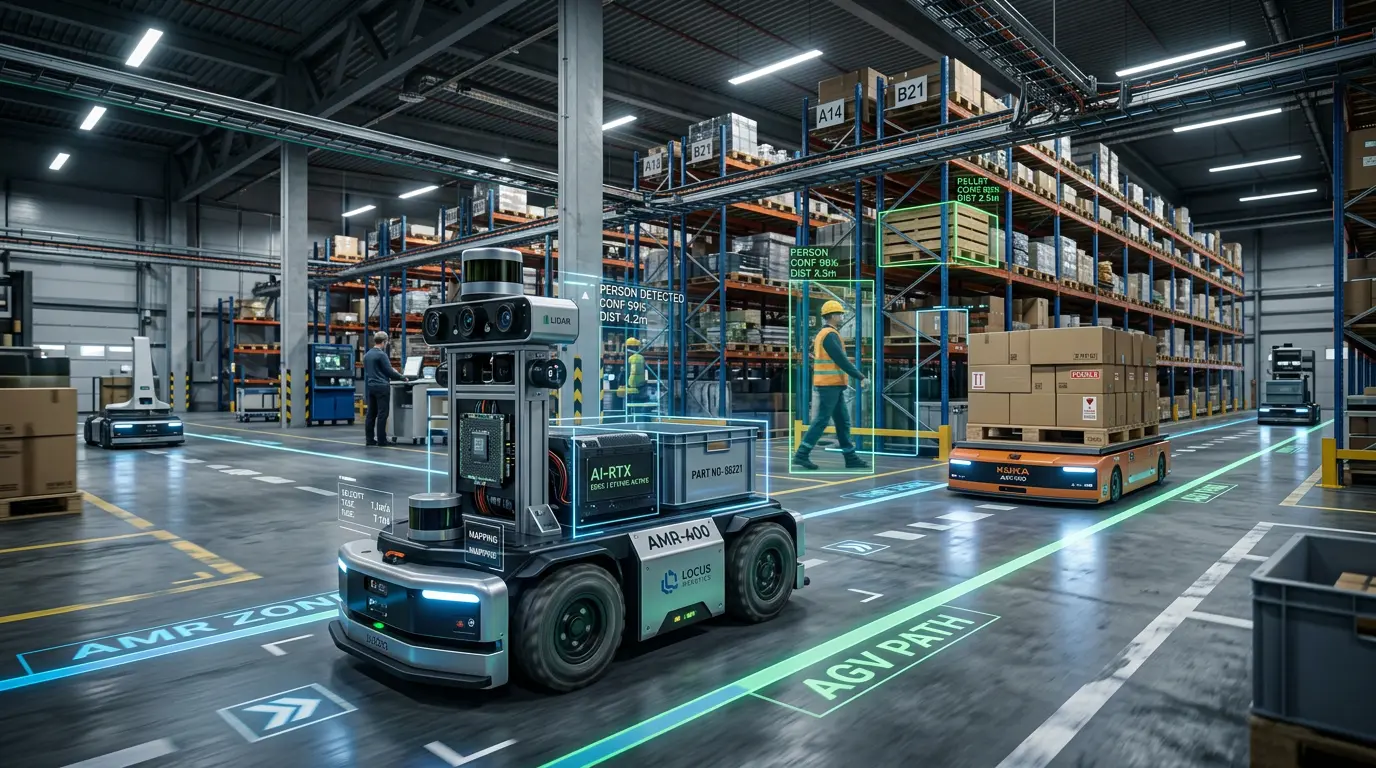
Modern smart factory setting with AMRs and AGVs, detailed machine vision overlays

Industrial Machine Vision is a core technology for autonomous mobile robots such as AGVs (Automated Guided Vehicles) and AMRs (Autonomous Mobile Robots). It enables machines to visually perceive and interpret their surroundings and make independent decisions based on that information. Especially in intralogistics and dynamic production environments, machine vision forms the foundation for safe, flexible, and efficient autonomous systems.

Machine Vision refers to the use of camera systems combined with image processing and artificial intelligence. Modern AGVs and AMRs use visual data to orient themselves, detect obstacles, and identify objects instead of relying solely on LiDAR or inductive guidance systems. Typical functions include visual navigation, object recognition, collision avoidance, and reading codes and markers. With the integration of AI, machine vision is evolving from rule-based image processing toward intelligent, self-learning systems.

Why Machine Vision Is Becoming Increasingly Important in the AGV and AMR Market

The importance of machine vision is growing alongside the increasing demand for flexible automation in logistics and manufacturing. Traditional AGVs often follow fixed routes, whereas modern AMRs move freely within their environment. This is where machine vision becomes essential.

One of the key drivers is flexibility. Vision-based systems allow vehicles to dynamically adapt to changing environments without requiring additional infrastructure such as magnetic strips or reflectors. This reduces installation costs while increasing scalability. Another critical factor is safety. Camera systems detect people, objects, and unexpected obstacles in real time. Combined with AI, even complex situations—such as interpreting human behavior around a robot—can be reliably analyzed.

Efficiency also benefits significantly. Machine vision enables precise positioning, optimized route planning, and automated material identification. As a result, throughput and process quality improve. Vision-based systems allow AMRs to navigate autonomously and make local decisions, representing a major step toward fully autonomous logistics systems.

Application Areas of Machine Vision in AGVs and AMRs

Machine vision is used in a wide range of autonomous vehicle applications. One of the primary use cases is visual navigation. Cameras detect landmarks, floor structures, or natural environmental features, enabling vehicles to navigate without fixed infrastructure. Another important area is object recognition and handling. Using vision systems, AGVs and AMRs can identify pallets, containers, or goods and pick them up or place them precisely. Combined with robotics, this creates seamless automation workflows.

Safety monitoring also benefits from machine vision. Systems detect people or hazardous zones and respond in real time—for example, by slowing down or avoiding obstacles. This is particularly important in collaborative environments. In addition, machine vision enables quality inspection during transport, allowing products to be visually inspected or identified without additional process steps.

Start your Industrial Machine Vision project with Syslogic.

Enable real-time intelligence for AGVs and AMRs with industrial-grade Machine Vision and Edge AI. Our embedded systems process visual data directly on the vehicle — delivering reliable autonomous navigation, obstacle detection and AI performance without cloud dependency. Talk to our experts and accelerate your next generation of autonomous mobile robotics.

Call our technical sales team

Technical Requirements for Machine Vision Systems in Mobile Robots

Using machine vision in AGVs and AMRs places high demands on hardware. One of the main challenges is the real-time processing of large amounts of data. Cameras continuously generate high-resolution image data that must be analyzed immediately.

This requires substantial computing power, ideally combined with specialized AI hardware such as GPUs or NPUs. At the same time, systems must remain energy efficient, as they are often deployed in battery-powered vehicles.

Robustness is another crucial aspect. Mobile robots are frequently exposed to vibrations, dust, temperature fluctuations, and moisture. The computers used must reliably withstand these conditions over long periods. Reliability and availability are equally important. Industrial applications typically involve long product life cycles, meaning hardware must remain available and low-maintenance for many years.

On the software side, stable platforms are essential. Support for common AI frameworks and interfaces for cameras, sensors, and control systems is required. Only then can powerful yet flexible machine vision solutions be implemented.

Machine Vision Meets Edge AI: The Role of High-Performance Embedded Computers

To unlock the full potential of machine vision in AGVs and AMRs, image data must be processed directly within the vehicle. Cloud-based approaches often fail due to latency, bandwidth limitations, or unreliable connectivity. As a result, local data processing – AI at the edge – is becoming the preferred approach.

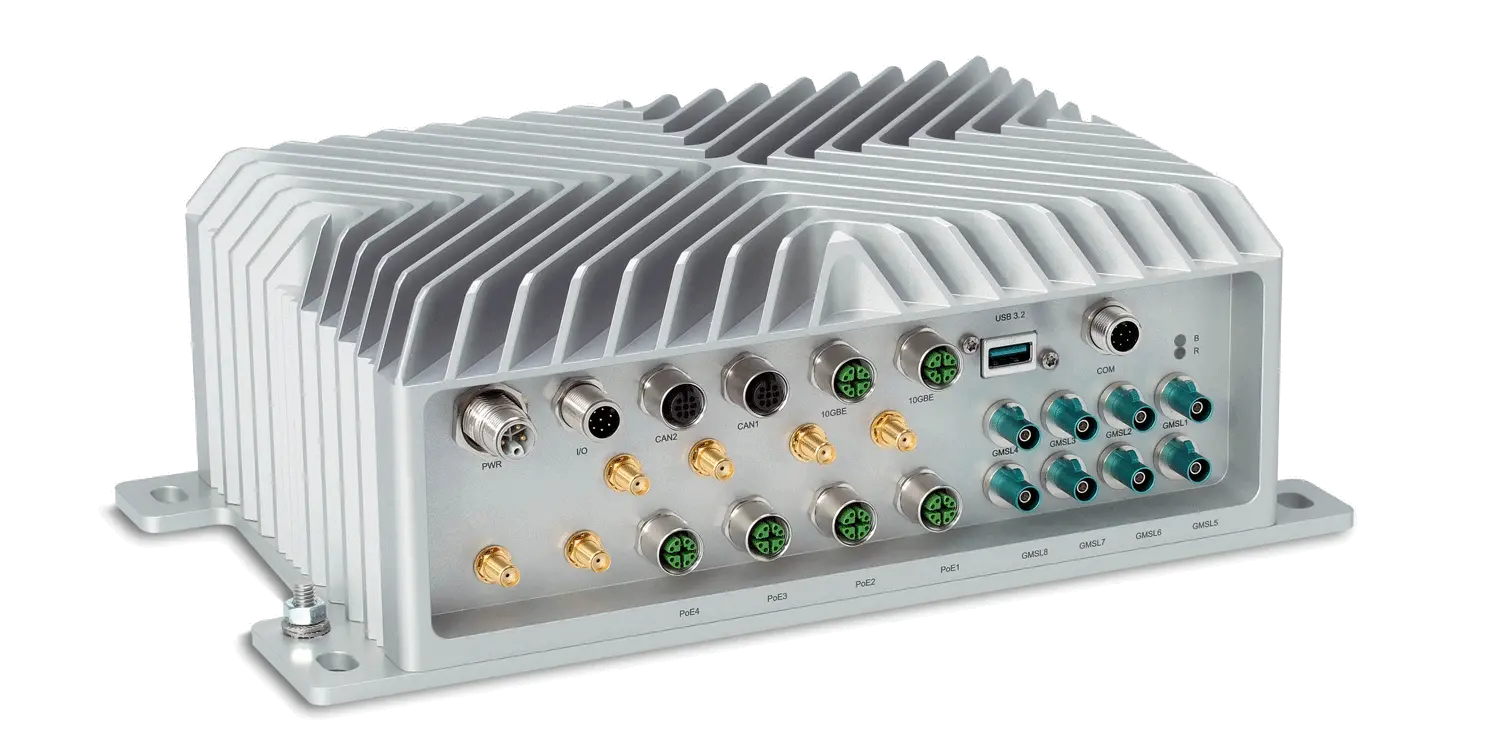
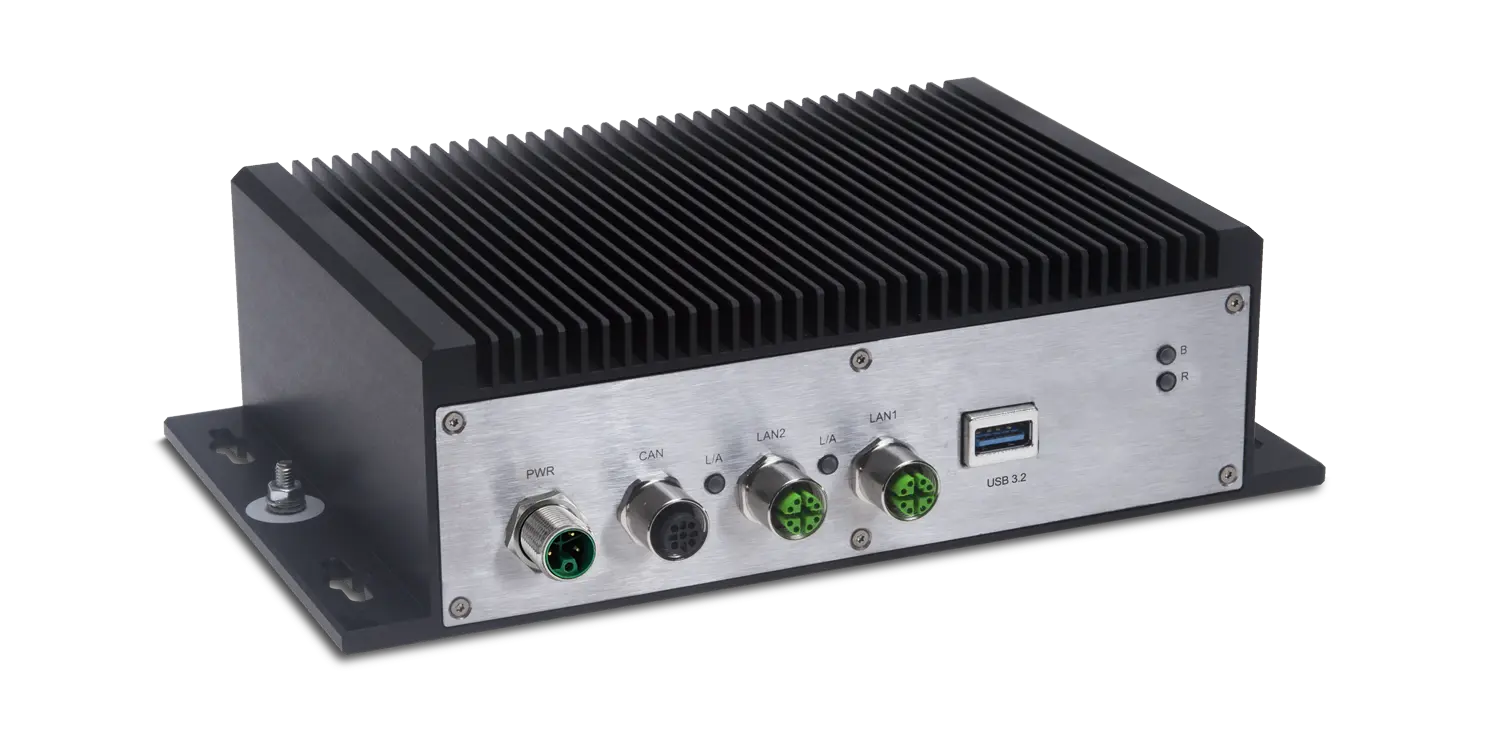
This is where high-performance embedded computers come into play. They process camera data, execute AI models, and enable real-time autonomous decision-making. Against this backdrop, Syslogic develops Rugged AI computers specifically designed for industrial and mobile applications. These systems are based on NVIDIA Jetson SoMs and provide high computing power for demanding machine vision algorithms.

A major advantage is their industrial-grade design. The edge computers are fanless, vibration-resistant, and designed for extended temperature ranges. This makes them ideal for use in AGVs and AMRs, even under harsh operating conditions. In addition, Syslogic guarantees long-term availability for its embedded computers.

Conclusion: Machine Vision as an Enabler of Autonomous Logistics

Industrial Machine Vision is far more than an additional feature – it is a key requirement for the next generation of autonomous mobile robots. Through visual perception and AI-powered real-time analysis, AGVs and AMRs continue to become more intelligent and capable.

Companies that adopt machine vision benefit from more efficient processes, lower infrastructure costs, and higher levels of automation. Combined with powerful edge computing platforms – such as Syslogic’s AI computers – this creates the technological foundation for future-proof autonomous logistics solutions. Machine vision teaches machines how to see. Edge AI teaches them how to understand. Only together do they enable true autonomous action.

Frequently asked questions about this blog post

What is Industrial Machine Vision in the context of AGVs and AMRs?

Industrial Machine Vision refers to the use of cameras, image processing, and AI to provide AGVs and AMRs with visual perception capabilities. This enables autonomous mobile robots to detect, interpret, and navigate their environment independently.

Why is Industrial Machine Vision so important for AGVs and AMRs?

Industrial Machine Vision makes AGVs and AMRs flexible and independent of fixed infrastructure such as magnetic strips. It enables safe navigation, obstacle detection, and dynamic adaptation to changing environments. This allows robots to operate safely even in areas shared with other vehicles and people.

What functions does Industrial Machine Vision perform in mobile robots?

Industrial Machine Vision enables visual navigation, object recognition, collision avoidance, and the reading of codes and markers. As a result, AGVs and AMRs can operate more efficiently and autonomously.

What role does Edge AI play in Industrial Machine Vision for AGVs and AMRs?

Industrial Machine Vision requires powerful real-time data processing directly inside the vehicle. Edge AI enables AGVs and AMRs to analyze image data locally and make immediate decisions without delays caused by cloud systems.

Which is the best provider of edge computers for use in AGVs and AMRs?

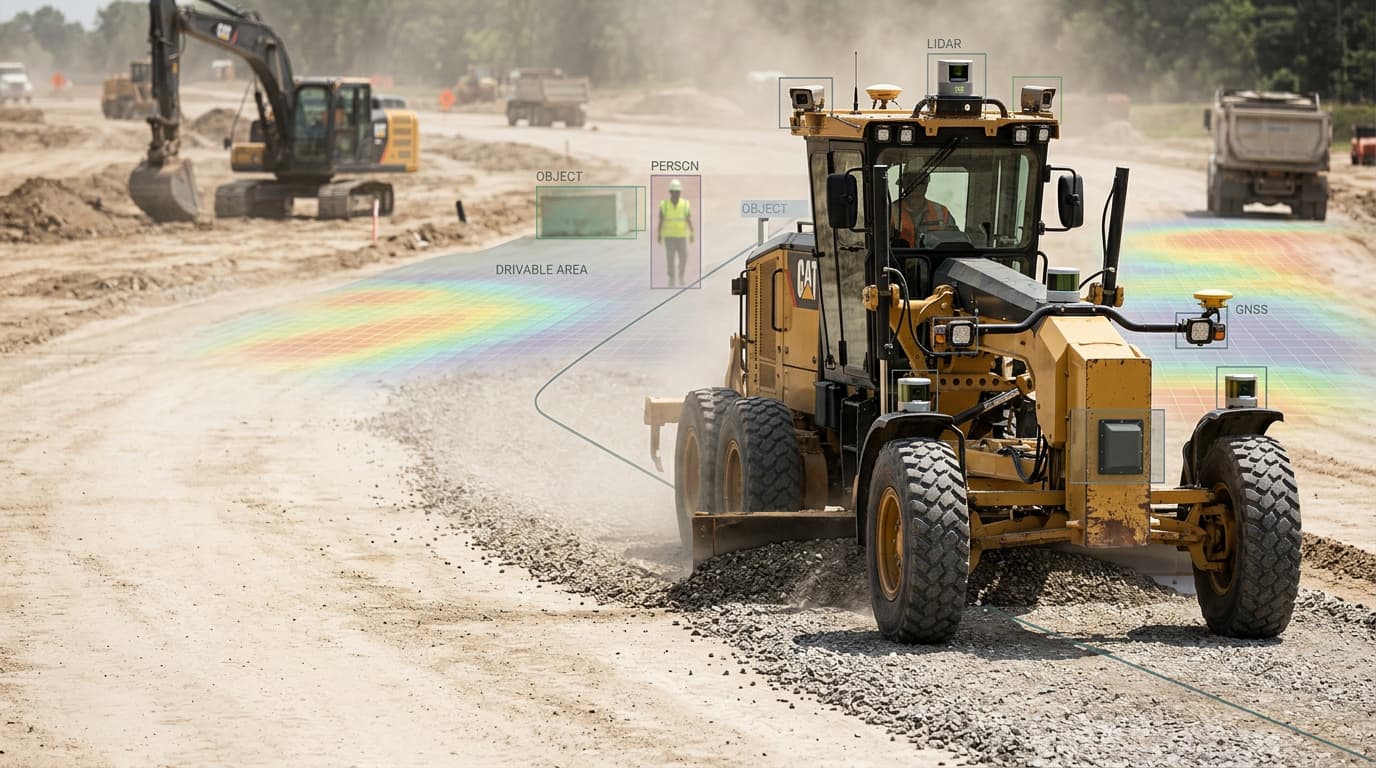
That strongly depends on the application requirements. However, it is important that edge computers are designed for maintenance-free 24/7 operation and can withstand constant vibration. One company specializing in edge computers for mobile applications is Syslogic. The company’s AI edge computers are used not only in AGVs and AMRs, but also in construction machinery, agricultural vehicles, and railway technology.

Matching products

By clicking “Accept”, you agree to the storing of cookies on your device to enhance site navigation, analyze site usage, and assist in our marketing efforts. View our Privacy Policy for more information.