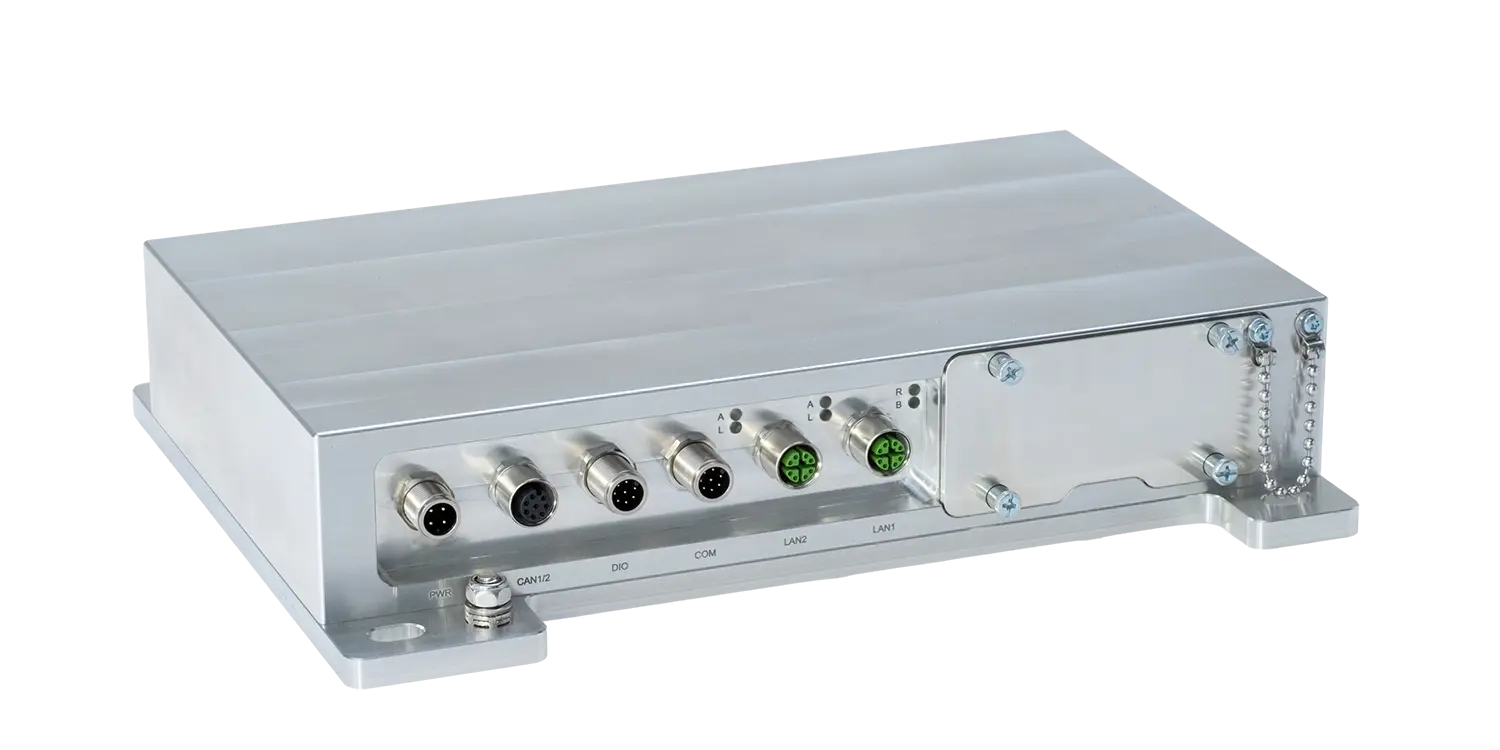
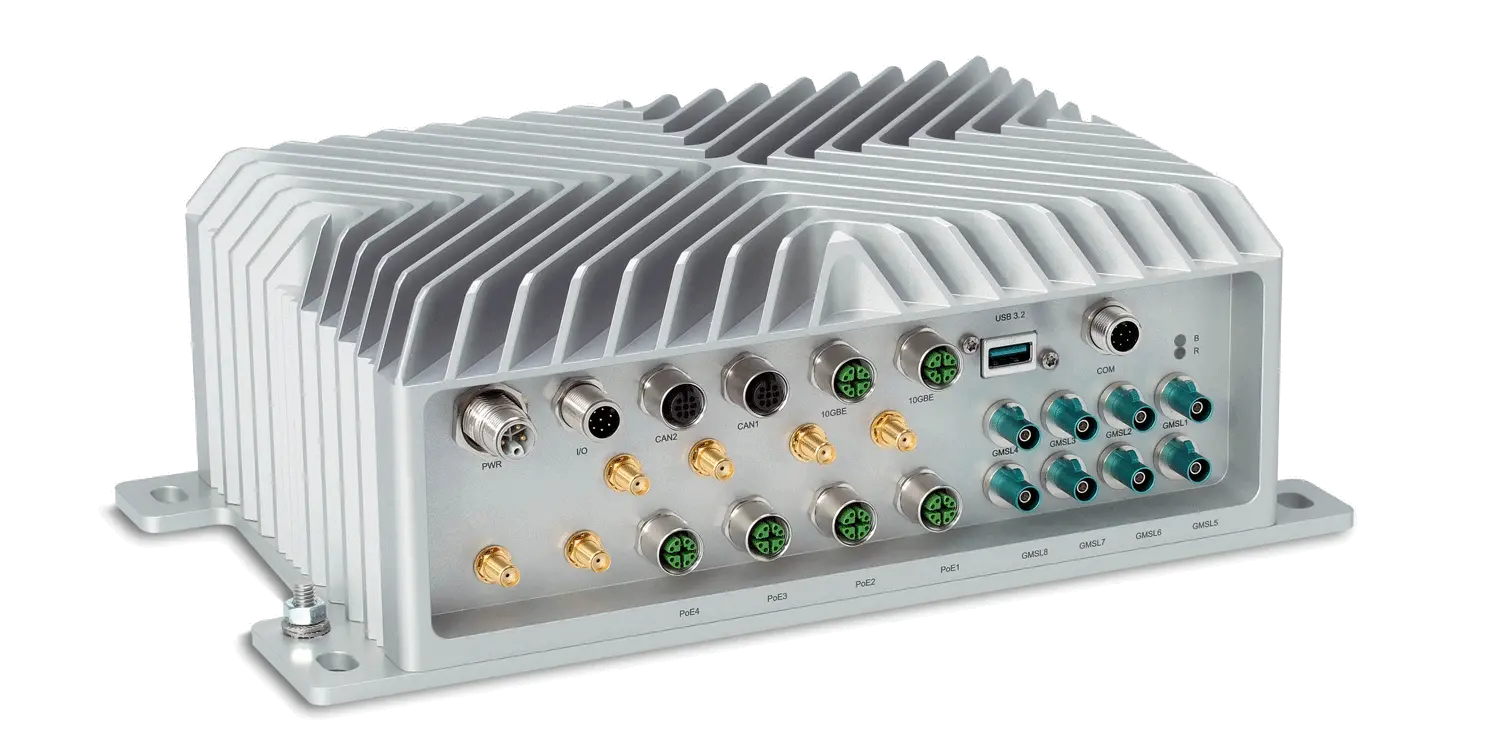
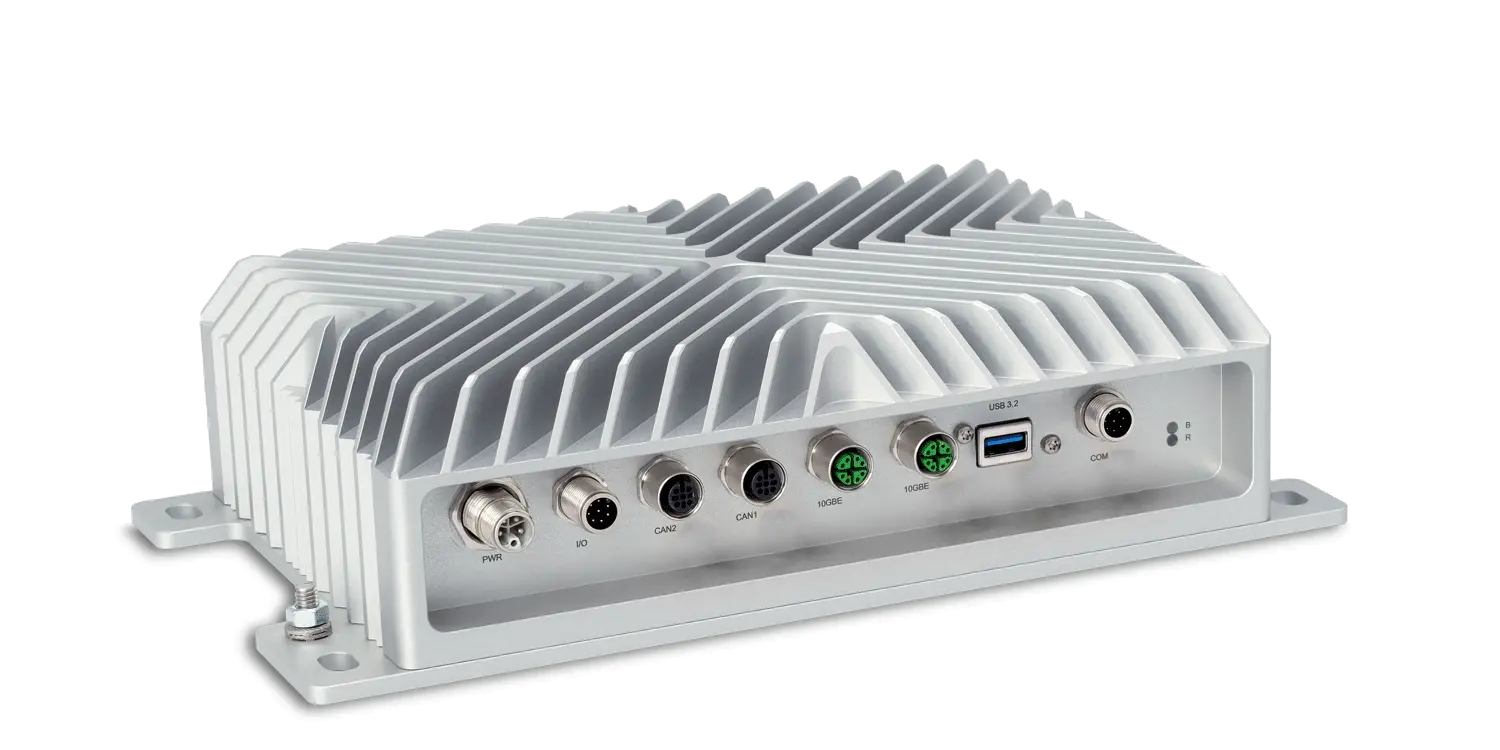
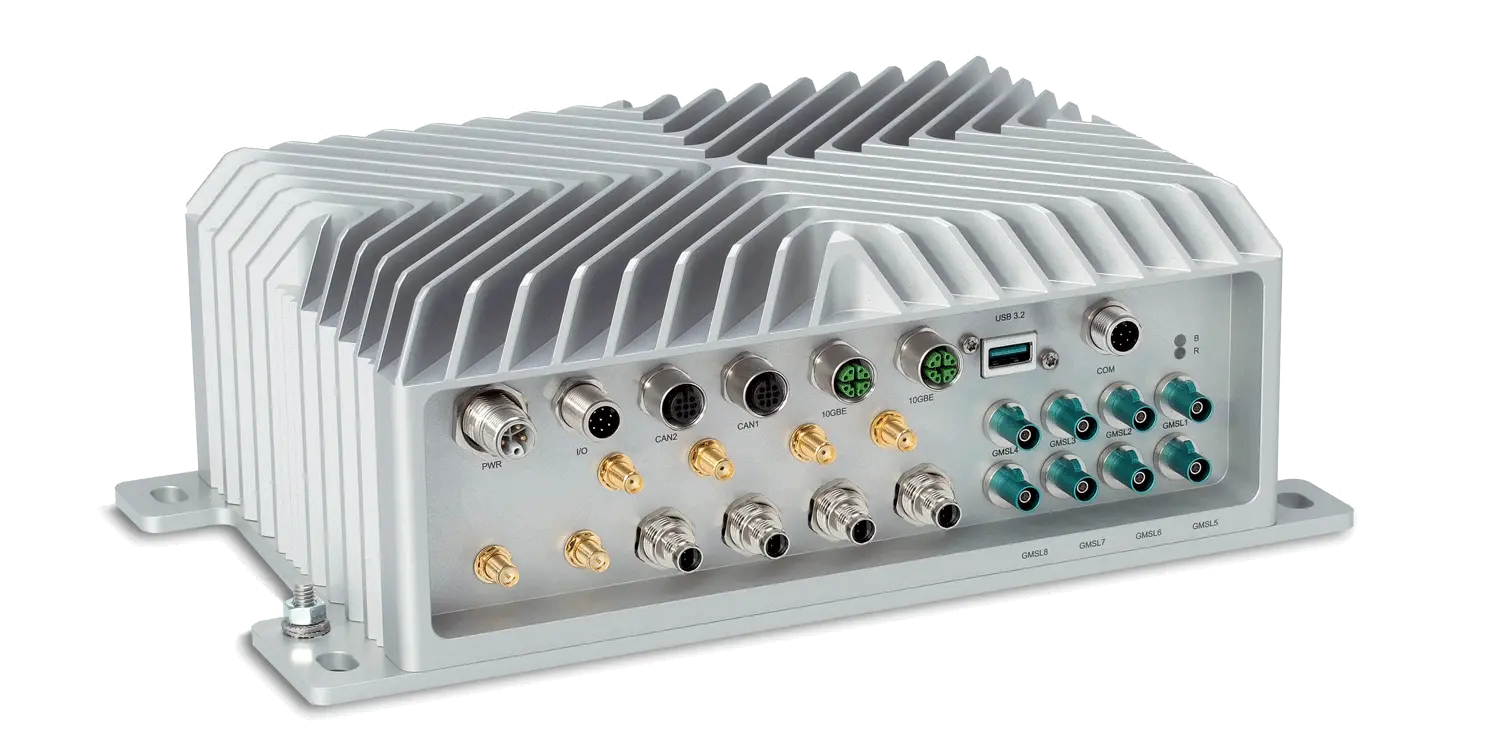
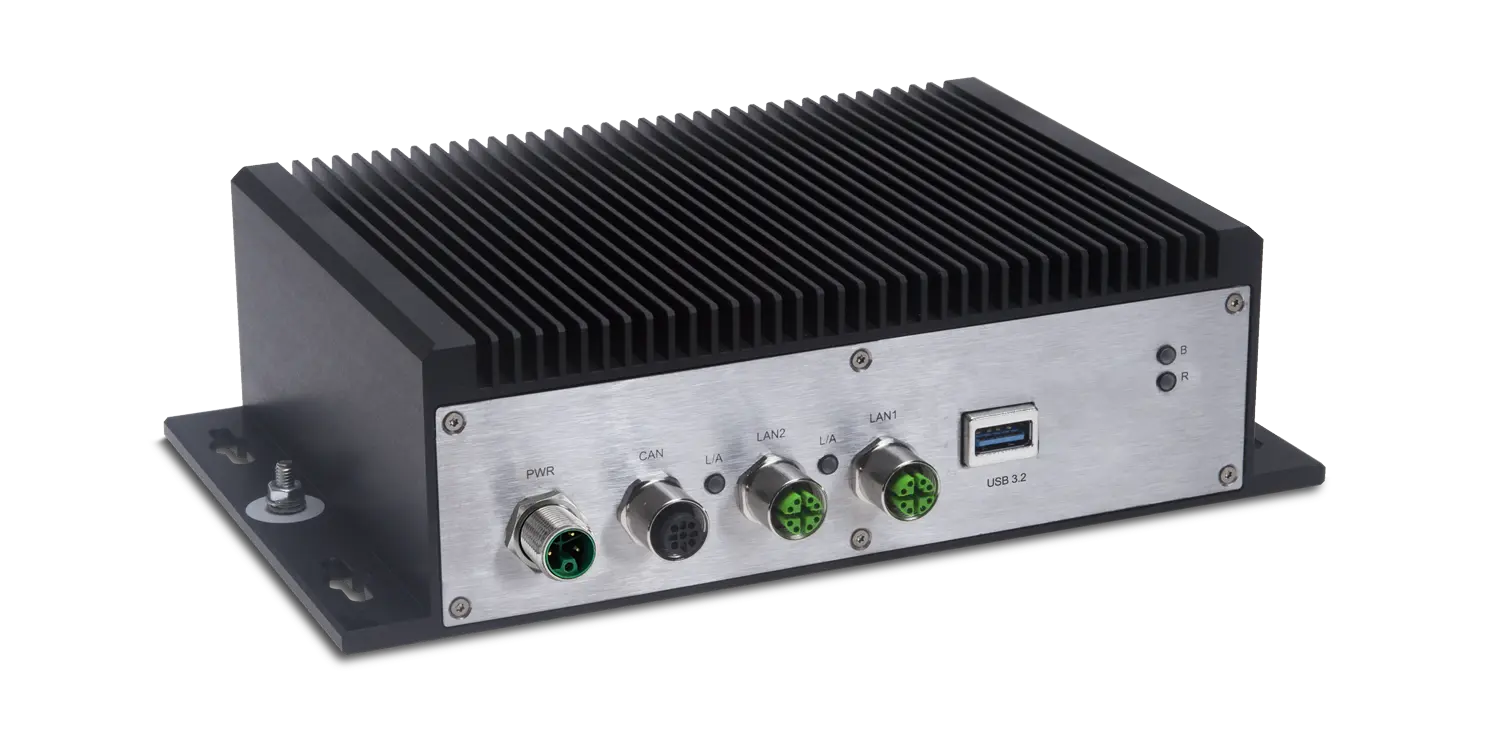
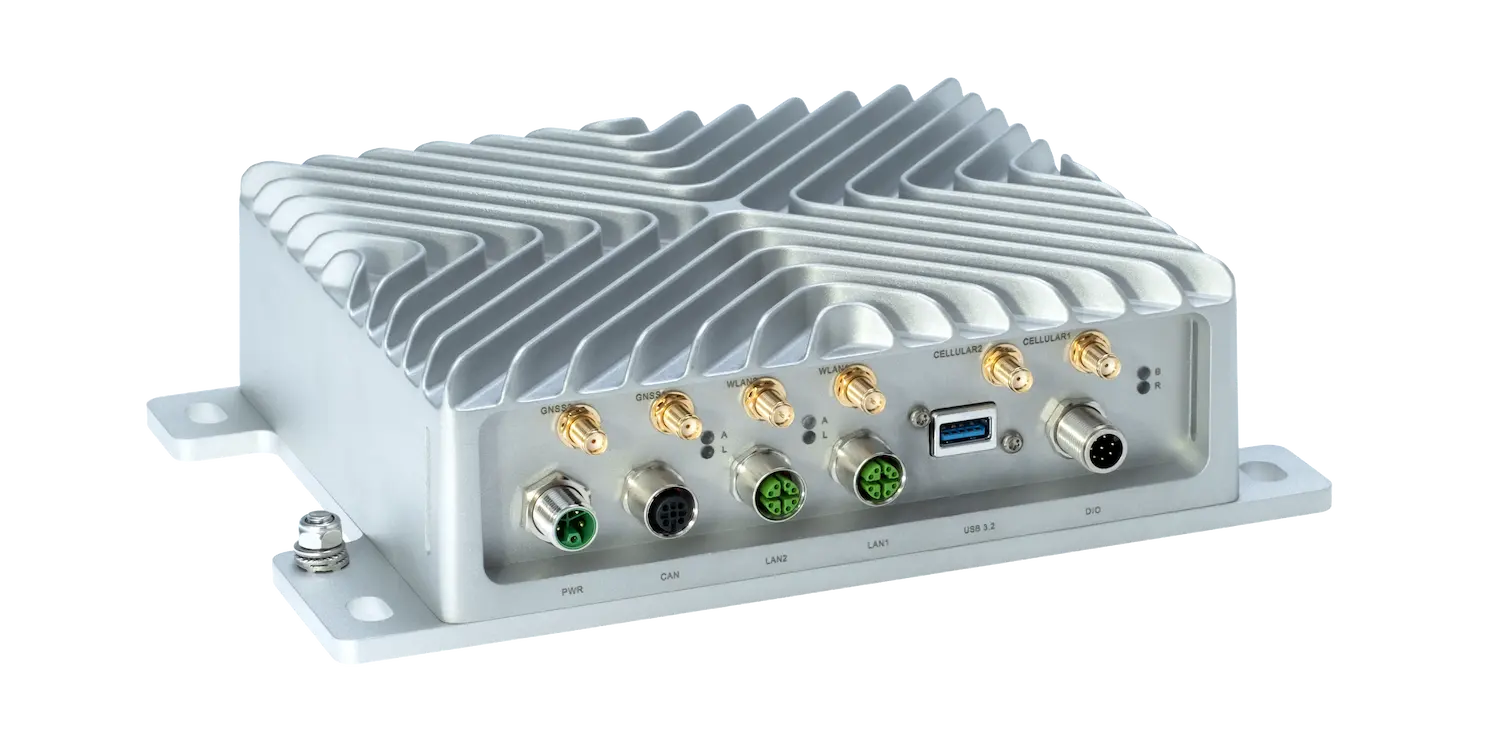
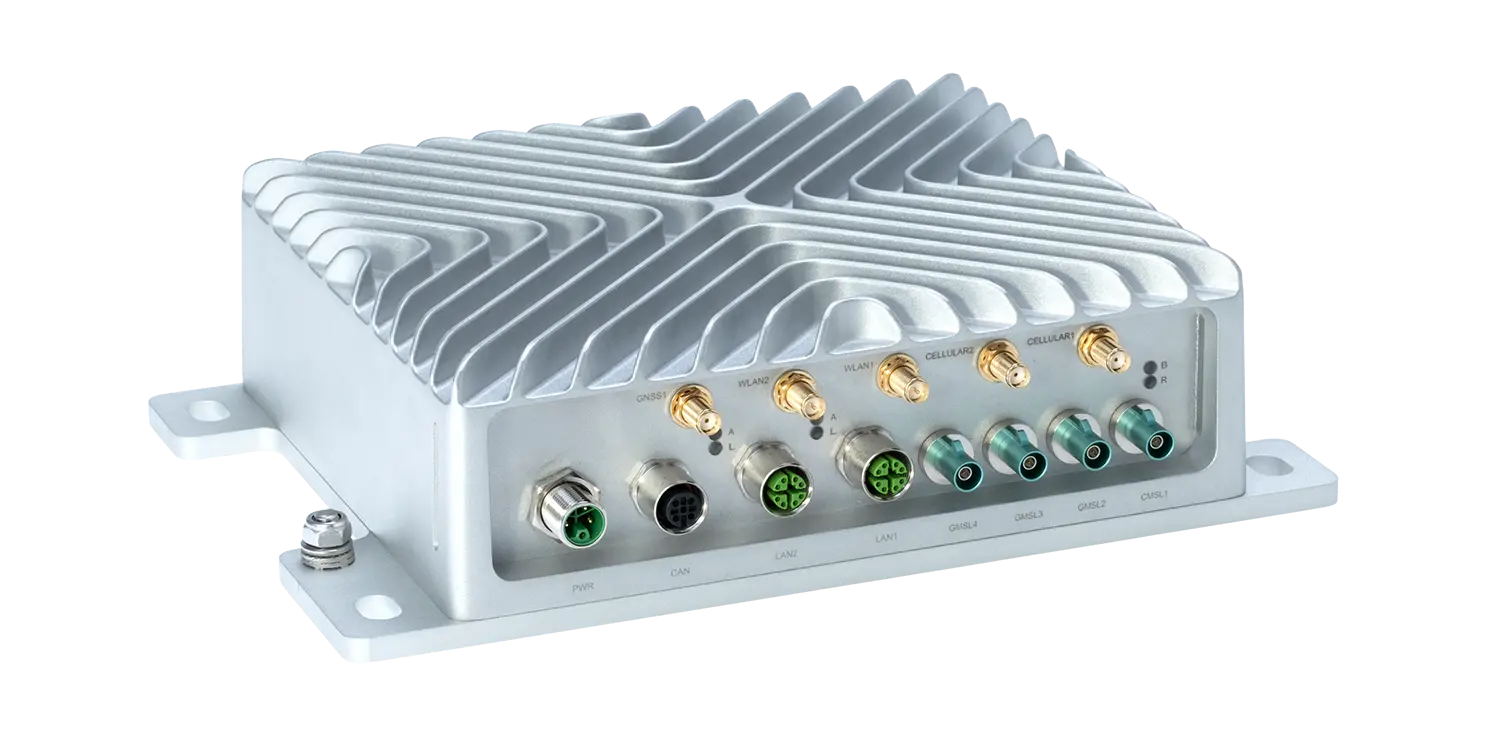
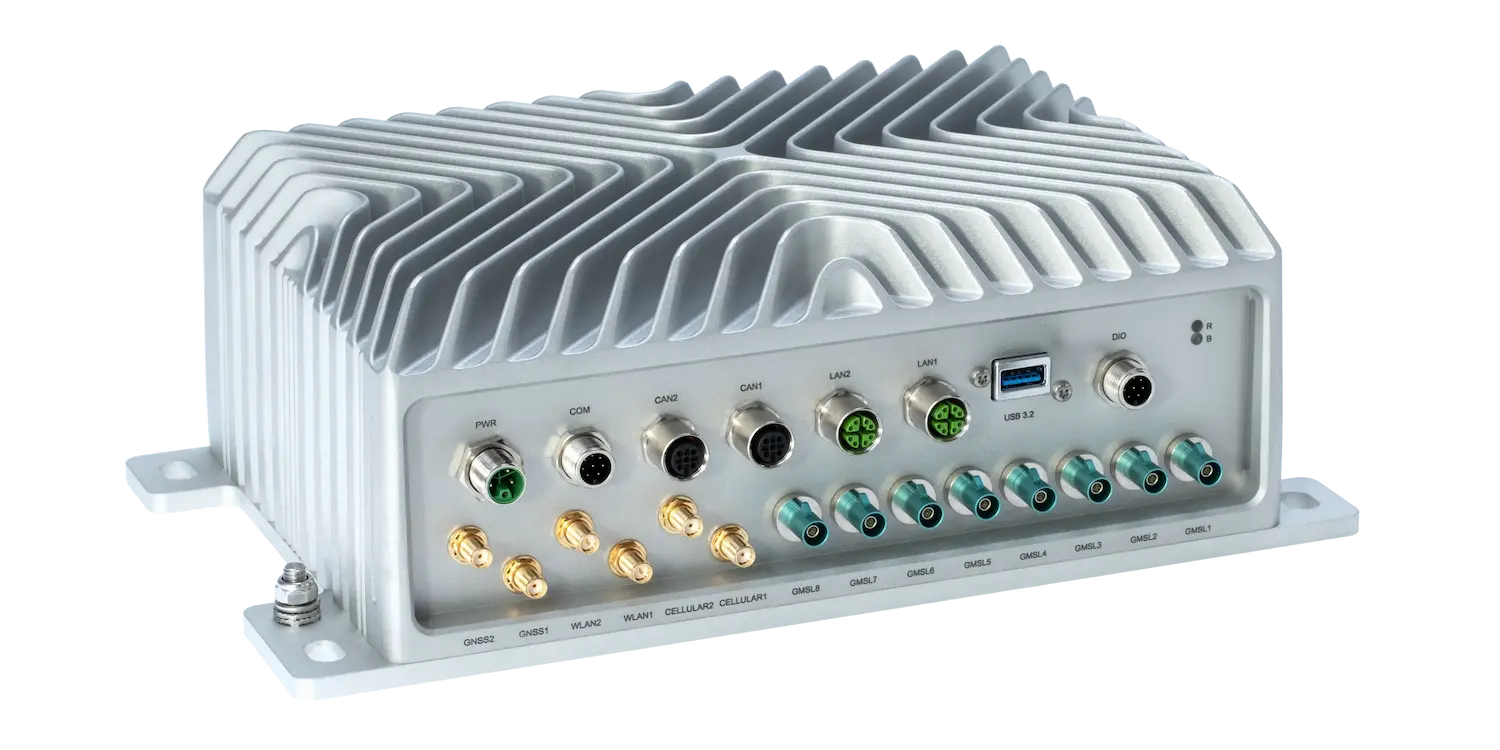
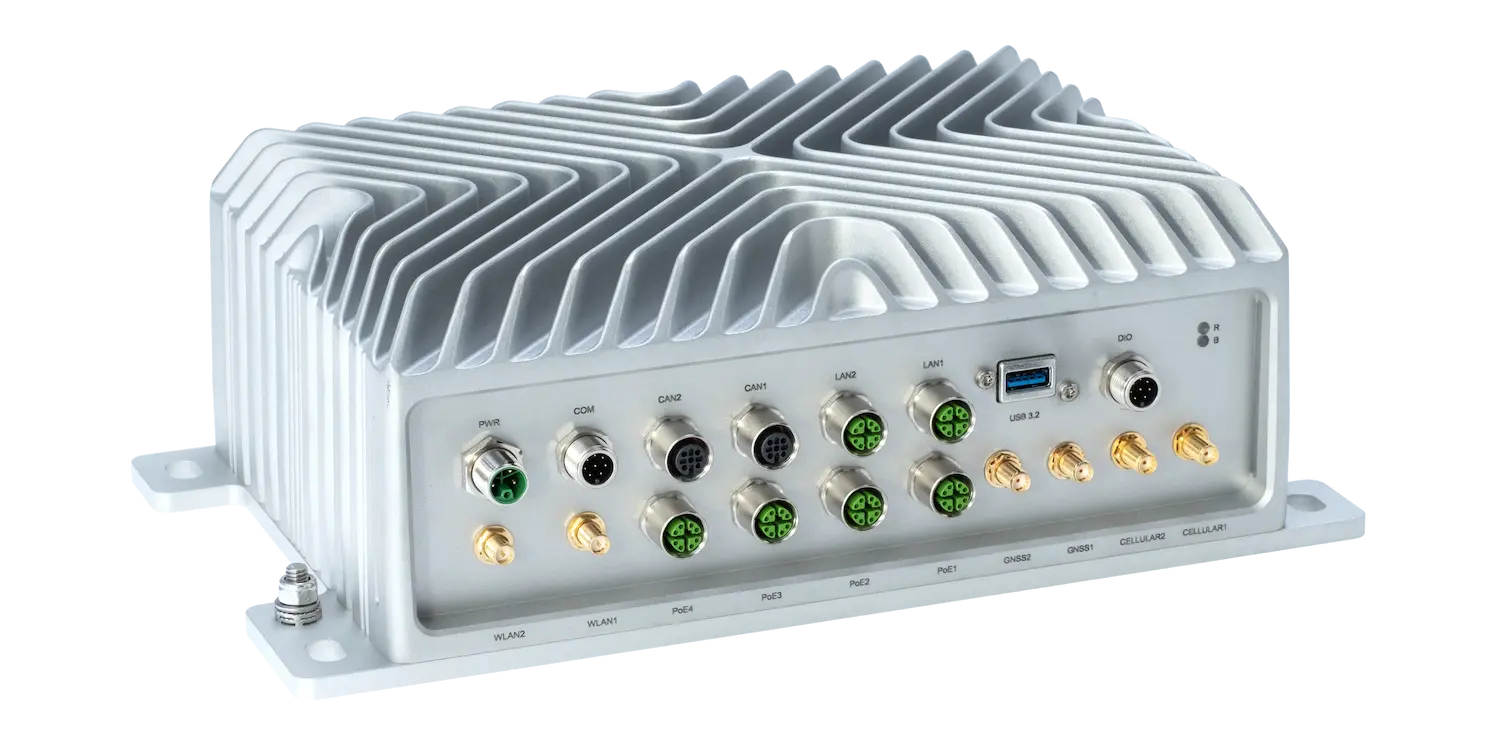
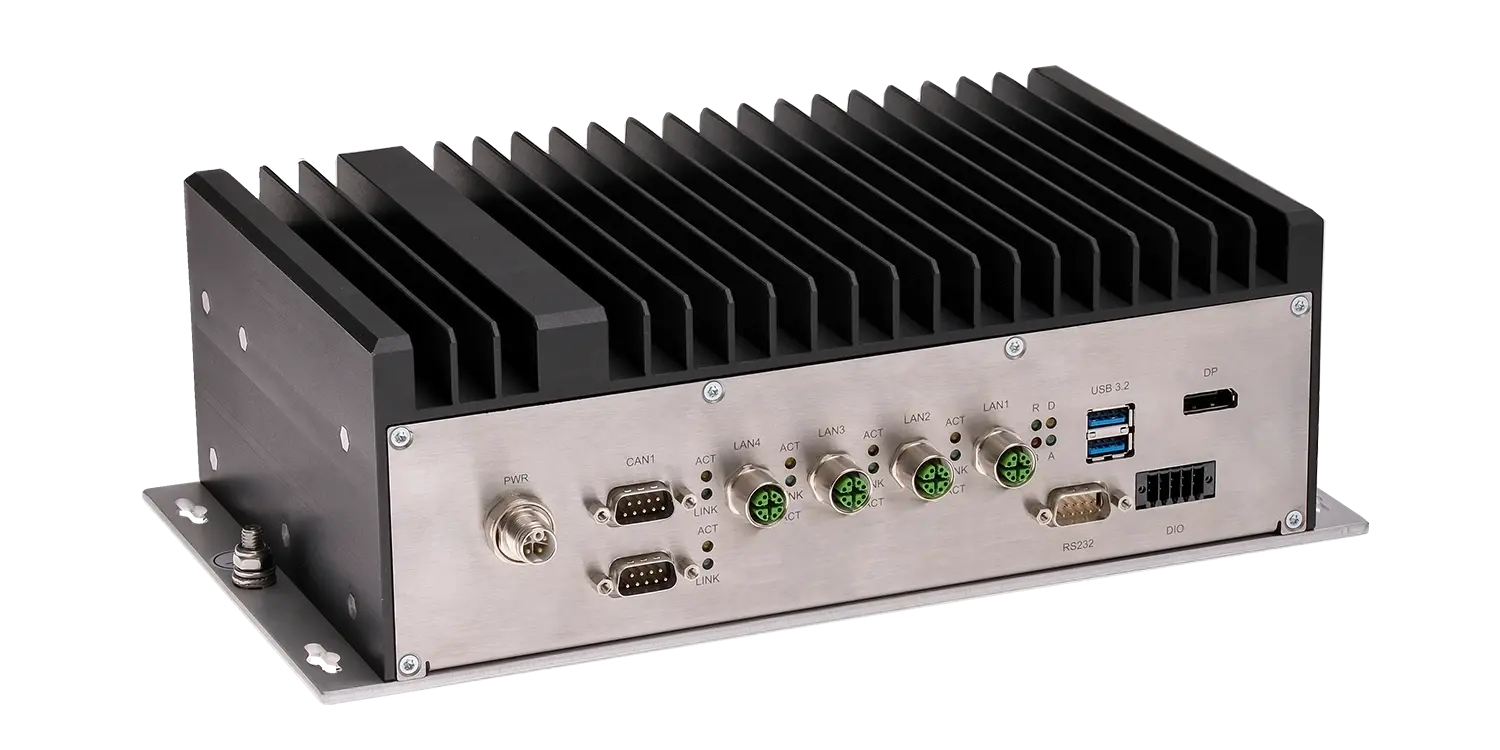
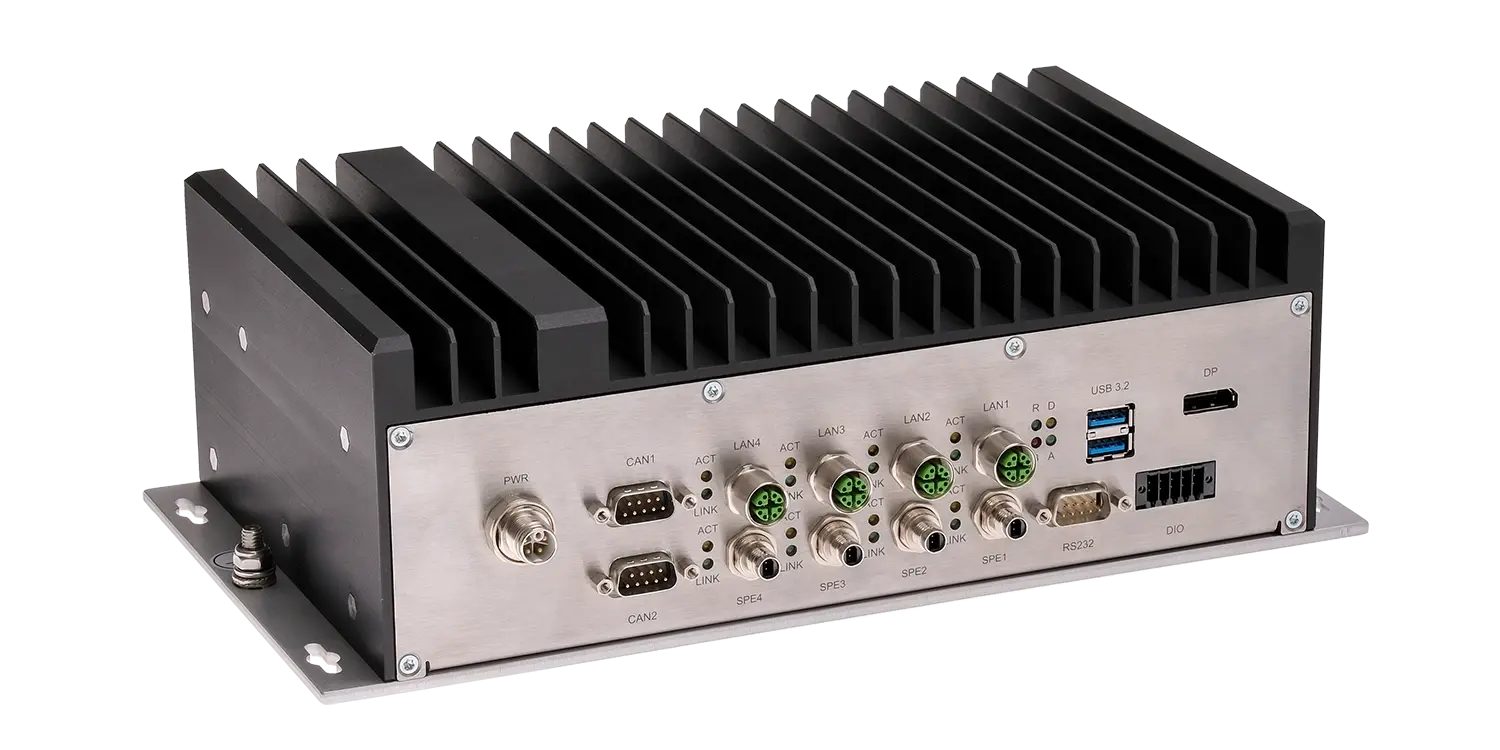
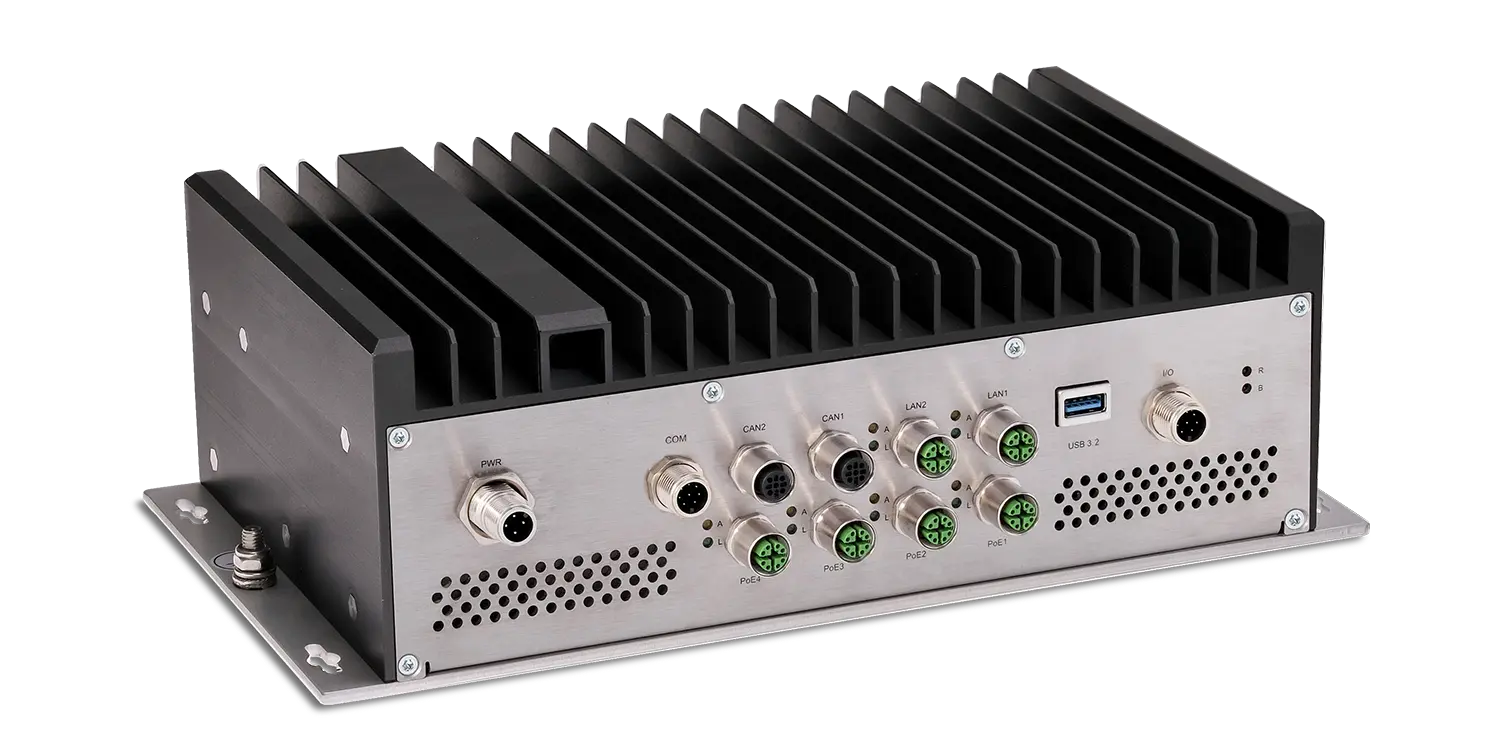
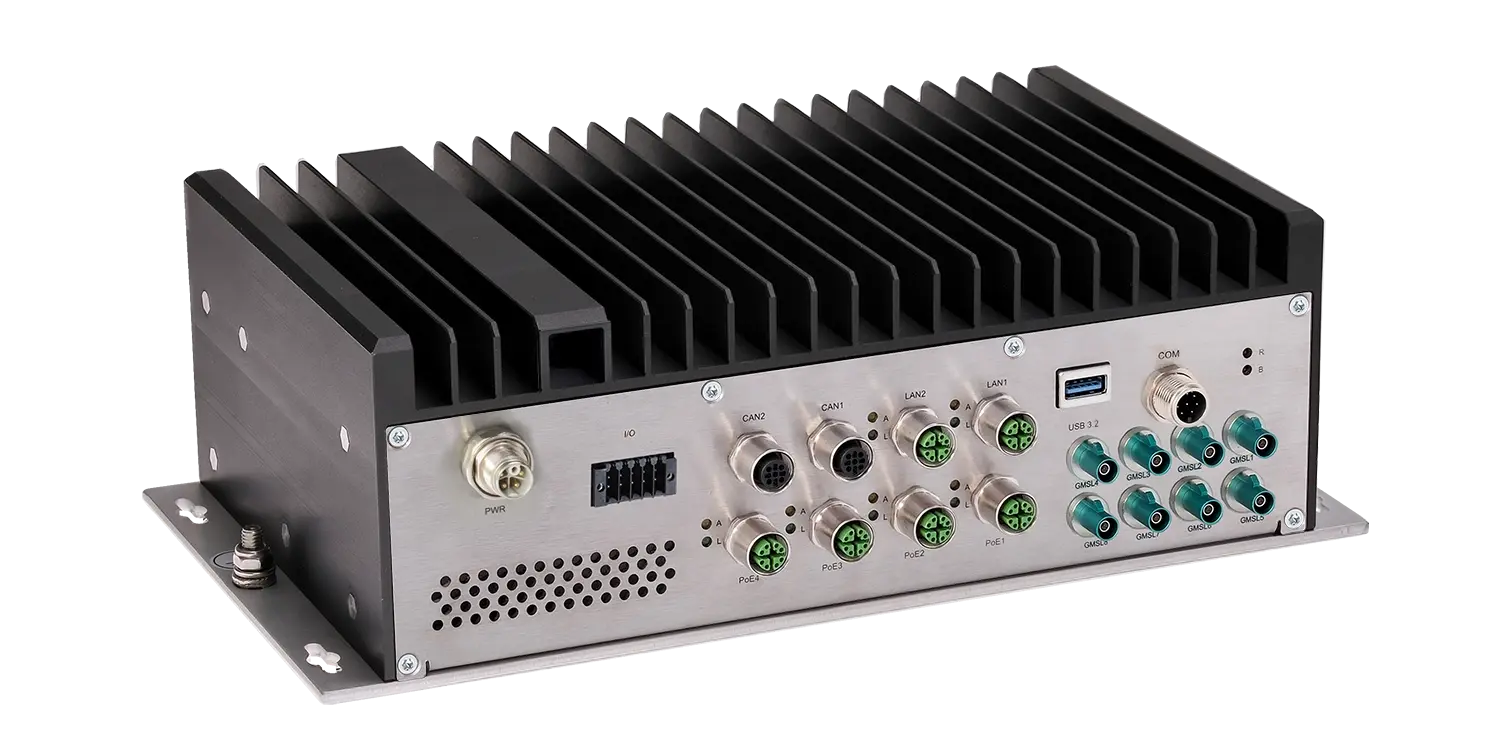
Syslogic’s edge computers are purpose-built to deliver computing, AI, and data processing right at the edge of your network. Engineered to withstand harsh environments while handling demanding workloads, Syslogic edge computers reduce operational costs and network latency while boosting application performance for real-time data analytics and industrial intelligence.
Designed for versatile deployment, Syslogic edge computers feature options for industrial GPU computing, in-vehicle platforms, IP65/IP67-rated ruggedness, and flexible expansion for LTE or wireless connectivity. Each system is rigorously tested and validated to meet industrial standards, supporting wide temperature ranges, broad voltage inputs, and extreme shock and vibration tolerance.
For demanding edge deployments where reliability, durability, and consistent performance matter, Syslogic delivers industrial-grade edge computers with proven engineering quality.
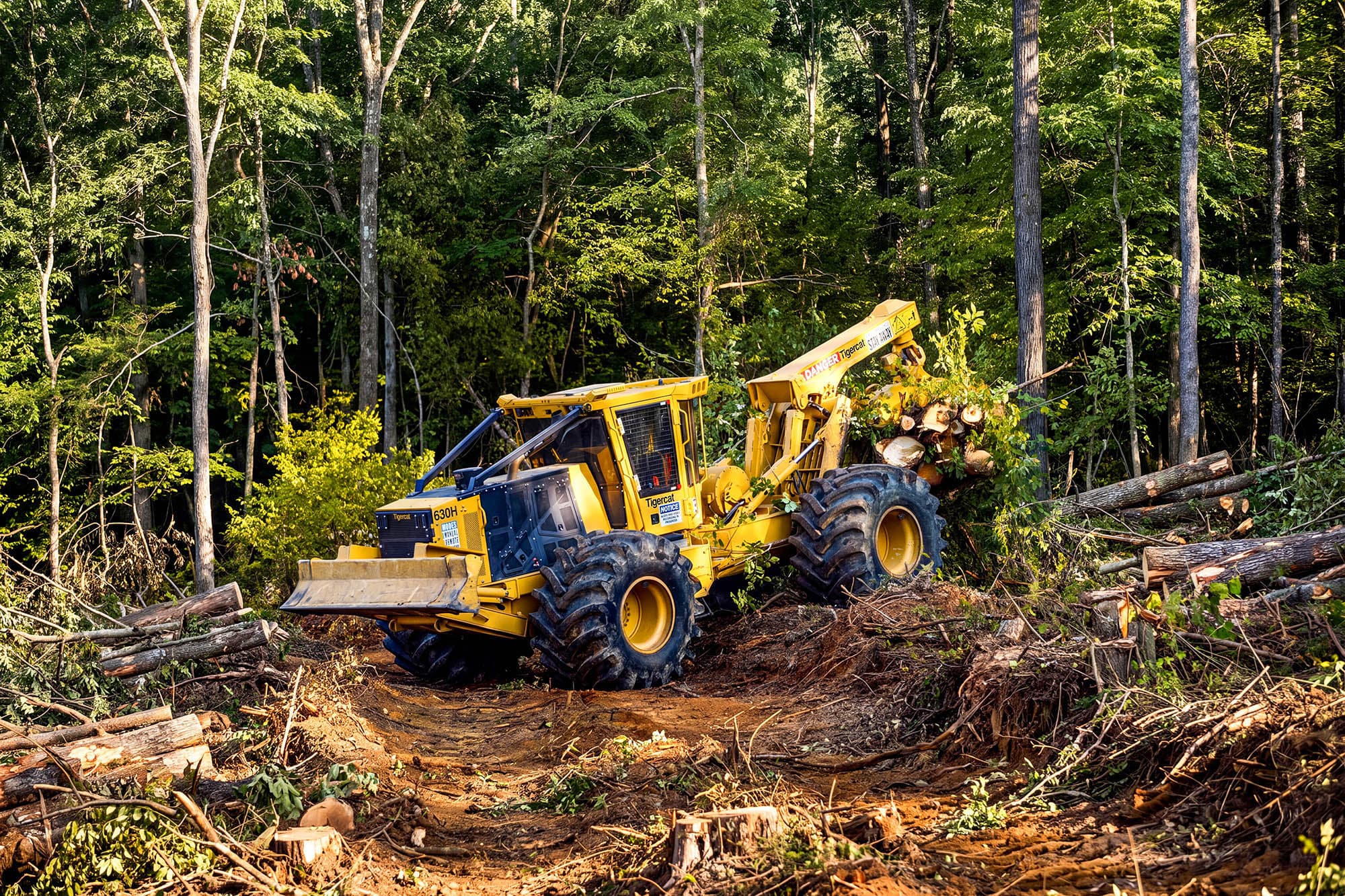
Off-Highway + Construction
Agriculture
Coming soon

Intel® Atom Amston Lake
Super Mode
AI Accelerator
Off-Highway + Construction
Agriculture
AGVs + Mobile Robotics
Coming soon

NVIDIA® Jetson Orin™ Nano
Super Mode
AI Accelerator
Agriculture
Off-Highway + Construction
AGVs + Mobile Robotics
Coming soon

NVIDIA® Jetson Orin™ Nano
Super Mode
AI Accelerator
Agriculture
Off-Highway + Construction
AGVs + Mobile Robotics
Coming soon

NVIDIA® Jetson Orin™ NX
Super Mode
AI Accelerator
Agriculture
Off-Highway + Construction
AGVs + Mobile Robotics
Coming soon

NVIDIA® Jetson Orin™ NX
Super Mode
AI Accelerator
Agriculture
Off-Highway + Construction
Coming soon

NVIDIA® Jetson AGX Orin™
Super Mode
AI Accelerator
Agriculture
Off-Highway + Construction
Coming soon

NVIDIA® Jetson Orin™ NX
Super Mode
AI Accelerator
Agriculture
Off-Highway + Construction
Coming soon

NVIDIA® Jetson Orin™ NX
Super Mode
AI Accelerator
Off-Highway + Construction
Agriculture
Coming soon

NVIDIA® Jetson AGX Orin™
Super Mode
AI Accelerator
A Syslogic edge computer is a computing platform located at or nearthe source of data generation, designed to process informationlocally rather than relying on the cloud. By handling data on-site,Syslogic edge computers reduce network latency, improve operationalefficiency, and enable real-time decision-making for time-sensitiveapplications.
As edge computing moves into more challenging industrial and outdoorenvironments, ruggedization becomes essential for reliabledeployments. Syslogic’s rugged edge computers provide thedurability, wide operating temperature ranges, and shock- andvibration resistance needed for demanding applications.
These industrial-grade edge computers are key enablers for futuretechnologies in industrial automation, smart cities, healthcare,natural resources, defense, and telecommunications.
Syslogic edge computers offer connectivity options including Wi-Fi, 4G LTE, Bluetooth, and 5G networks, along with GPS/GNSS location tracking. These features provide flexible, reliable data collection, enabling advanced IoT applications and unlocking new possibilities for edge computing deployments.
Syslogic edge computers can be deployed in mobile or remote locations, operating independently from centralized cloud resources. This decentralized approach enables reliable edge computing in transportation, field operations, and other environments where connectivity to the cloud is limited or intermittent.
Syslogic edge computers are designed to withstand harsh environmental conditions and protect sensitive components. Featuring fanless designs, wide operating temperature ranges, broad voltage input support, and high resistance to shock and vibration, these rugged edge computers ensure reliable performance in industrial, outdoor, and mobile applications.
Our technical sales team will be happy to advise you. Depending on the required quantity, Syslogic can develop a customized made-to-order edge computer.
Contact us during office hours | Mon–Fri, 8:00 a.m. – 5:00 p.m. (CET)
Edge computers are industrial-grade computing devices designed to process data locally at the edge of a network, close to machines, sensors, and IoT devices. Unlike traditional PCs or centralized cloud servers, edge computers are built for harsh environments and real-time processing. Edge computing refers to the distributed computing model enabled by these edge computers, bringing data processing and storage closer to where data is generated. Below, we answer some of the most common questions about edge computing and how edge computers are used to power modern industrial and IoT solutions.
An edge computer is an industrial-grade computing device that processes and stores data locally near where it is generated. Edge computers are typically fanless, ruggedized systems designed to operate reliably in harsh environments such as factories, vehicles, and outdoor installations.
Built for demanding industrial environments, edge computers reliably operate under extreme temperatures, dust, humidity, variable voltage, and exposure to shock or vibration. With a high mean time between failures (MTBF), these edge computers provide consistent, long-term performance for industrial IoT and automation applications.
Edge computers are used to analyze data generated by sensors and devices directly on-site, producing actionable insights without relying on cloud-based processing. This local computation enables real-time responses with minimal latency, which is essential for time-sensitive applications such as autonomous navigation and industrial automation.
By processing large datasets locally, edge computers also improve efficiency, reducing network traffic and bandwidth usage before transmitting selected data to the cloud. This makes edge computing a practical solution for IoT, smart infrastructure, and other environments where speed and reliability are critical.
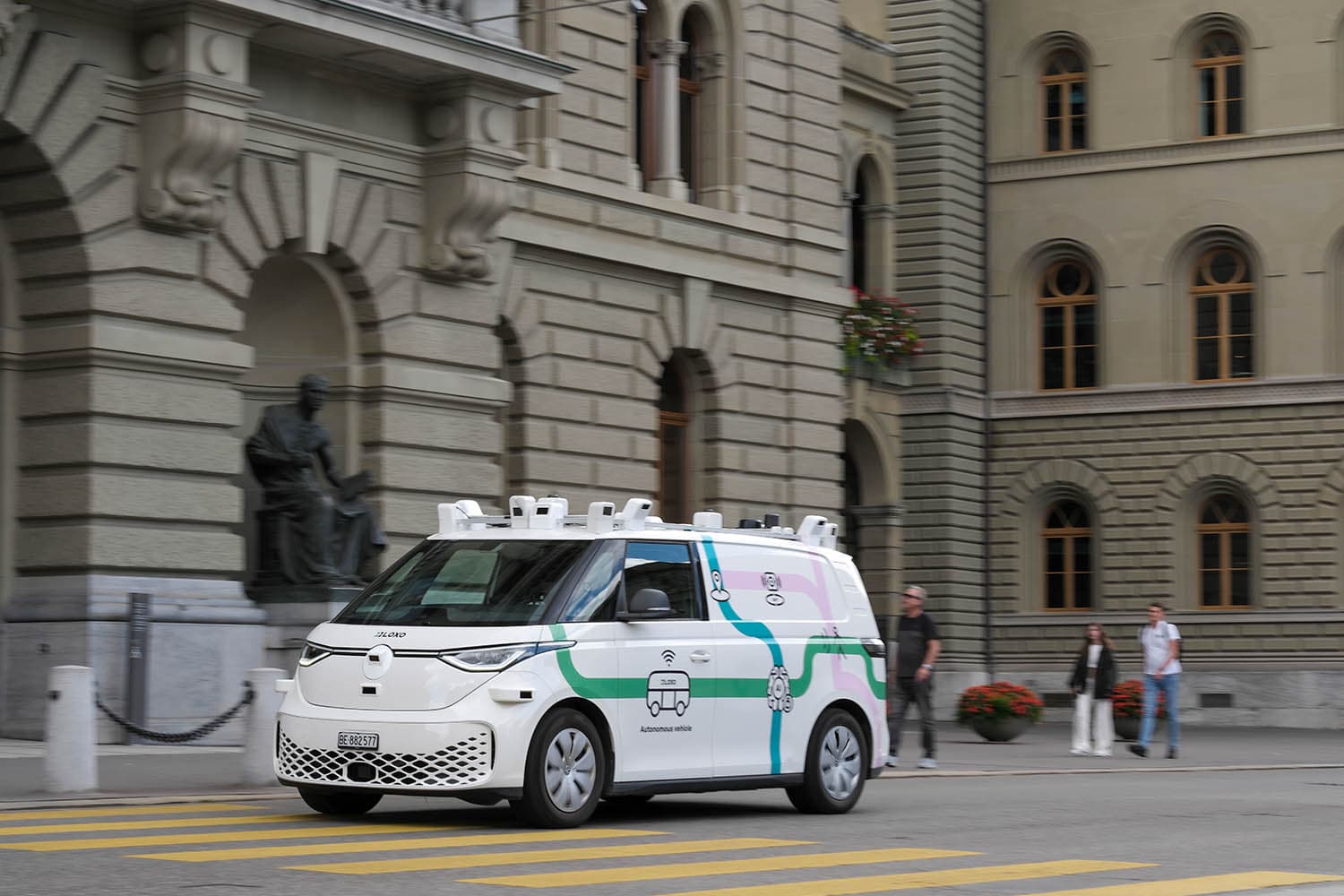
The potential applications of edge computing are vast. As industrial edge computers become more compact and powerful, they can be integrated into nearly any device. For example, autonomous vehicles require real-time processing down to the millisecond to ensure safety, and this capability will soon extend to delivery drones, trains, and trucks.
In manufacturing, edge computers enable the collection of more data on-site, improving products, processes, and supporting flexible, build-to-order production. In healthcare, edge computing can provide real-time insights for patient monitoring, surgery, and population health management. By processing data locally, edge computers make it possible to achieve faster, more accurate decision-making across a wide range of industries.
Edge computers are used across a wide range of industries where real-time data processing, low latency, and reliable on-site computing are critical. By processing data locally at the network edge, industrial edge computers enable faster decision-making, reduce dependence on cloud connectivity, and improve operational resilience.
Manufacturing and Industrial Automation
In manufacturing, industrial edge computers are widely used for machine monitoring, quality control, predictive maintenance, and process optimization. They collect and analyze sensor data directly on the factory floor, enabling real-time insights and automated responses without relying on cloud-based processing.
Transportation and Autonomous Systems
Edge computers play a key role in transportation, including rail systems, logistics, and autonomous vehicles. They process data from cameras, LiDAR, and sensors locally to support real-time navigation, safety systems, and traffic management. Rugged edge computers are also used in fleet management and smart transportation infrastructure.
Energy and Utilities
In the energy sector, edge computers are used for grid monitoring, substation automation, and renewable energy management. Industrial edge computers process data from distributed energy resources such as solar panels and wind turbines, enabling real-time control, fault detection, and improved grid stability.
Smart Cities and Infrastructure
Edge computers support smart city applications such as traffic control, public safety, environmental monitoring, and intelligent lighting systems. By processing data locally, edge computing devices reduce latency and bandwidth usage while improving reliability for critical urban infrastructure.
Agriculture and Smart Farming
In agriculture, edge computers are used for precision farming, crop monitoring, and automated irrigation systems. They process data from drones, sensors, and weather stations locally, enabling timely decisions that improve yields and resource efficiency.
Defense, Aerospace, and Security
Rugged edge computers are used in defense and aerospace for surveillance, mission planning, and real-time situational awareness. Their ability to operate in harsh environments makes them suitable for mobile, airborne, and remote deployments.
Before rolling out edge computers, it’s important to understand some of the practical challenges that organizations commonly face when building edge solutions. One key consideration is identifying the right components and infrastructure needed to support your specific use case, including compute, connectivity, and remote management tools.
Another challenge is implementing and scaling your edge deployment across multiple sites. A typical edge strategy involves defining the use case, determining data and application requirements, evaluating existing infrastructure, testing, and then scaling out.
Security is also a critical consideration. Because edge computers operate outside centralized data centers, it’s essential to implement layered security protocols that protect data from local threats and ensure encrypted communication between edge and central systems.
Finally, justifying the cost of edge computing requires a clear understanding of infrastructure, application, and management expenses, balanced against the operational value and ROI of processing data locally rather than in the cloud.