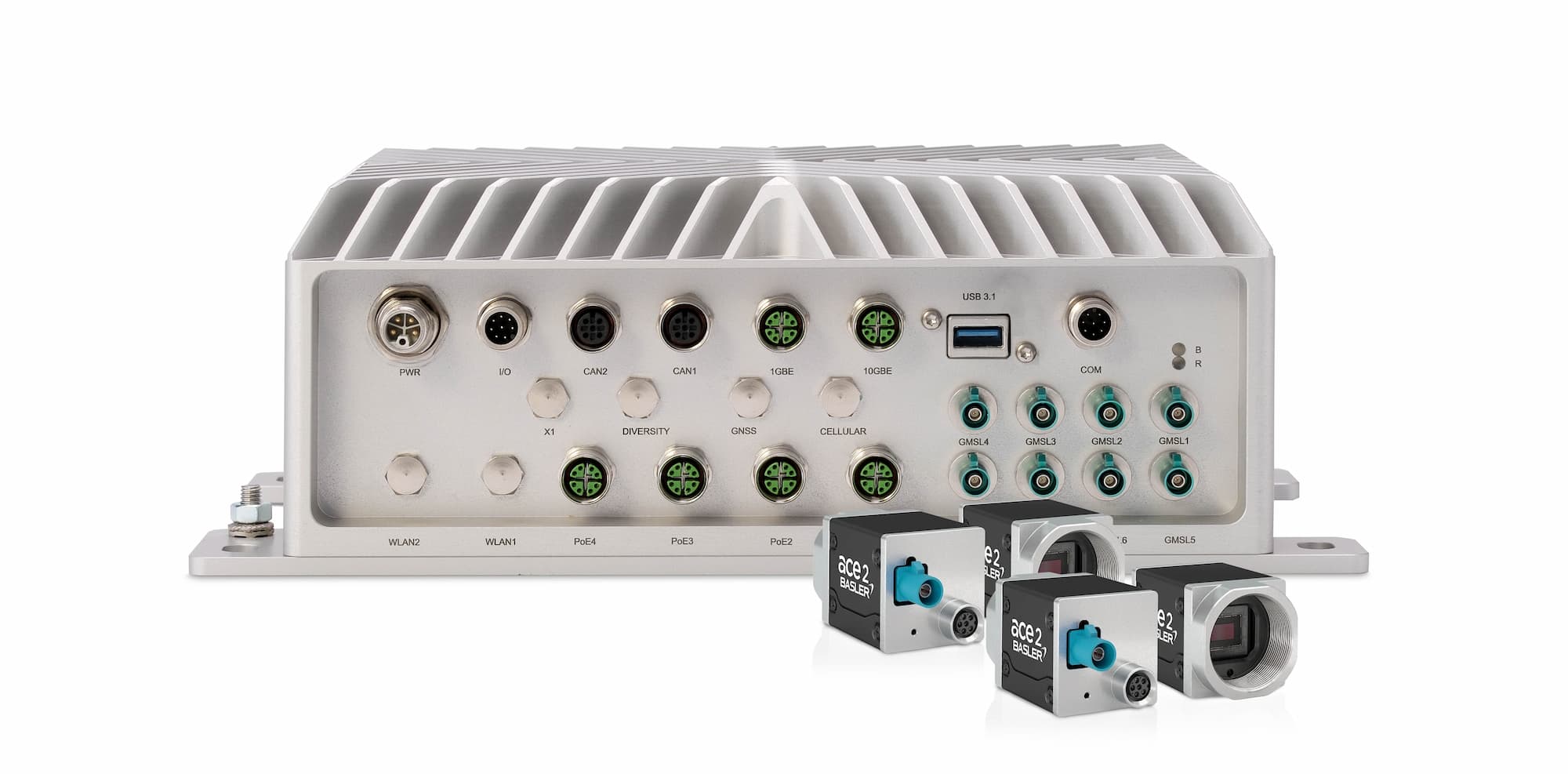
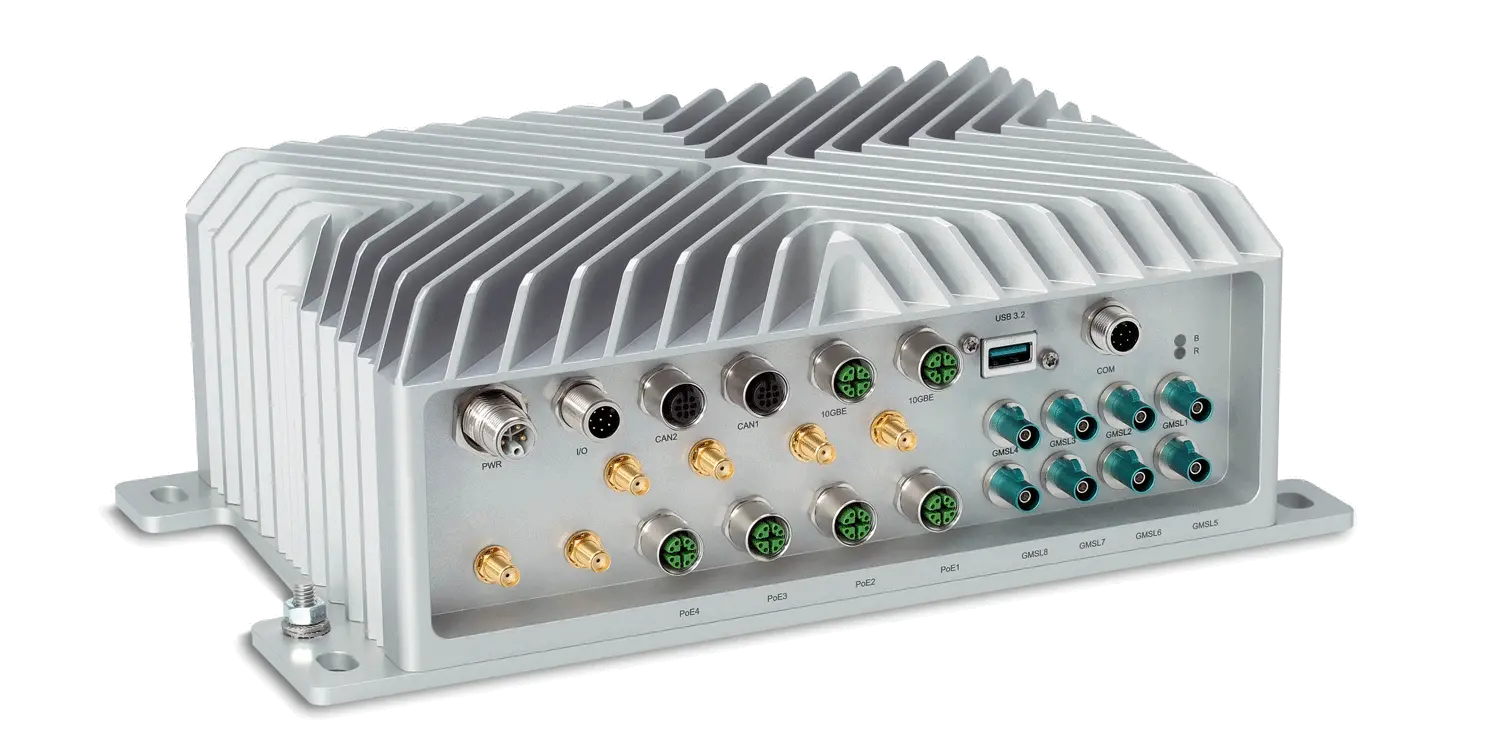
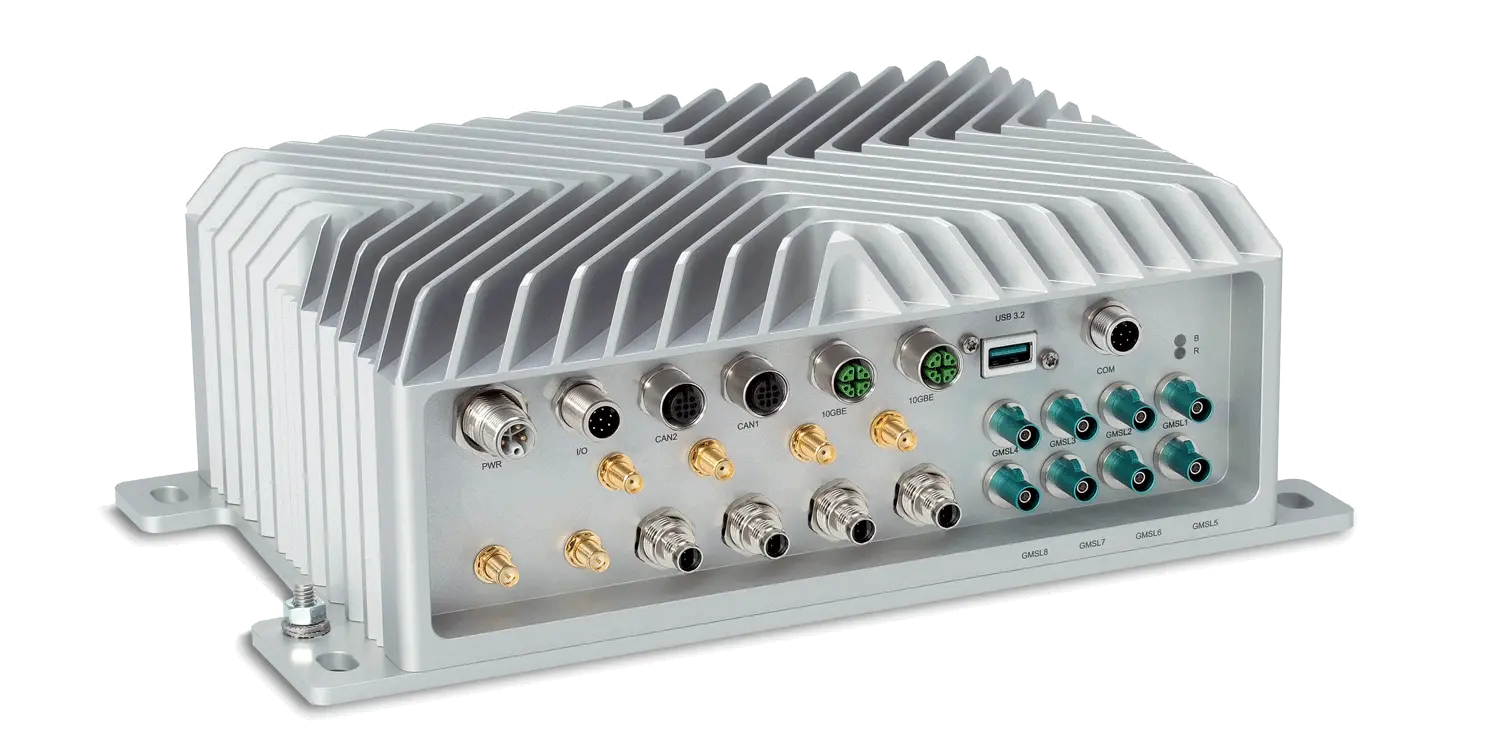
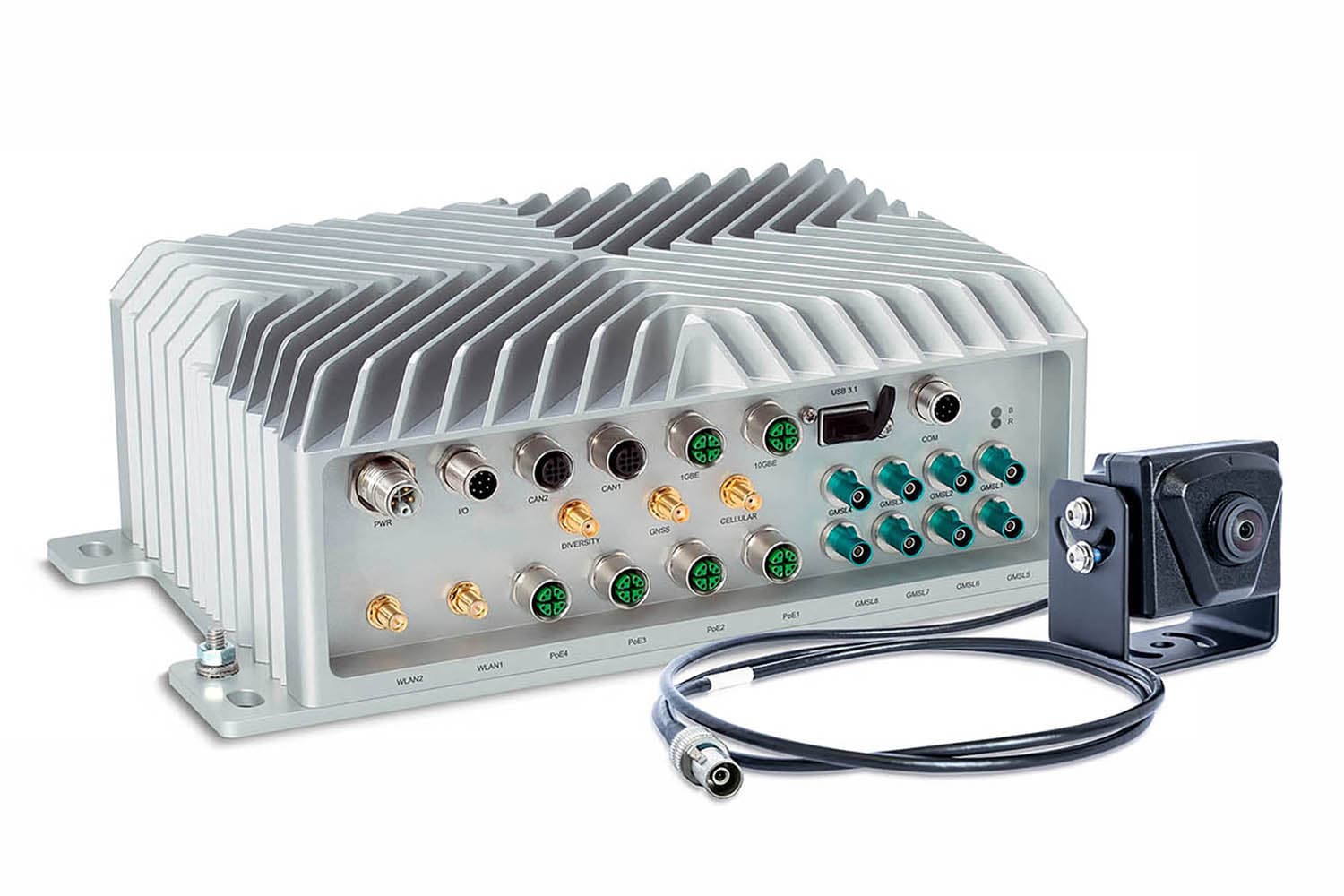
Basler and Syslogic unite machine vision and edge AI: Basler ace 2 GMSL cameras integrate seamlessly with Syslogic’s rugged computers, enabling high-performance vision for mobile robots, agricultural vehicles, and construction equipment.

Machine vision has become a key technology across industrial applications. Autonomous mobile robots, agricultural vehicles, construction equipment, and intelligent transportation systems capture and analyze their surroundings in real time. These applications require both high-performance cameras and rugged AI computing platforms. Against this backdrop, machine vision specialist Basler and embedded computing specialist Syslogic are combining their expertise.
Basler’s ace 2 GMSL cameras can now be seamlessly combined with Syslogic’s rugged computers, creating an optimized hardware platform for demanding vision AI applications.
The joint solution combines high-performance image processing with rugged embedded computing technology. Basler’s software ecosystem, including the pylon SDK and Camera Enablement Packages (CEP), simplifies the integration of machine vision cameras into industrial embedded systems. This gives developers a ready-to-use hardware foundation, allowing them to focus on their applications rather than spending time integrating cameras and computing platforms.
“Basler is one of the leading providers of machine vision cameras,” says Michael Jung, Product Manager at Syslogic. “Combining Basler’s ace 2 GMSL cameras with Syslogic rugged computers gives customers a fast and straightforward way to get started with demanding vision AI projects.”
Image data captured by the cameras is processed directly on Syslogic’s rugged computers. Integrated NVIDIA® Jetson™ modules handle AI inference, image analysis, and deep learning workloads directly at the edge. Because processing takes place locally, there is no need to transfer data to the cloud. This reduces latency and enables near-real-time decision-making.
In addition to supporting up to eight GMSL cameras, Syslogic computers can connect to other sensors, including LiDAR, radar, and GNSS systems. This enables powerful sensor fusion solutions for autonomous vehicles and mobile machinery.
Basler’s ace 2 GMSL cameras were developed specifically for embedded vision applications. The GMSL2 interface enables high-resolution image data to be transmitted over coaxial cables up to 15 meters long, while providing low latency and high immunity to interference. Multiple cameras can also be synchronized, enabling efficient implementation of 360-degree surround vision, spatial image processing, and AI-based object detection.
The combination of robust data transmission and straightforward integration makes GMSL2 an ideal technology for demanding industrial vision systems.
The joint hardware solution targets applications where reliability and performance are critical. These include autonomous mobile robots (AMRs), automated guided vehicles (AGVs), agricultural vehicles, construction equipment, and off-highway vehicles. While Basler cameras provide precise image data, Syslogic rugged computers deliver reliable AI processing even under extreme operating conditions. The embedded systems are designed to withstand shock, vibration, dust, moisture, and wide temperature ranges, meeting the requirements of demanding industrial applications.
“With the ace 2 GMSL cameras, we offer a powerful camera platform for modern embedded vision applications,” says Dr. Melanie Gräsel, Product Manager at Basler. “Combined with Syslogic’s rugged computers, the platform can also be deployed in demanding environmental conditions.”
The joint Basler and Syslogic solution is available now for evaluation and integration projects.
GMSL (Gigabit Multimedia Serial Link) is a high-speed interface for transmitting video, sensor, and control data. The SerDes (serializer/deserializer) technology developed by Analog Devices was originally designed for automotive applications and is increasingly being used for Intelligent Vision, autonomous machines, mobile robotics, agriculture, and off-highway vehicles.
One of the key advantages of GMSL is its combination of high bandwidth and low latency. GMSL2 supports data rates of up to 6 Gbps, while GMSL3 supports up to 12 Gbps. This makes it possible to transmit high-resolution camera data at high frame rates to an edge AI computer. This is particularly important for applications that need to process multiple camera streams in real time and combine them with data from radar, LiDAR, or other sensors.
For Intelligent Vision applications, this means cameras can deliver large volumes of image data with minimal latency to powerful edge AI platforms such as NVIDIA Jetson. AI models can then use this data for tasks such as object detection, navigation, obstacle detection, and environmental perception.
GMSL cameras are particularly well suited for mobile and rugged applications where high data rates, low latency, and reliable connectivity are essential. Compared with typical USB cameras, GMSL also enables significantly longer distances between the camera and the computer. Depending on the system and cable configuration, cable lengths of up to 15 meters (about 49 feet) are possible.
Another advantage is Power over Coax (PoC), which allows camera data and power to be transmitted over the same coaxial cable. The connection can also carry control, synchronization, and status information. This reduces the number of cables and connectors—a significant benefit in vehicles and mobile machines, where less wiring means lower weight, reduced space requirements, and fewer potential points of failure.
Compared with Ethernet-based cameras, GMSL is especially attractive when deterministic, low-latency video transmission and a compact system architecture are required. Ethernet, on the other hand, offers advantages for standardized network infrastructures and very long transmission distances. The best technology therefore depends on the application, number of cameras, required bandwidth, latency requirements, and overall system architecture.
Integrating a GMSL camera is more complex than connecting a conventional USB camera. The camera, serializer, deserializer, and host processor need to work together as a complete system. On the computer side, the video stream can be passed to the processor through an interface such as MIPI CSI-2.
Multi-camera systems introduce additional considerations, including correct I²C addressing, the configuration of virtual channels, CSI lanes and bandwidth, and synchronization across multiple cameras. On Linux-based embedded systems, proper Device Tree configuration is also an important part of the integration process.
For Intelligent Vision systems with multiple cameras, using a validated combination of camera, GMSL interface, driver, and edge AI computer can significantly simplify development. Syslogic works with various camera manufacturers and provides preconfigured or validated combinations of GMSL cameras and NVIDIA Jetson-based rugged computers. This can reduce integration effort and accelerate time to market.
Intelligent Vision systems used in construction equipment, agricultural machinery, AMRs, AGVs, and other autonomous vehicles need to process large volumes of sensor data reliably and in real time. At the same time, their electronics are often exposed to vibration, shock, dust, moisture, and wide temperature ranges.
Combining GMSL cameras with a rugged computer addresses both challenges. GMSL provides high-speed, low-latency transmission of high-resolution camera data, while the rugged computer processes that data directly at the edge. Systems based on NVIDIA Jetson Orin can run GPU-accelerated computer vision and AI models locally, without first sending large amounts of data to the cloud.
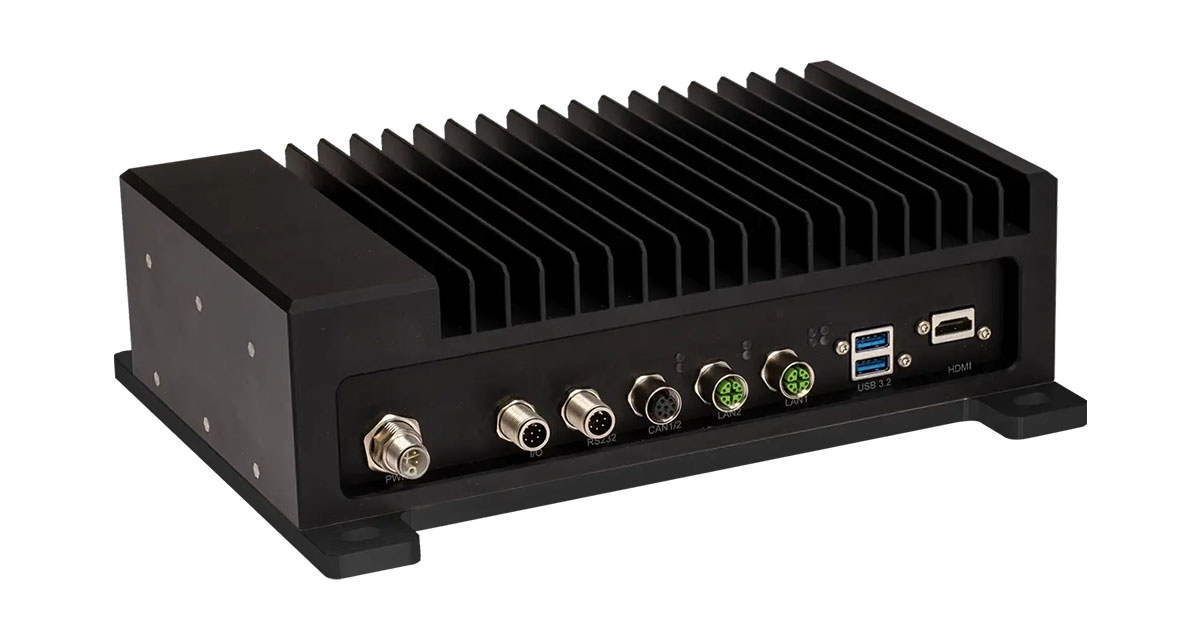
Syslogic, for example, offers fanless rugged computers with four or eight GMSL2 camera inputs. Depending on the system, multiple high-resolution mono or stereo cameras can be connected directly. Rugged enclosures, locking connectors, and IP67 protection on selected systems make these computers suitable for demanding mobile environments.
Together, GMSL cameras, powerful edge AI processors, and rugged computers provide a robust platform for Intelligent Vision and sensor fusion – from autonomous navigation and object detection to advanced environmental perception.