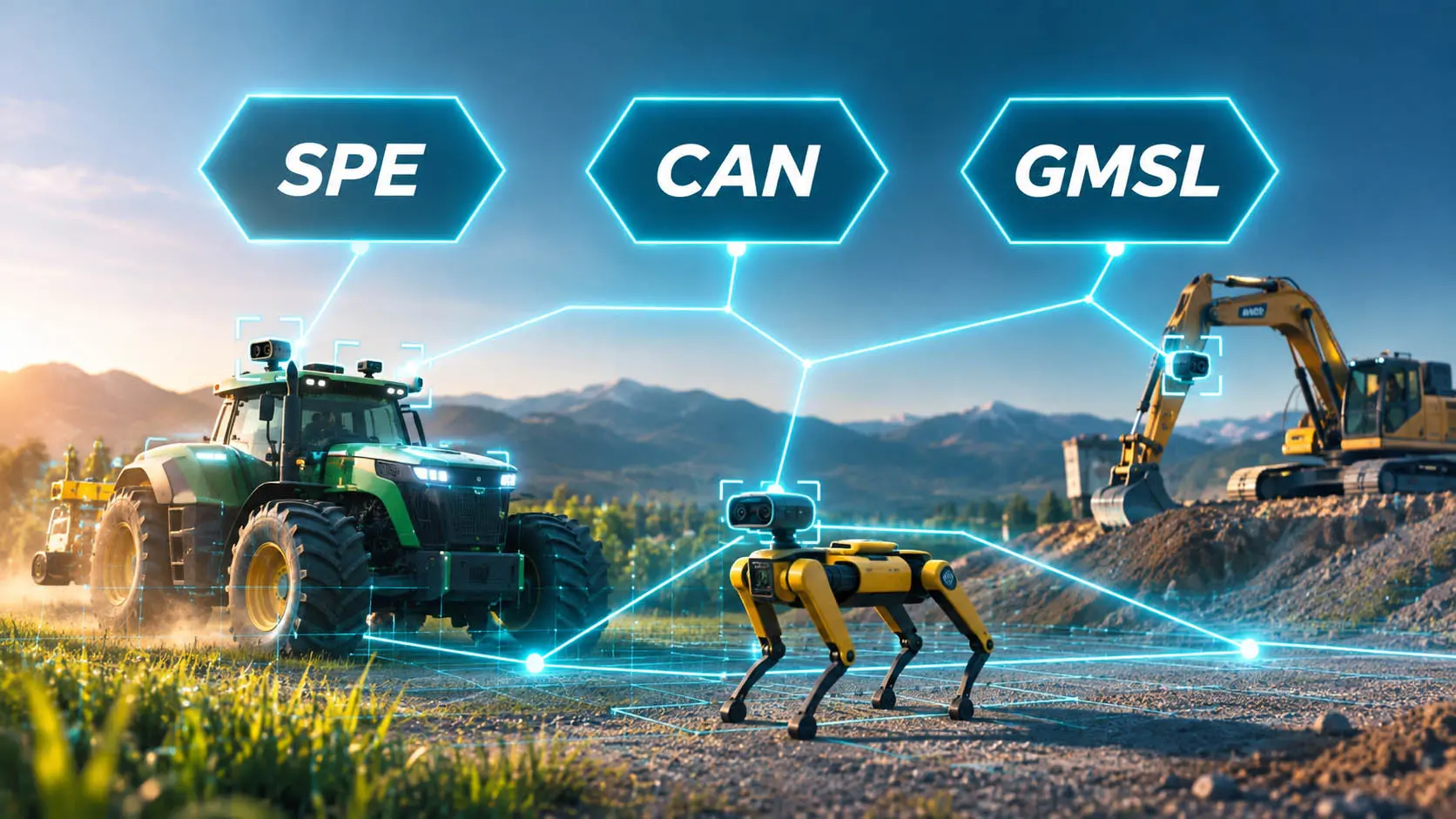
Modern vehicles and machines process large amounts of data. Different technologies are available for communication between sensors, control units and embedded computers. But what are SPE, CAN and GMSL best suited for?
Whether autonomous agricultural machinery, industrial robots or automated guided vehicles – modern machines are equipped with numerous sensors, cameras and control units. They need to exchange data reliably, sometimes in real time. However, not every interface is suitable for every task. Key factors include data rate, transmission timing requirements and the types of devices connected.
CAN: Proven Technology for Control Applications
The Controller Area Network (CAN) bus has been widely used in vehicles and mobile machinery for decades. It enables reliable communication between control units, sensors and actuators. Typical applications include engine control, monitoring operating conditions and controlling hydraulic components.
One of CAN's main advantages is its robustness. Multiple devices share a common bus. A mechanism known as bus arbitration determines which message takes priority when several devices attempt to transmit simultaneously. This allows high-priority messages to be transmitted first.
Classical CAN supports data rates of up to 1 Mbit/s. CAN FD enables higher transmission rates during the data phase and larger data payloads. This is sufficient for many control applications. However, CAN reaches its limits when transmitting high-resolution camera images or large volumes of sensor data.
SPE: Ethernet for Sensors and Control Units
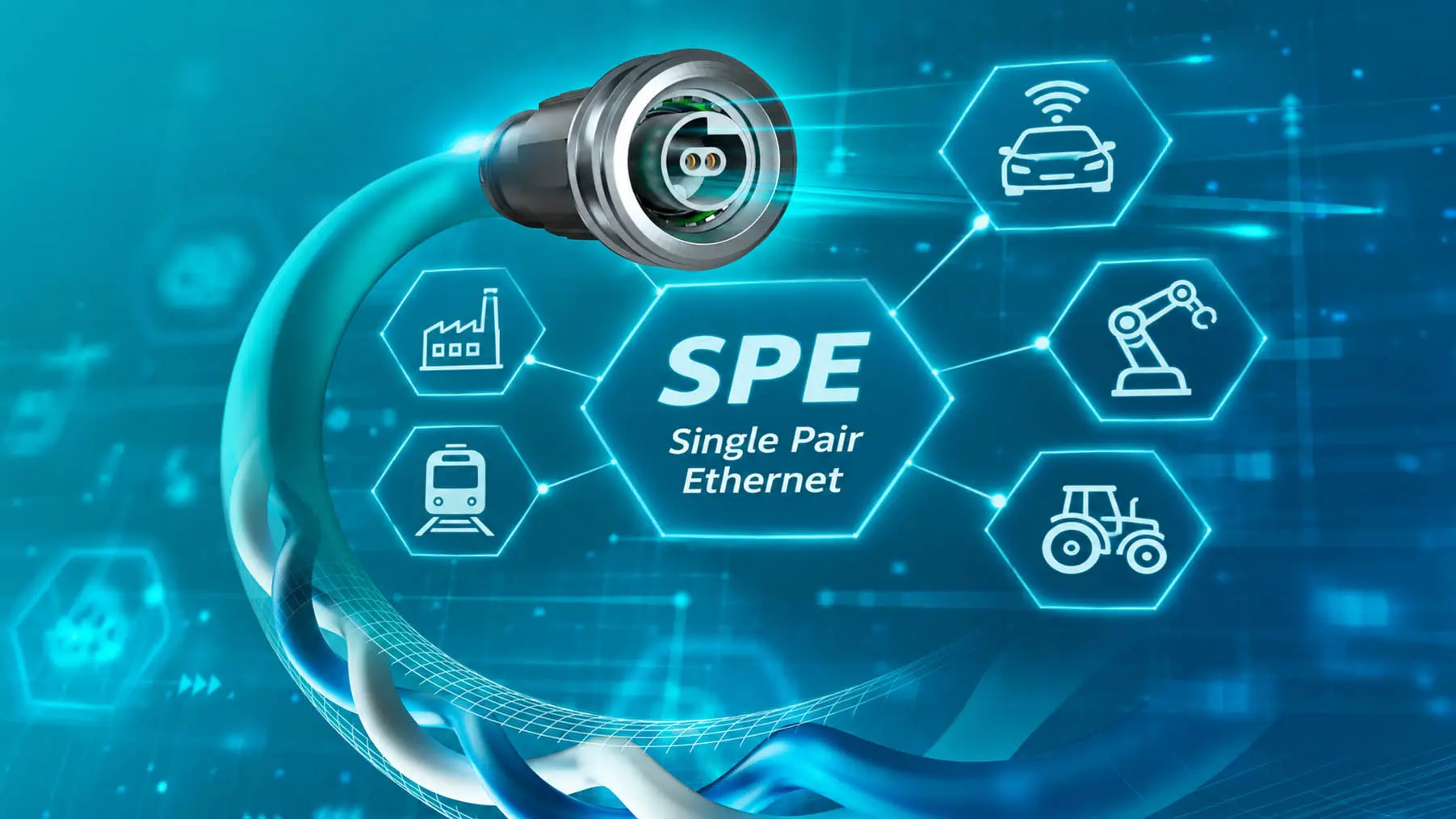
Single Pair Ethernet (SPE) enables Ethernet communication over a single twisted pair of wires. Depending on the standard, data rates range from 10 Mbit/s to 10 Gbit/s. This makes SPE suitable for both simple sensors and data-intensive applications.
Compared with CAN, SPE primarily offers higher bandwidth and the ability to connect devices using standardized Ethernet protocols. Developers can use existing software libraries, network protocols and development tools.
Cabling is another advantage. With 10BASE-T1S, multiple devices can share a common cable. Other SPE variants use point-to-point connections. Power over Data Line (PoDL) also allows compatible devices to receive electrical power through the data cable.
However, SPE is not automatically the better choice. For simple, cost-sensitive control applications involving small amounts of data, CAN often remains more economical while providing sufficient performance.
GMSL: A Specialist for Camera Data
Gigabit Multimedia Serial Link (GMSL) takes a different approach. The technology was developed primarily for transmitting high-resolution camera and video data.
GMSL enables high data rates with low latency. Cameras are connected to a central computing system using suitable serializers and deserializers. Depending on the implementation, the connection can also transmit control information and supply power to the cameras alongside image data.
This makes GMSL particularly attractive for autonomous vehicles, robotics and Edge AI applications. These often require several high-resolution cameras to transmit large amounts of data simultaneously to a powerful computer.
Unlike SPE, however, GMSL is not a general-purpose Ethernet networking technology. It is primarily suited to specialized point-to-point connections, particularly between cameras and image processing systems.
SPE
CAN
GMSL
Main Application
Networking sensors, control units and computers
Control and status data
Camera and video data
Data Rate
10 Mbit/s to 10 Gbit/s
Classic CAN: up to 1 Mbit/s
CAN FD: typically up to 5–8 Mbit/s
GMSL2: up to 6 Gbit/s
GMSL3: up to 12 Gbit/s
Cable Length
15 to 1000 m, depending on the standard
Typically 40 m at 1 Mbit/s; longer distances at lower data rates
Typically 5–15 m, depending on cable and data rate
Topology
Point-to-point; multidrop with 10BASE-T1S
Multi-node bus
Primarily point-to-point
Real-Time Capability
With suitable hardware and TSN
Priority-based, predictable transmission
Low latency, particularly for video data
Power over Data Cable
Possible via PoDL
Not supported as standard
Possible, e.g. Power over Coax
Typical Applications
Vehicles, robotics, industrial automation, mobile machinery
Vehicles, machine control, hydraulics, actuators
ADAS, autonomous vehicles, robotics, Edge AI
Key Strength
Flexible Ethernet networking with compact cabling
Robust and cost-effective control communication
High bandwidth and low latency for camera data
How Do the Technologies Compare in Real-Time Performance?
In time-critical applications, data rate is not the only consideration. It is equally important that information arrives within defined time limits.
CAN offers predictable communication characteristics thanks to its priority-based bus arbitration. However, bus load and potential waiting times must be considered during system design.
SPE can take advantage of mechanisms from the Ethernet ecosystem. The Precision Time Protocol (PTP) enables precise time synchronization. Time-Sensitive Networking (TSN) extends Ethernet with functions for scheduled and predictable data transmission. This requires the network components involved to support these functions.
GMSL is designed to transmit large amounts of data with low latency. This is particularly relevant for processing camera images.
It is therefore not possible to make a general statement about which technology offers the best real-time performance. The decisive factors are the specific application and the overall system architecture.
SPE, CAN and GMSL in a Single Machine
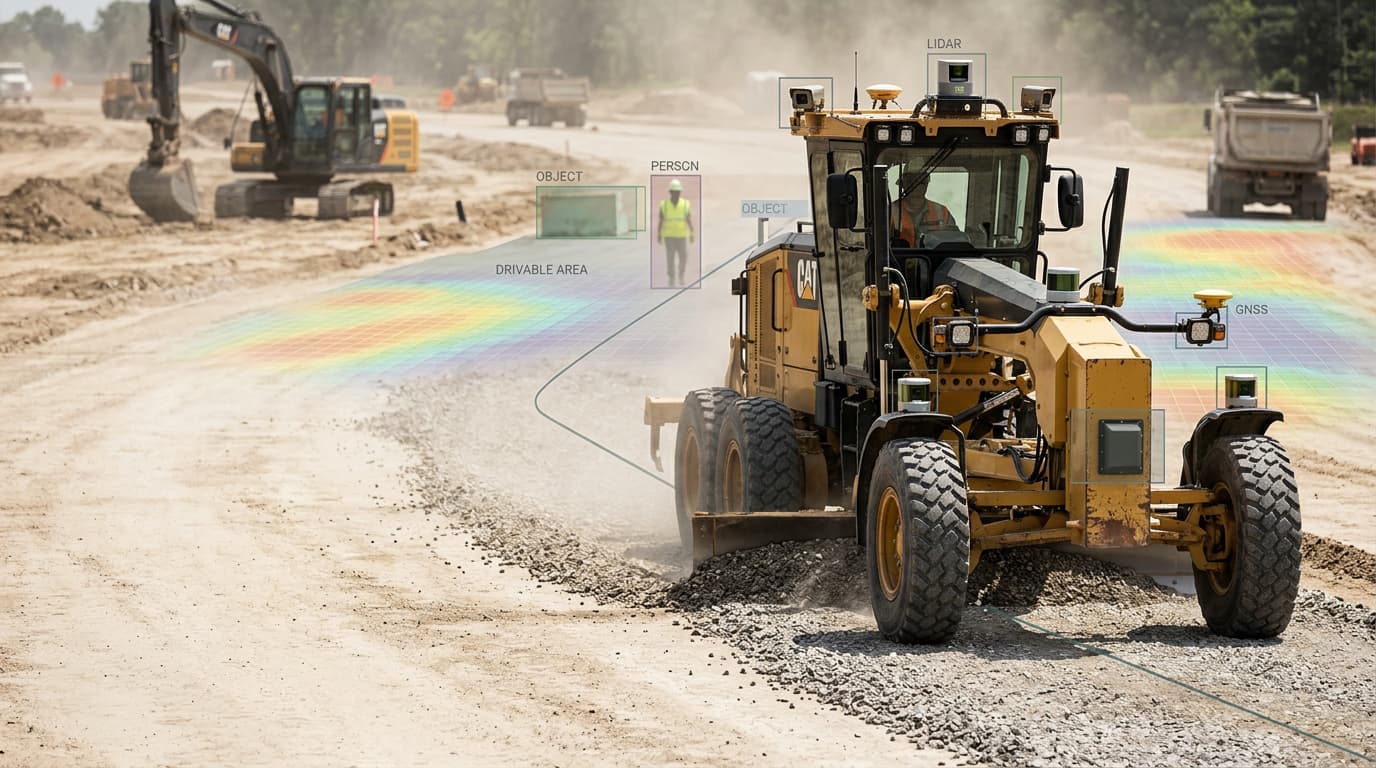
The three technologies are not mutually exclusive. Instead, their respective strengths can be combined. An autonomous agricultural machine provides a good example. Several cameras capture the surroundings and transmit their image data via GMSL to a central Edge AI computer. The images are processed to identify plants, obstacles or people, for example.
Additional sensors and control units are connected via SPE. This technology enables the exchange of larger amounts of data and integration into a common Ethernet network. CAN continues to handle conventional control tasks, such as communication with engine control units or hydraulic components. Suitable gateways allow CAN and Ethernet-based networks to be connected.
High-performance networking is also becoming increasingly important in agriculture. High-Speed ISOBUS (HSI) is being developed to enable faster communication between tractors and implements. In the future, this is expected to support data-intensive applications such as camera-based plant recognition.
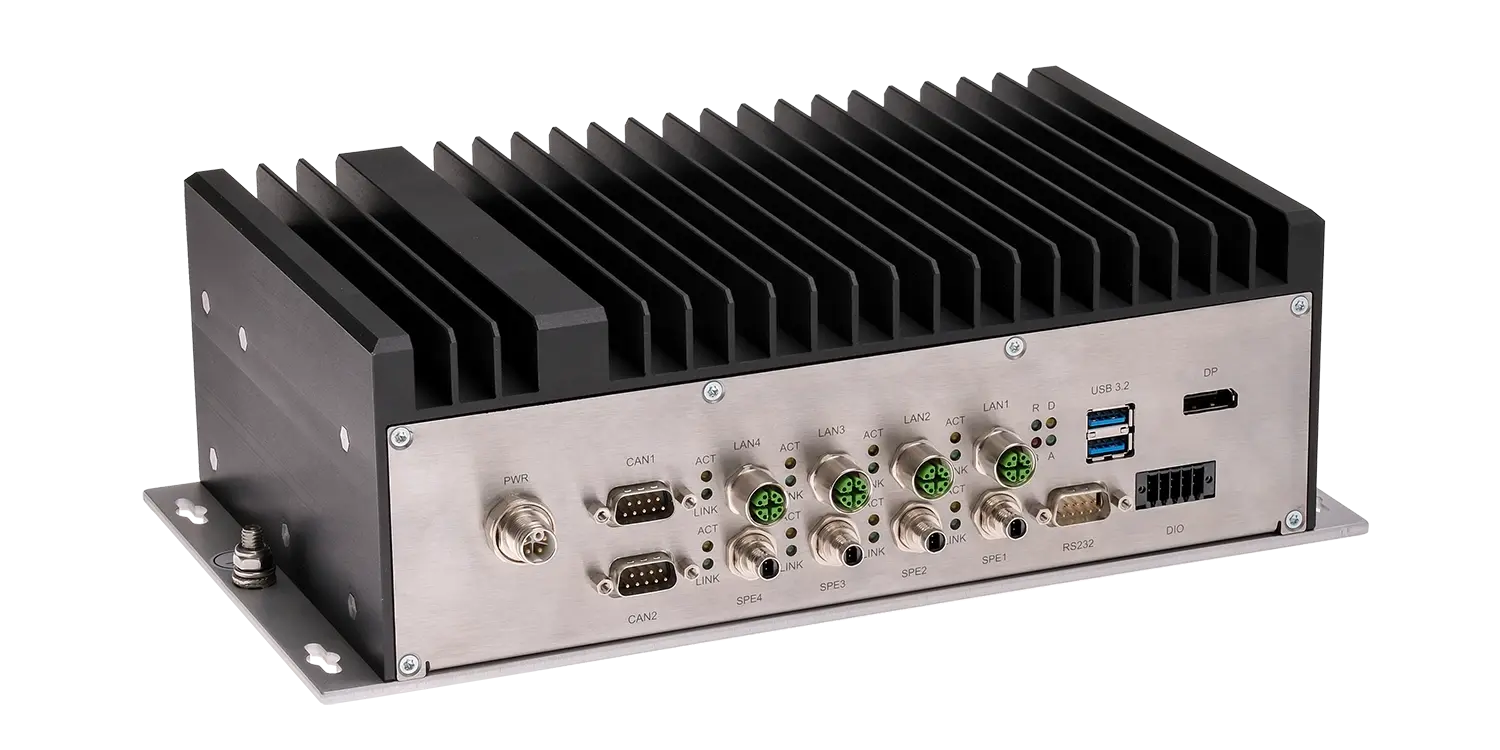
Syslogic Embedded Computer – with CAN, GMSL and SPE
How Do the Technologies Compare in Real-Time Performance?
In time-critical applications, data rate is not the only consideration. It is equally important that information arrives within defined time limits.
CAN offers predictable communication characteristics thanks to its priority-based bus arbitration. However, bus load and potential waiting times must be considered during system design.
SPE can take advantage of mechanisms from the Ethernet ecosystem. The Precision Time Protocol (PTP) enables precise time synchronization. Time-Sensitive Networking (TSN) extends Ethernet with functions for scheduled and predictable data transmission. This requires the network components involved to support these functions.
GMSL is designed to transmit large amounts of data with low latency. This is particularly relevant for processing camera images.
It is therefore not possible to make a general statement about which technology offers the best real-time performance. The decisive factors are the specific application and the overall system architecture.
SPE, CAN and GMSL in a Single Machine
The three technologies are not mutually exclusive. Instead, their respective strengths can be combined.
An autonomous agricultural machine provides a good example. Several cameras capture the surroundings and transmit their image data via GMSL to a central Edge AI computer. The images are processed to identify plants, obstacles or people, for example.
Additional sensors and control units are connected via SPE. This technology enables the exchange of larger amounts of data and integration into a common Ethernet network.
CAN continues to handle conventional control tasks, such as communication with engine control units or hydraulic components. Suitable gateways allow CAN and Ethernet-based networks to be connected.
High-performance networking is also becoming increasingly important in agriculture. High-Speed ISOBUS (HSI) is being developed to enable faster communication between tractors and implements. In the future, this is expected to support data-intensive applications such as camera-based plant recognition.
Embedded Computers Connect the Technologies
In modern machines, data from different interfaces often converges in a central embedded computer. This computer processes camera images, evaluates sensor data and communicates with control units.
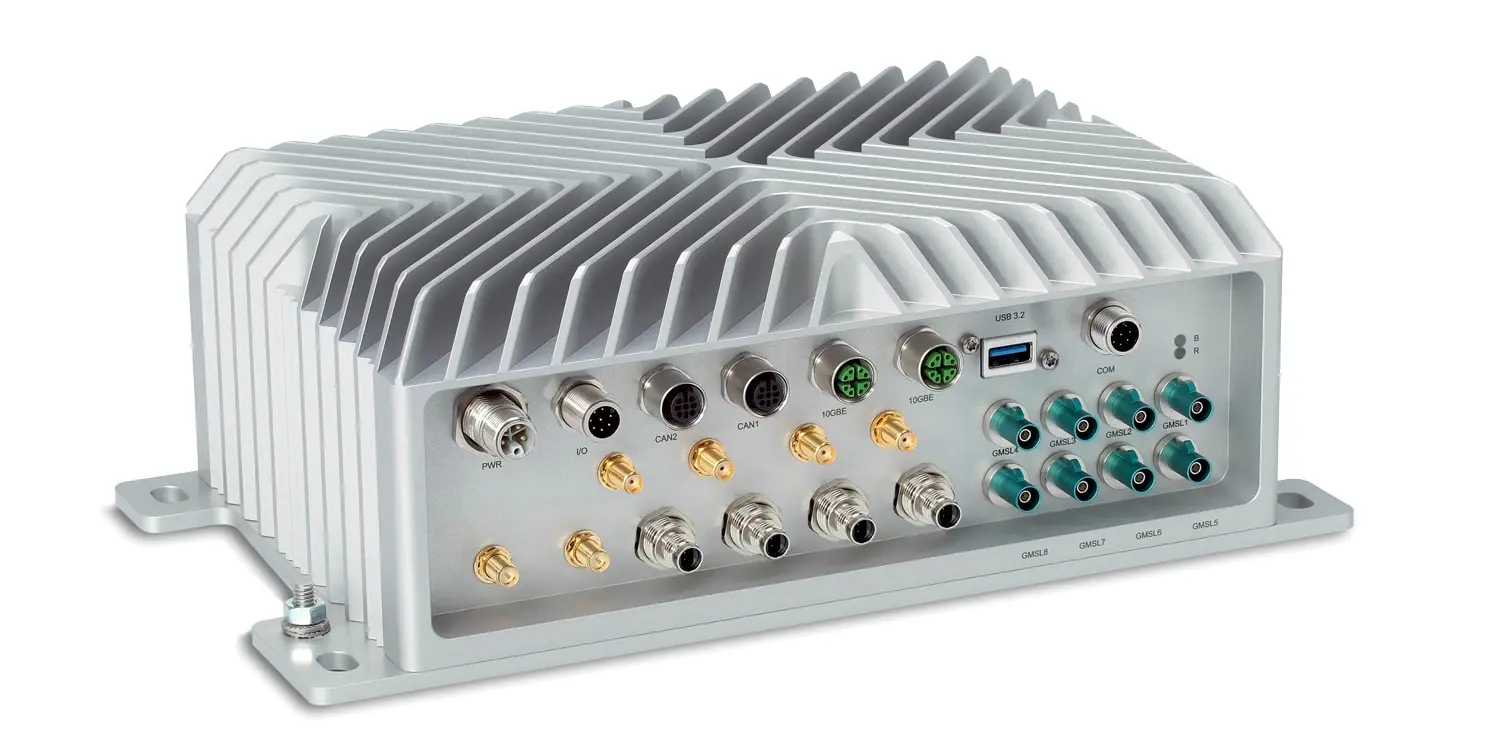
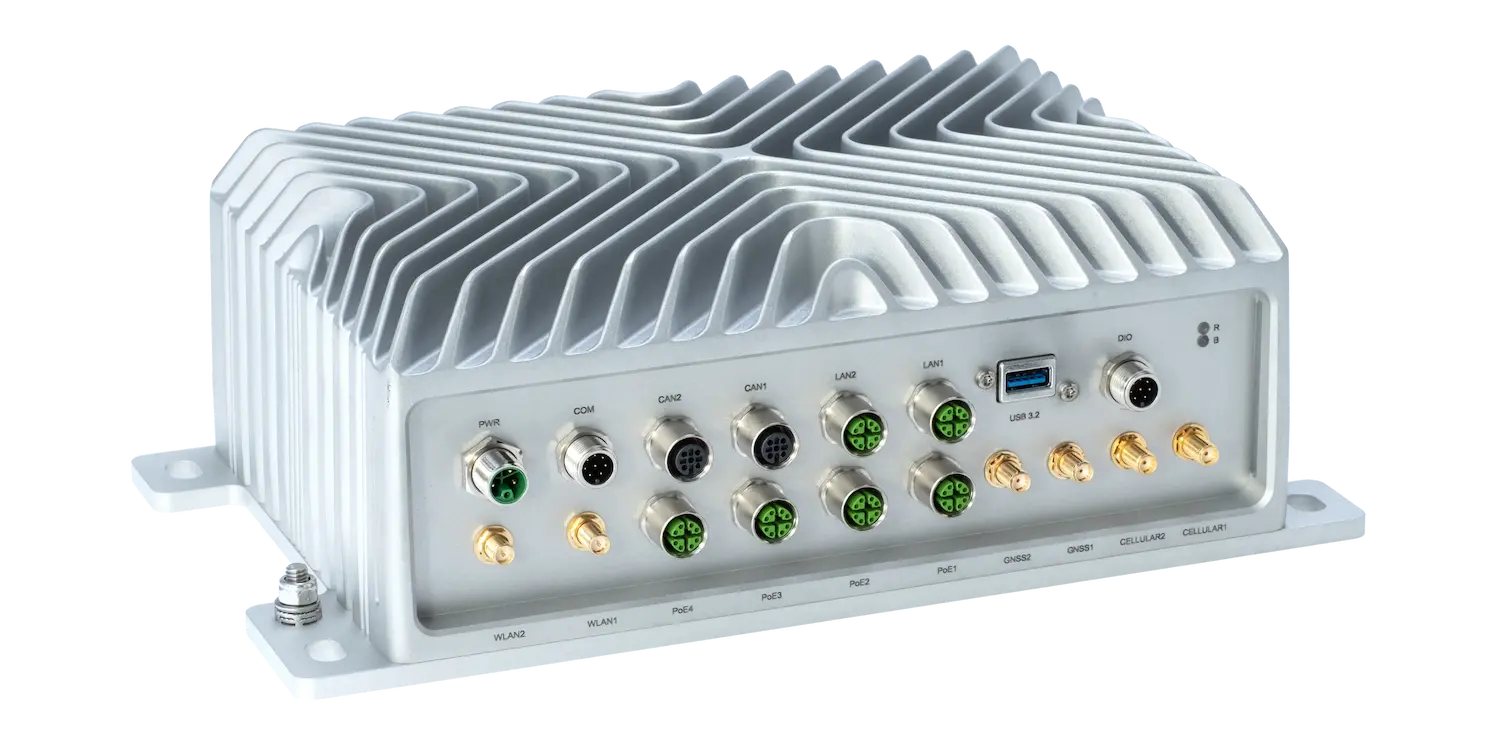
Syslogic develops rugged embedded computers that combine different interface technologies. For example, the AI Rugged Computer RPC RML A5AGX (SPE), based on the NVIDIA Jetson AGX Thor, features four SPE interfaces and eight GMSL2 camera interfaces.
This allows cameras and other sensors to be connected directly to a powerful Edge AI system. Integration into existing CAN networks is possible using suitable additional interfaces or gateways.
Conclusion: The Right Combination Makes the Difference
CAN, SPE and GMSL each have their own strengths. CAN is a proven solution for robust control applications involving moderate amounts of data. SPE enables flexible Ethernet networking between sensors, control units and embedded computers. GMSL is particularly well suited to transmitting high-resolution camera data.
Modern vehicles, robots and mobile machinery therefore often use several technologies in parallel. The key is not to choose a single interface, but to combine them effectively.
By clicking “Accept”, you agree to the storing of cookies on your device to enhance site navigation, analyze site usage, and assist in our marketing efforts. View our Privacy Policy for more information.