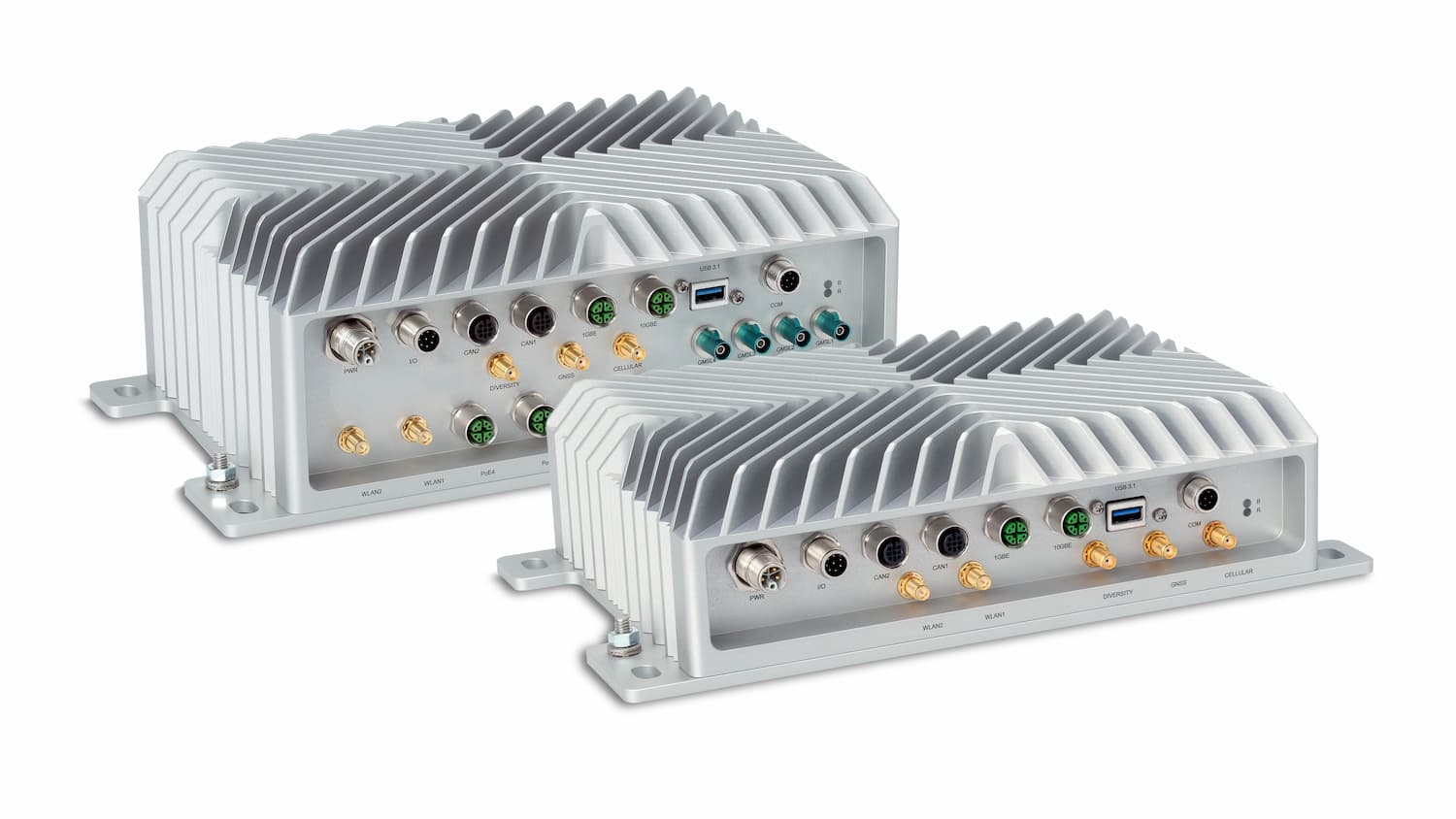
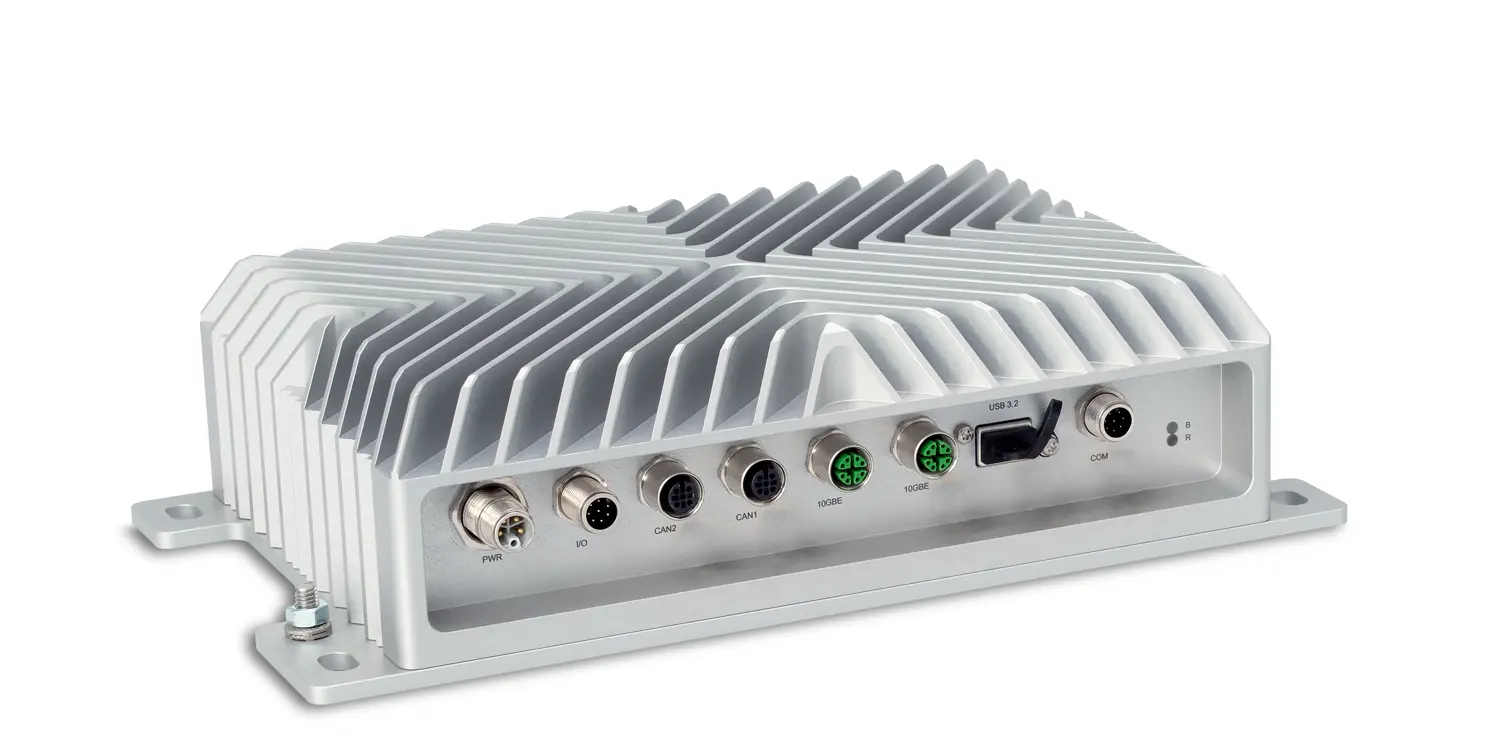
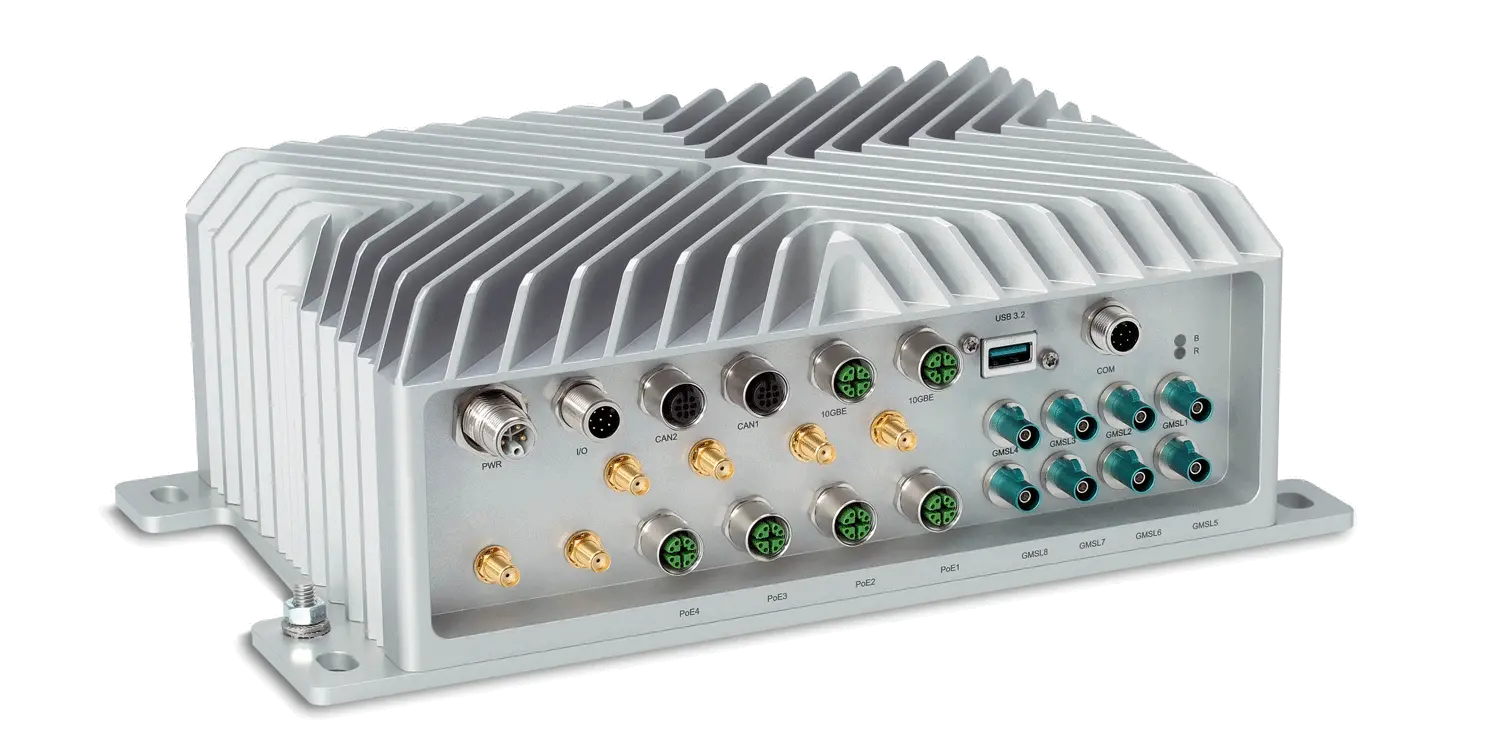
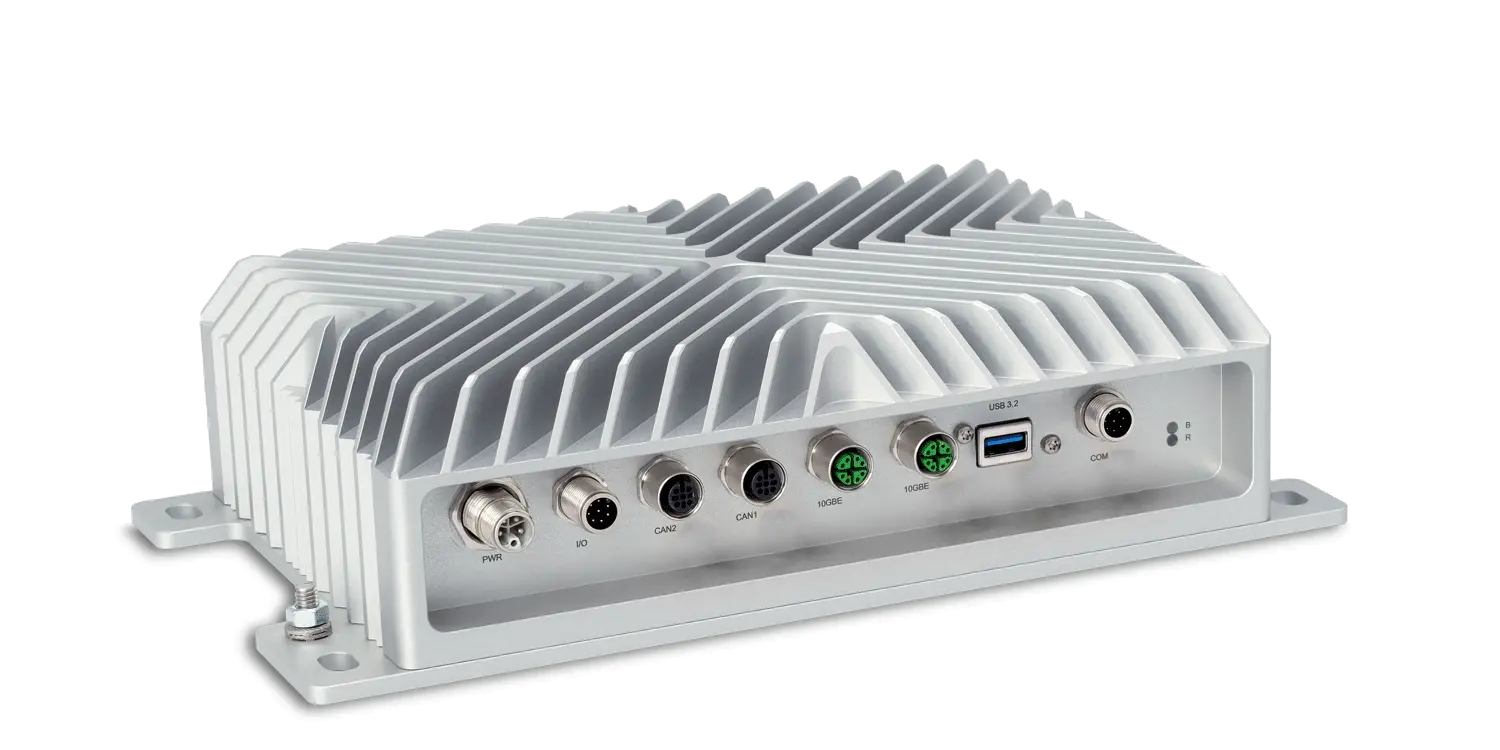
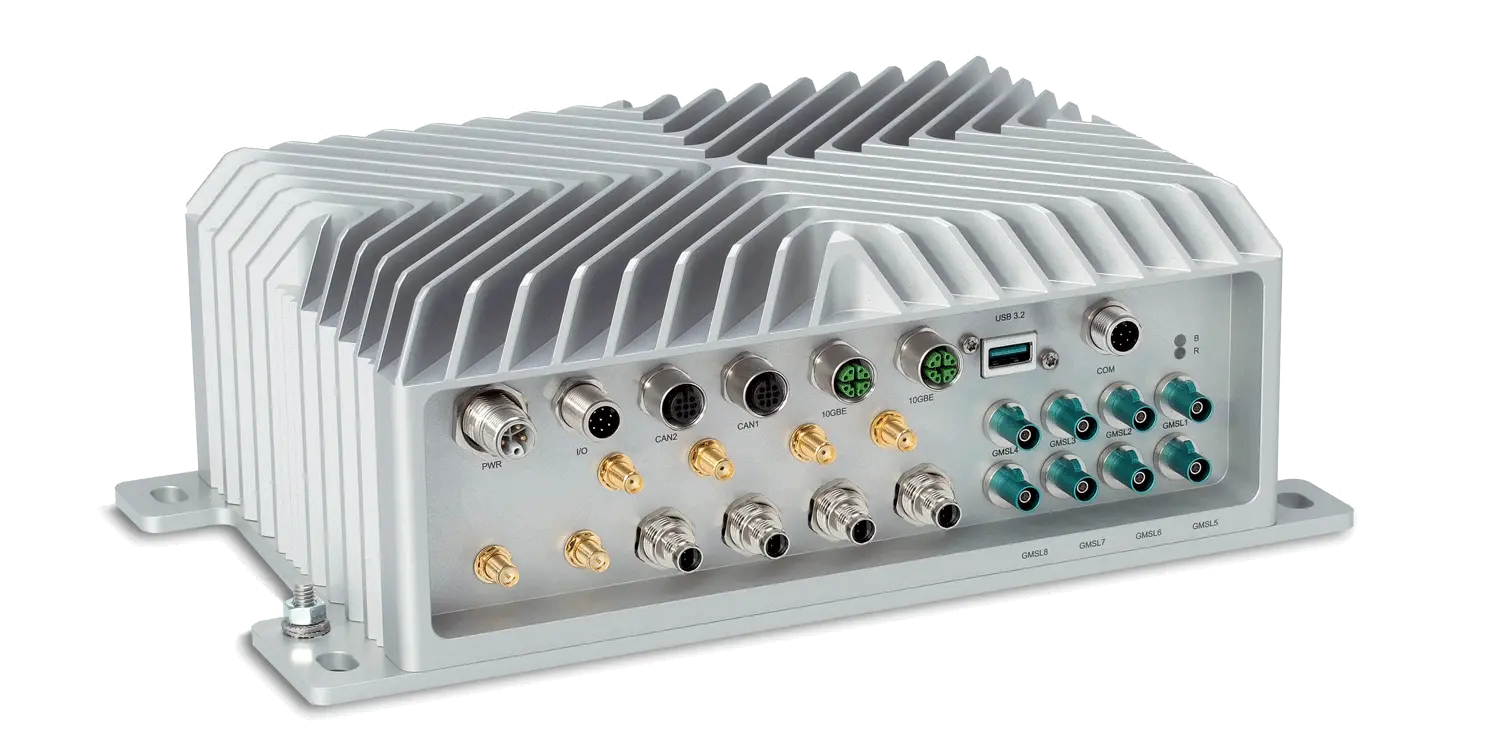
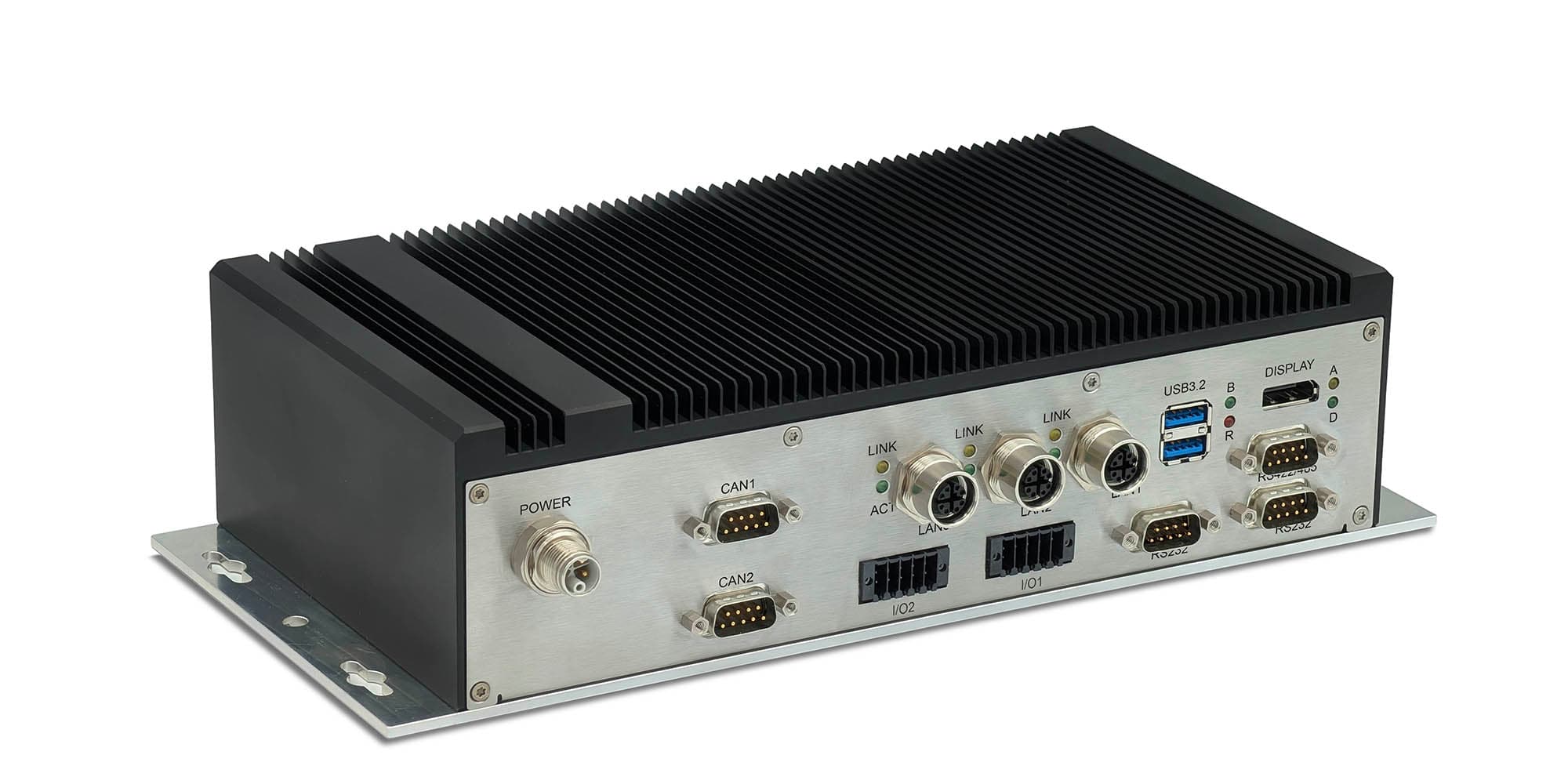
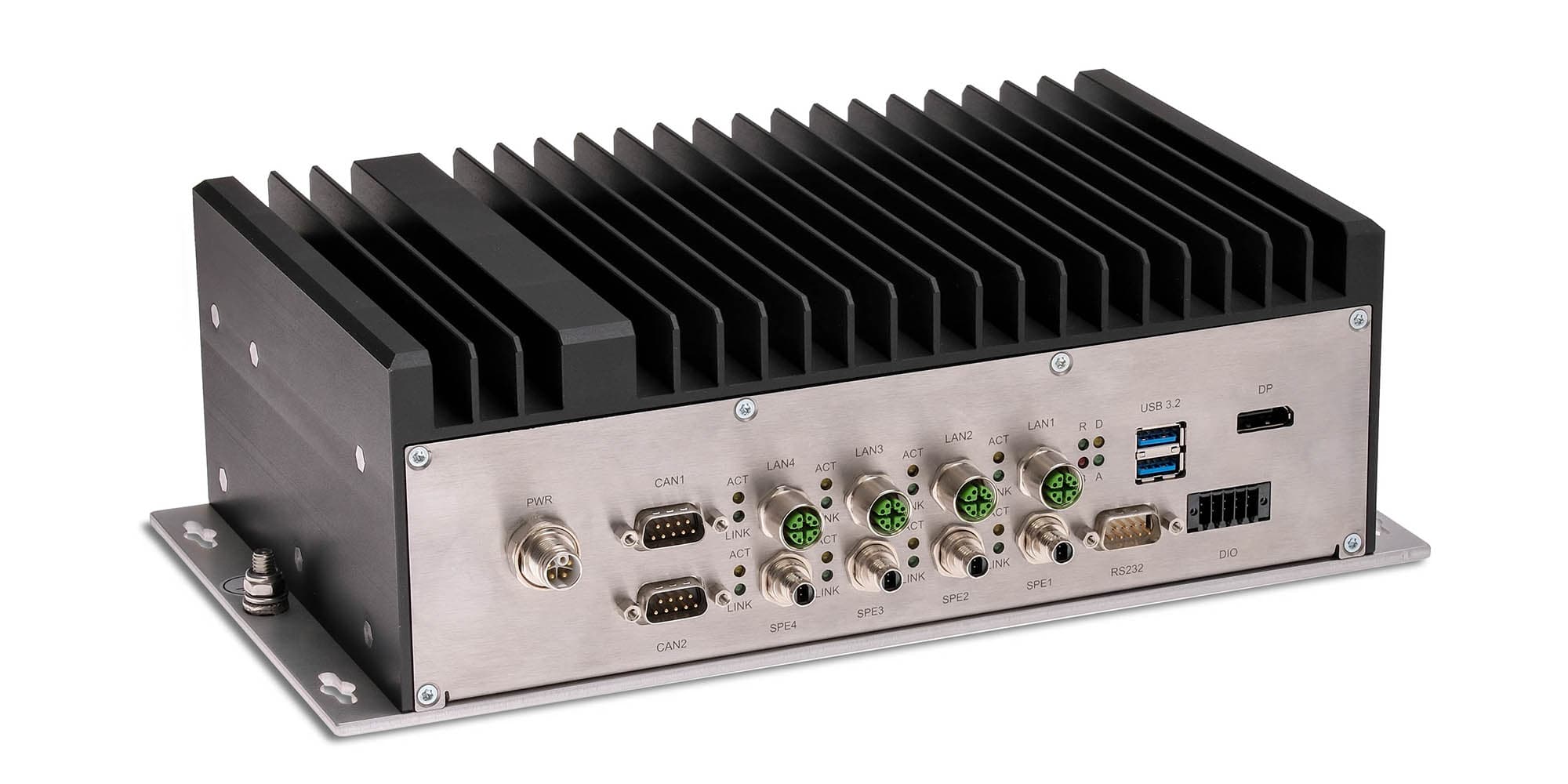
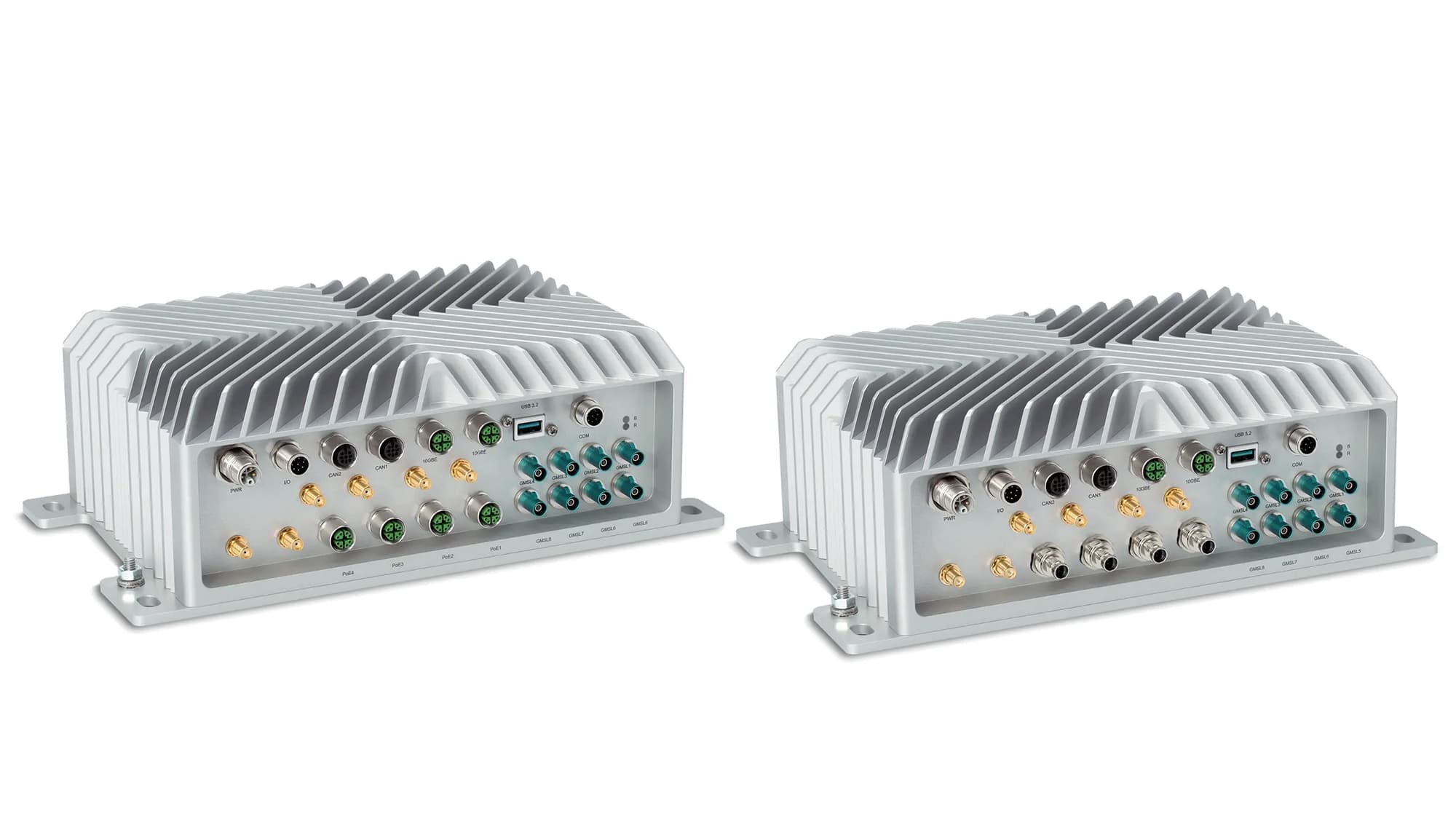
Syslogic rugged computers with NVIDIA Jetson Thor deliver next-level edge AI performance for real-time inference, sensor fusion, cameras, and LiDAR applications in autonomous machines and robotics.

The NVIDIA Jetson Thor modules deliver AI computing performance of up to 2,070 FP4 TFLOPS — 7.5 times the performance of the NVIDIA AGX Orin. At the same time, they achieve 3.5 times greater energy efficiency. Power consumption can be flexibly configured between 40 and 130 watts.
With these capabilities, the NVIDIA Jetson Thor series sets a new benchmark for high-performance edge computing. Jetson Thor processes data from multiple high-resolution sensors within milliseconds. Typical applications include real-time AI reasoning, autonomous navigation, and multimodal AI agents for humanoid robots, autonomous transport vehicles, and AMRs (Autonomous Mobile Robots). Image processing, sensor fusion from LiDAR, radar, and camera data, as well as decision-making, are performed with near-zero latency.
Michael Jung, Product Manager at Syslogic, explains: “Jetson AGX Thor enables complex autonomous reasoning and generative AI. What previously required a data center can now be brought directly into mobile vehicles and robots.»
Syslogic ensures that NVIDIA technology can be deployed reliably even under harsh conditions. The embedded systems handle inferencing and intelligent vision tasks wherever robustness and high reliability are required.
Jetson modules have already served as the foundation for Syslogic’s rugged AI computers, which are used worldwide in agricultural technology, construction machinery, mining, AMRs, and railway applications.
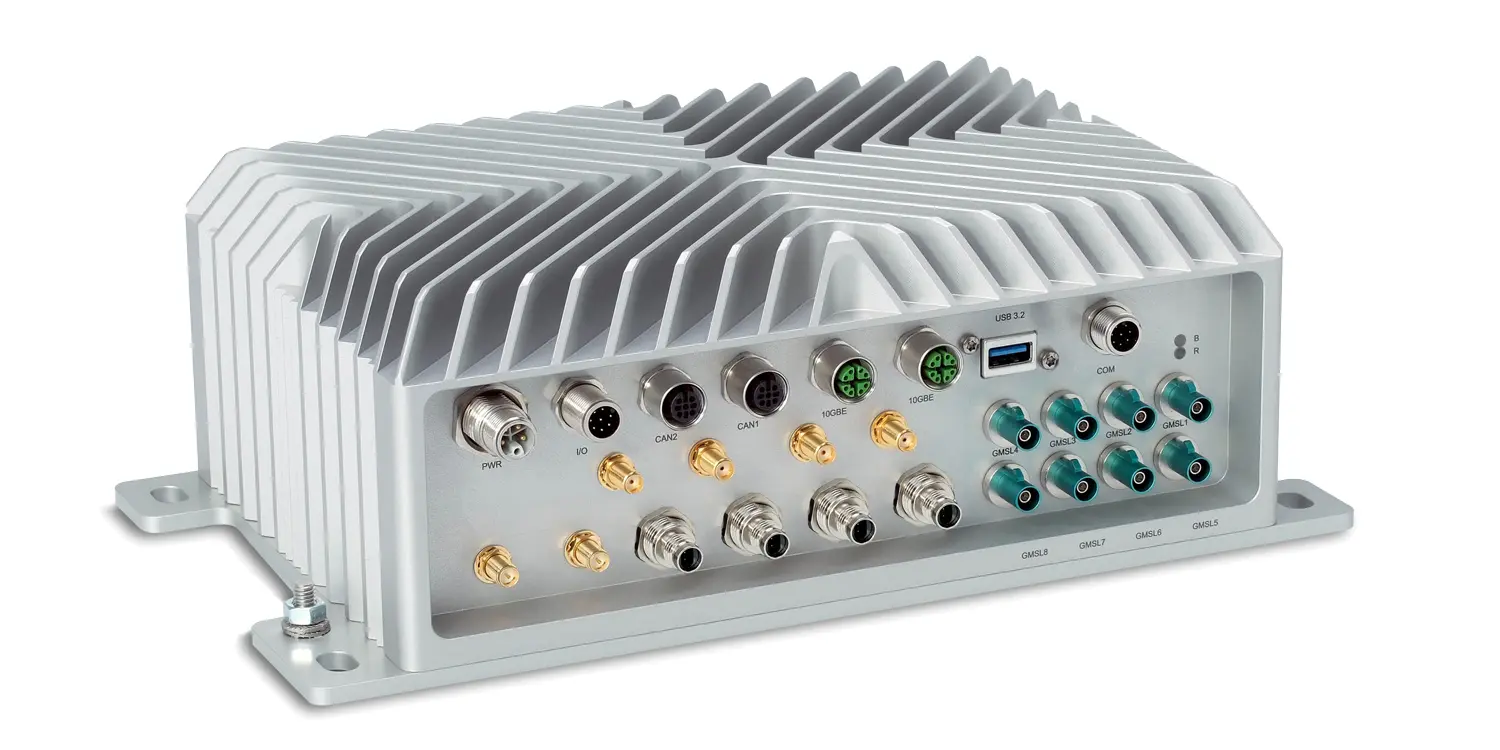
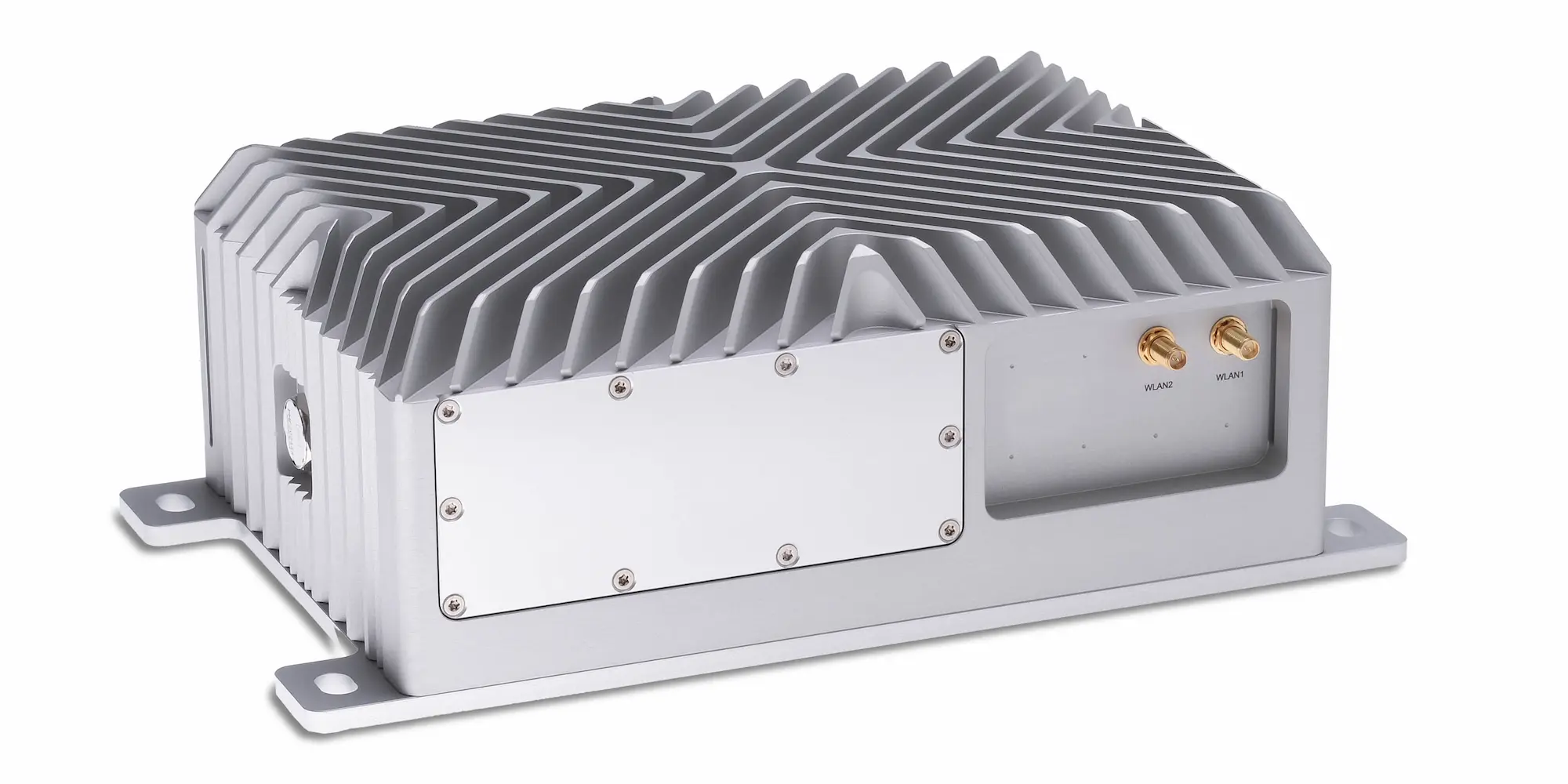
The new RSL A5AGX and RML A5AGX AI Rugged Computers based on Jetson Thor are now available. The embedded systems are offered with both the Jetson Thor T4000™ and the Jetson Thor T5000™. All versions are designed for an operating temperature range of –25 to +60 degrees Celsius and comply with IP67 and IP69 protection ratings.
The dual-deck RML A5AGX is available with four Single Pair Ethernet (SPE) interfaces — an Ethernet variant specifically optimized for vehicles. It supports typical automotive sensors and data rates of up to 1 Gbit/s.
In the AI Rugged Computer RML A5AGX, each SPE interface is equipped with its own dedicated Network Interface Controller (NIC). This enables real-time communication with cameras and other sensors. Combined with Time-Sensitive Networking (TSN) and the resulting deterministic low-latency communication, SPE is also well suited for real-time control tasks.
In a typical application scenario, the Syslogic rugged computer serves as an edge AI hub in a construction machine. It captures high-resolution video data from multiple cameras, LiDAR point clouds, and telemetry data, processes the data locally, and transmits the results via SPE.
Thanks to the SPE interfaces, the AI rugged computer can be connected directly to the electronics of modern vehicles and machines via plug-and-play.
The embedded computers are designed not only functionally for use in vehicles and autonomous machines, but also with regard to reliability, ruggedness, and long-term availability.
Our technical sales team will be happy to advise you. Depending on your requirements and project scope, Syslogic can develop a customized rugged embedded computer for autonomous machines, robotics, and mobile AI applications.
Contact Syslogic Sales
NVIDIA Jetson AGX Thor is the newest generation of embedded AI computing modules designed for advanced robotics and edge AI workloads. Built on NVIDIA Blackwell architecture, it offers significantly higher AI performance, improved power efficiency, and support for complex sensor processing compared to earlier Jetson platforms such as AGX Orin. With scalable power profiles and high memory capacity, Jetson AGX Thor is optimized for real-time AI inference, autonomous systems, and multimodal applications.
For demanding edge AI applications in harsh environments, Syslogic is among the leading manufacturers of rugged embedded computers based on NVIDIA technology. Syslogic combines high-performance NVIDIA Jetson platforms with fanless, maintenance-free designs engineered for mobile machines, robotics, railway, and industrial automation. The systems are optimized for shock, vibration, temperature extremes, and long-term availability, making them well suited for reliable AI deployment in real-world conditions.
NVIDIA Jetson AGX Thor is designed for advanced edge AI systems that rely on real-time data from multiple sensors. Combined with rugged embedded platforms from Syslogic, the technology supports high-resolution camera setups, LiDAR, radar, and additional industrial sensors through high-bandwidth interfaces and automotive networking technologies such as SPE and GMSL2. The platform enables low-latency sensor fusion and synchronized data processing for AI-driven perception tasks. This makes Jetson AGX Thor particularly suitable for autonomous vehicles, mobile robots, smart farming equipment, industrial automation, and intelligent vision systems operating in harsh environments.
Embedded computers powered by NVIDIA Jetson AGX Thor are designed for compute-intensive edge AI workloads that require real-time processing and low latency. Typical applications include AI inference, autonomous navigation, sensor fusion, intelligent video analytics, robotics, and generative AI directly on the device without relying on cloud infrastructure.
The platform is particularly well suited for autonomous mobile robots (AMRs), construction and agricultural machinery, railway systems, industrial automation, and smart infrastructure projects. Thanks to support for multiple high-resolution cameras, LiDAR, radar, and automotive networking technologies, Jetson AGX Thor can process complex perception data in real time for advanced decision-making and machine autonomy in harsh operating environments.
Embedded systems used in mobile machines and autonomous vehicles must operate reliably under continuous vibration, shock, dust, moisture, and extreme temperatures. Conventional industrial PCs are often not designed for these demanding environments and may fail due to mechanical wear or insufficient environmental protection.
A rugged embedded system is specifically engineered for long-term deployment in harsh mobile conditions. This includes fanless cooling concepts, industrial-grade components, and mechanically robust housing designs that support both thermal management and environmental protection. High ingress protection ratings such as IP67 or IP69 are essential for outdoor and heavy-duty applications.
Reliable connectivity is equally important. Rugged systems commonly use vibration-resistant interfaces such as M12 connectors and automotive Ethernet technologies to ensure stable communication with cameras, LiDAR, radar, and vehicle electronics. Combined with long lifecycle support and resistance to shock and temperature fluctuations, these systems provide the reliability required for modern edge AI, automation, and autonomous machine applications.