Modern rail vehicles contain far more electronics than passengers realize. Millions of sensors, control units, and communication systems must function reliably – even under extreme conditions. These include constant vibrations, large temperature changes, strong electromagnetic interference, and power fluctuations. This is exactly where EN50155 certification comes into play, one of the most important standards for electronic components in the railway industry.
EN50155 is a European standard that defines requirements for electronic devices used on railway vehicles – whether control systems, industrial PCs, edge computers, sensors, or communication modules. EN50155 specifies the environmental conditions and test procedures that components must withstand in order to operate reliably in the harsh railway environment.
A central part of the EN50155 standard is the defined temperature classes. They specify the ambient temperatures at which electronic devices in railway vehicles must operate reliably. Since railway electronics are installed both in air-conditioned interiors and in unheated outdoor enclosures or underfloor areas, wide temperature ranges must be considered.
The TX temperature class in particular is widely used in modern railway projects. It covers the extended temperature range from –40°C to +85°C and is suitable for applications in extreme climate conditions – for example, in vehicles operating in desert regions or very cold climate zones.
In railway transport, conditions go far beyond what standard industrial electronics can withstand. Constant vibrations, electromagnetic fields from drive systems, extreme weather, and moisture all put electronic systems under stress. The EN50155 standard ensures that electronic devices not only function properly, but are also safe and do not cause operational disruptions. Another important factor is the long service life of electronic components. The goal is for electronics to operate reliably over a long period in continuous use, without unexpected failures. This is important because rail vehicles are often in service for 20 years or more, and unplanned failures of electronic components can lead to high follow-up costs.
Without EN50155 compliance, the use of electronics in trains would involve significant risks, ranging from malfunctions to safety-critical system failures.
EN50155 certification is based on extensive testing to ensure that electronic devices can permanently withstand the high demands of railway operation. As part of EN50155 testing, components are subjected to defined environmental, climate, EMC, and voltage stress tests. These include temperature cycling tests, humidity tests, shock and vibration tests according to EN61373, as well as EMC tests in accordance with EN50121.
A key element of the EN50155 test procedures is the simulation of real operating conditions over an extended period. For example, devices must tolerate voltage drops, transients, and interruptions of the onboard power supply without losing functionality. In addition, insulation tests, high-voltage tests, and in some cases aging tests are performed.
The EN50155 certification process is usually carried out by accredited testing laboratories or certification bodies. After successfully completing all tests, compliance is documented and verified through the appropriate test reports. For manufacturers, this means not only a one-time type test, but also continuous quality assurance to ensure compliance throughout the entire product lifecycle.
Deploy robust, EN50155-certified embedded systems designed specifically for demanding railway environments. Our rugged railway computers deliver reliable performance under extreme temperatures, vibration, and unstable power conditions. Talk to our experts and build your next rail project on a proven, railway-ready platform.
Call our technical sales team
In railway technology, EN50155 is often only the starting point within a broader landscape of standards. Other relevant standards include:
This standard addresses how materials and assemblies behave in the event of a fire. It covers flammability, smoke development, and material toxicity. EN45545 is especially important for passenger areas and technical cabinets.EN50121 – Elektromagnetische Verträglichkeit (EMV)
The EN50121 standard regulates how electrical and electronic components must behave to avoid or tolerate interference – for example, between traction drives and control units. EN50155 explicitly refers to parts of this standard.
The mechanical tests described in EN61373 form a basis for EN50155 compliance. This standard defines the test conditions for shock and vibration that components must withstand.
This standard covers the supply voltages used in railway networks – an important aspect, since onboard devices use different voltages from various sources.
Together with EN50155, these standards form the foundation for reliable electronics in railway and rail applications.
In the age of digitalization, robust, railway-approved embedded computers play a key role – whether for control functions, passenger information systems, video surveillance, condition monitoring of vehicle components, or predictive maintenance. This is where EN50155 certification fully proves its value. It ensures that embedded computers operate reliably even under the most demanding environmental and operating conditions.
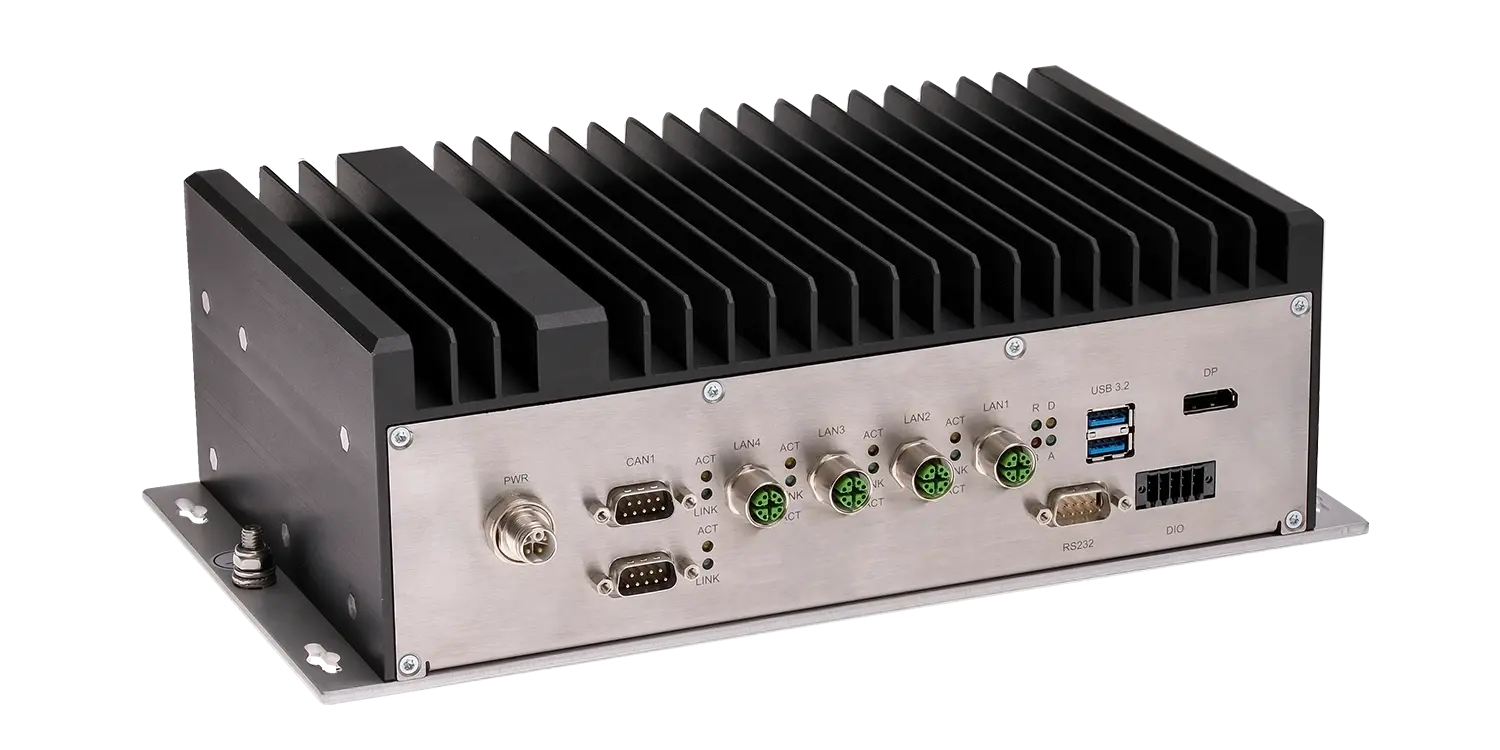
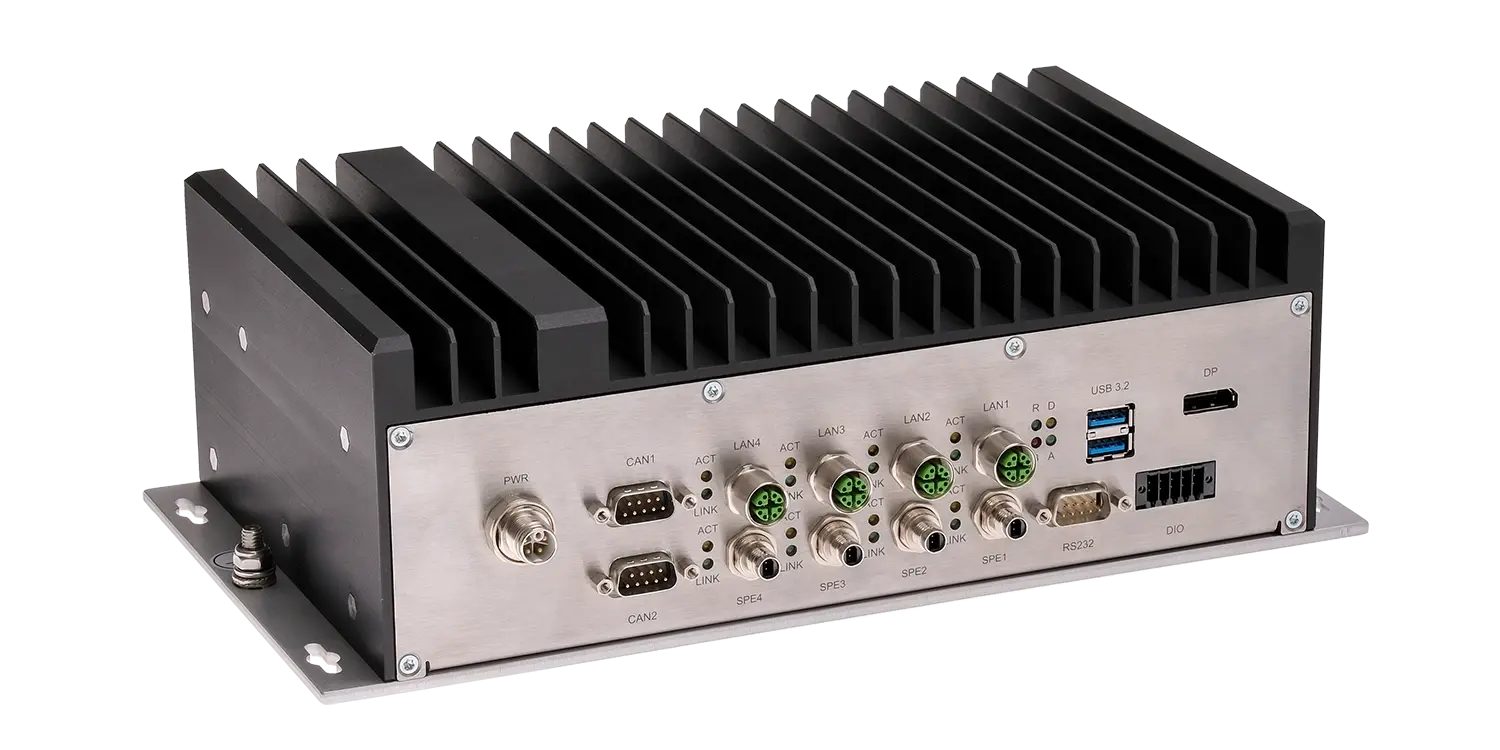
Syslogic offers a range of EN50155-certified embedded computers specifically developed for railway applications. These systems are designed for the extended temperature range, feature a stable power supply including power interruption bridging of up to 10 milliseconds (EN50155, class S2), and are resistant to shock, vibration, and electromagnetic influences.
By integrating such railway-certified embedded computers, system integrators, rolling stock manufacturers, and railway operators can implement projects that require maximum availability and safety. Syslogic railway computers provide the foundation for reliable performance in demanding railway environments. They are used worldwide by rolling stock manufacturers, railway operators, and system integrators. Syslogic’s railway customers include the vehicle manufacturer Stadler Rail, the Swiss Federal Railways (SBB), and the Danish company Cubris.
EN50155 primarily applies to electronic devices used in railway vehicles. In practice, however, it also affects assemblies and subsystems if they are an integral part of a certified overall system.
At the component level, individual electronic parts such as integrated circuits (ICs), capacitors, or other discrete components are not directly EN50155-certified. However, they must be selected and designed to withstand the environmental conditions required by EN50155, including temperature, vibration, and voltage variations.
At the assembly level, such as CPU boards or power supply units, compliance is typically verified as part of the overall system. These assemblies are tested within the complete device to ensure that the entire system meets EN50155 requirements.
Manufacturers often refer to EN50155-compliant components. Formally, however, the complete device is certified under defined installation conditions. For system integrators, it is therefore essential that the tested configuration is precisely documented.
At first glance, the requirements of industrial standards such as IEC 60068 or automotive standards like ISO 16750 may appear similar to EN50155. However, the key difference lies in the specific combination of extreme environmental conditions, long product life cycles of 20 to 30 years, safety-critical system environments, and the normative links to additional railway standards. This unique combination makes EN50155 particularly demanding compared to standards from other industries.
EN50155 considers the nominal voltages commonly used in railway vehicles according to EN50163. Typical onboard power systems include:
EN50155 defines not only the nominal supply voltage, but also permissible continuous voltage fluctuations, short-term voltage drops, transients, and power interruptions (for example, Class S2 requires bridging of at least 10 ms). For developers, this makes the power supply one of the most critical assemblies in EN50155-compliant system design.
No, EN50155 does not cover functional safety in terms of SIL classifications. The standard regulates environmental conditions, electrical robustness, and reliability, but it does not define safety integrity levels.
For safety-critical railway applications, additional standards must be considered. EN50126 addresses RAMS (Reliability, Availability, Maintainability, and Safety), EN50128 covers software used in safety-related railway applications, and EN50129 defines the safety approval requirements for electronic systems. More broadly, IEC 61508 establishes general principles for functional safety across industries.
An embedded computer can therefore be EN50155-certified without automatically being SIL-certified. In safety-critical projects, compliance with EN50155 and functional safety standards must be evaluated and implemented separately.
Compliance with EN50155 has a fundamental impact on hardware design. Typical measures begin with thermal design, where fanless (passive) cooling concepts, heat dissipation via the housing, and component derating are commonly implemented to ensure reliable operation across extended temperature ranges.
Mechanical design is equally critical. Instead of plug-in connectors, screw connections are often used to improve robustness. Sensitive components may be potted for additional protection, and vibration-resistant mass storage such as SSDs is preferred over traditional HDDs.
From an electrical perspective, EN50155-compliant systems typically require extended input filtering, galvanic isolation, and protection against surge and burst events to withstand unstable railway power conditions.
Quality assurance also plays a key role. Long-term component availability, structured obsolescence management, and documented requalification processes in the event of design changes are essential to support the long service life of railway systems.
EN50155 is therefore not merely a testing standard; it influences the entire development process—from component selection and system architecture to validation and series production.