4.11.2025
Product Notes

NVIDIA Jetson Orin Nano: For Sensor Fusion – AI Rugged Computer with GMSL

min read time
Syslogic AI Rugged Computer with four GMSL2 inputs, shown with two ZED stereo cameras for high-speed sensor fusion.

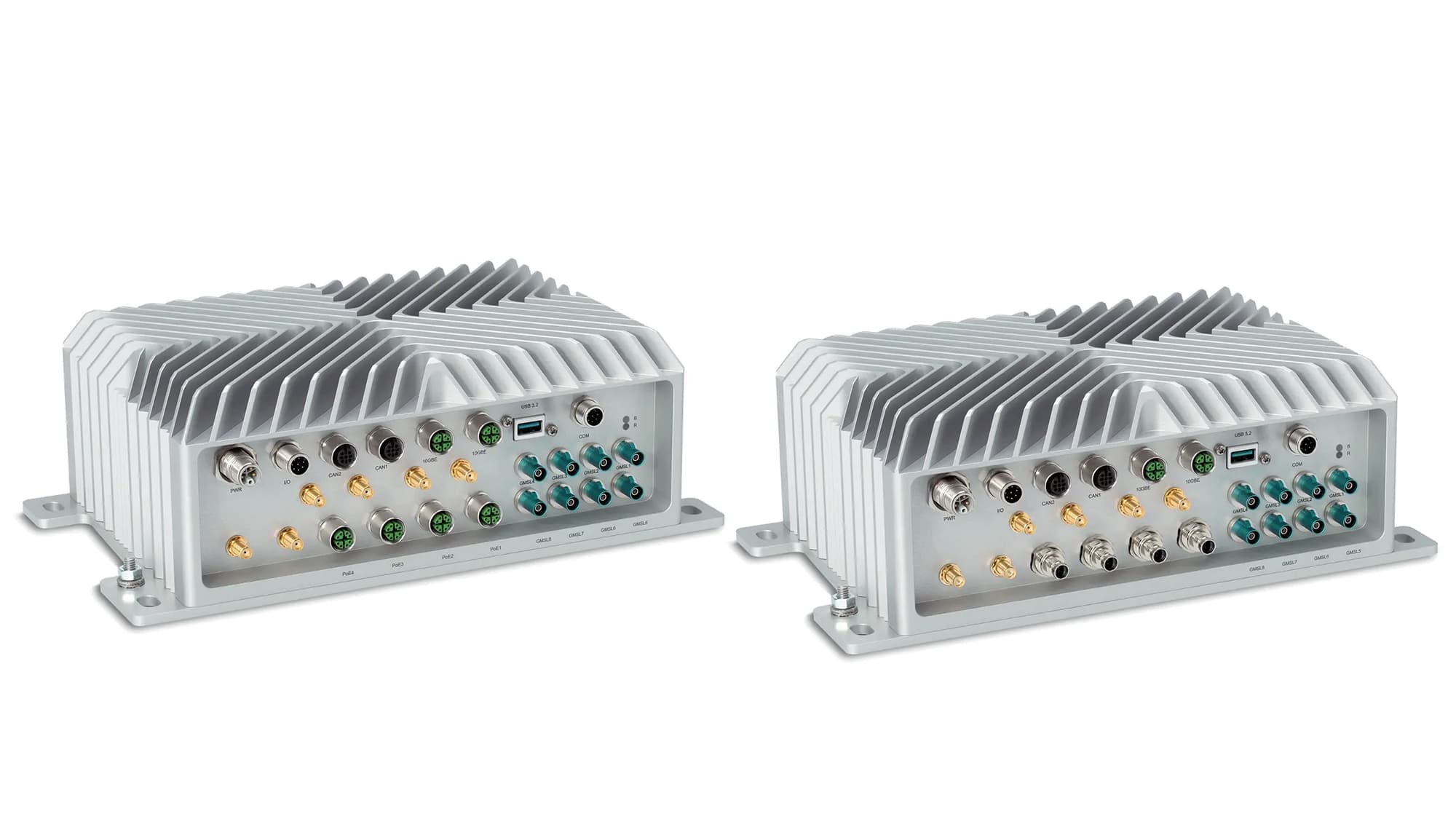
In its new Rugged Computer RPC RS A4NA, Syslogic combines the NVIDIA® Jetson Orin™ Nano with four GMSL2 inputs. These video interfaces enable the reception of high-resolution sensor data at speeds of up to 6 Gbit/s. GMSL is commonly used in sensor fusion systems where data from multiple high-resolution cameras and other sensors – such as radar or lidar – is transmitted, synchronized, and processed in real time.

Designed for Mobile Applications

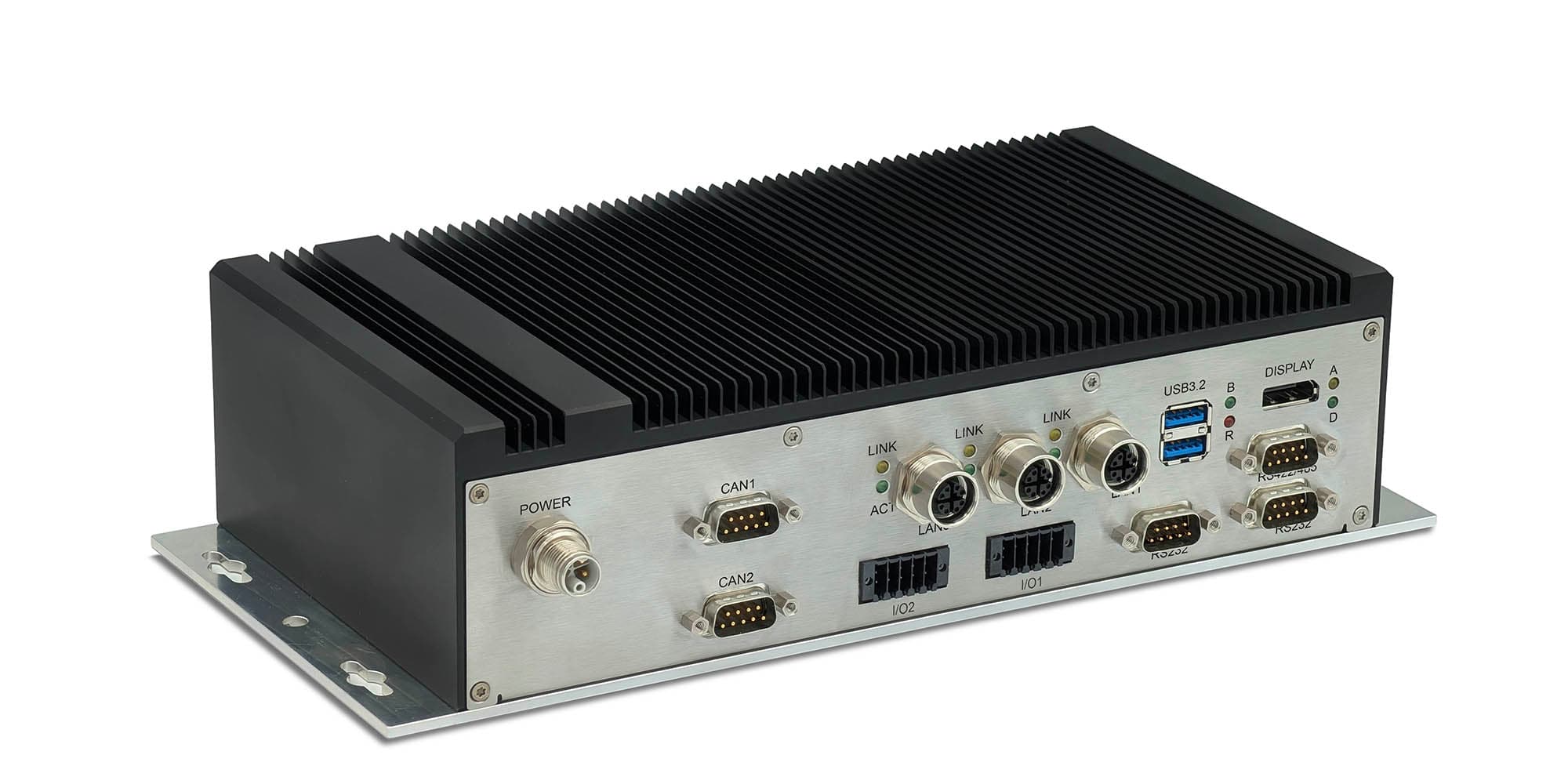
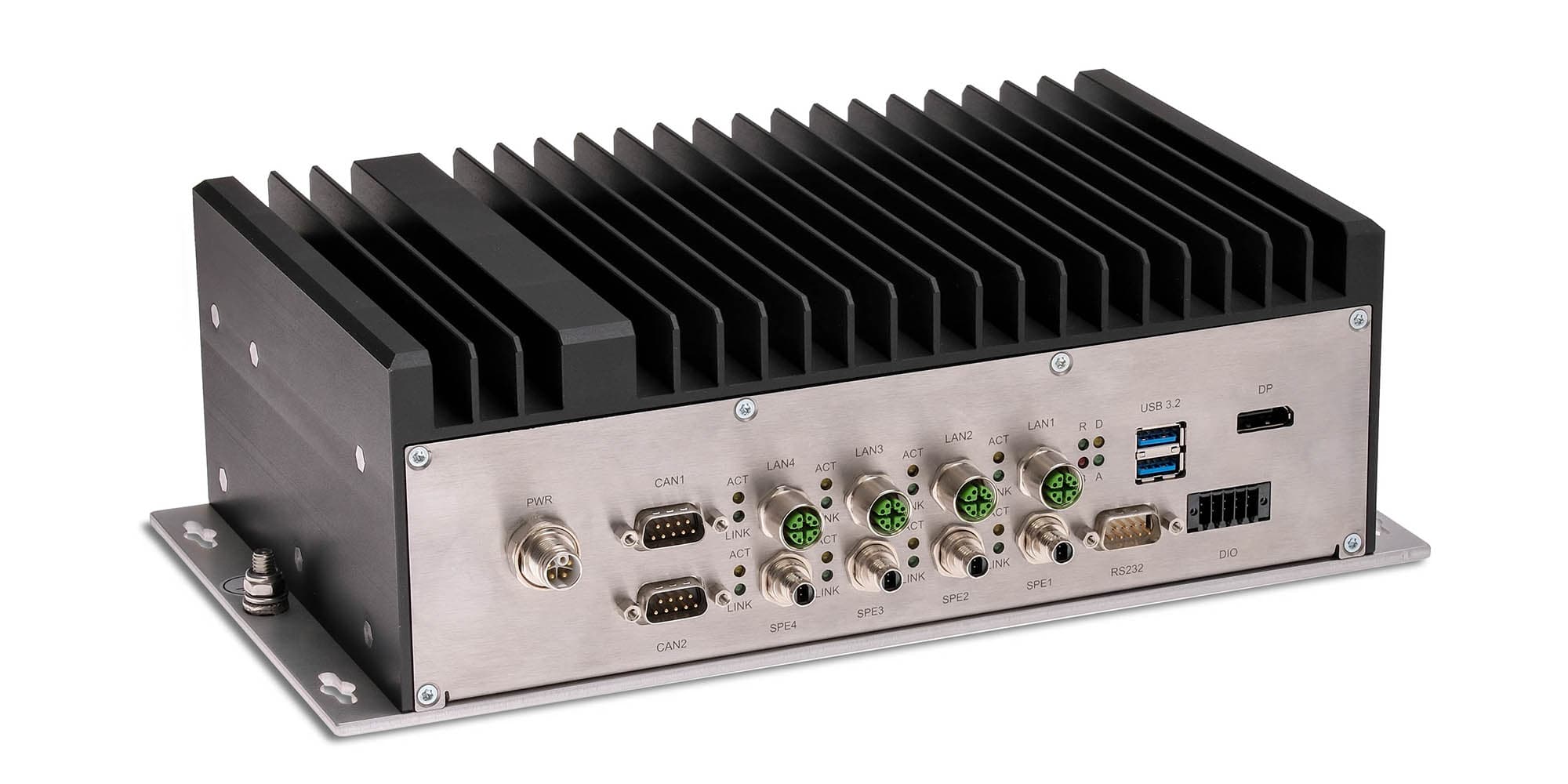
The Syslogic embedded computer is purpose-built for mobile use. With its compact, robust housing, the RS A4NA is ideally suited for automated guided vehicles (AGVs), collaborative robots (cobots), autonomous mobile robots (AMRs), agricultural machinery, and off-highway applications.

Reduced Cabling with Power-over-Coax (PoC)

Beyond high data rates, GMSL technology offers additional advantages over conventional transmission methods. Power-over-Coax (PoC) significantly reduces wiring complexity by delivering both power and data over a single coaxial cable. Cameras and other sensors can thus be powered directly without separate power lines. GMSL2 also supports the transmission of control commands, synchronization signals, software updates, and status information.

Jetson Orin Nano – Compact Yet Powerful

To ensure near-zero latency when processing sensor data, Syslogic integrates NVIDIA’s Jetson Orin Nano System-on-Module (SoM) into the RS A4NA. Its GPU operates at up to 1020 MHz, delivering an impressive AI performance of up to 67 TOPS.

The Rugged Computer RS A4NA comes in a fully sealed housing with IP67 and IP69 protection ratings, safeguarding it from dust, moisture, and water ingress. To achieve high shock and vibration resistance, Syslogic has combined the NVIDIA module with a custom-designed carrier board. The system is engineered for reliable operation in extreme environments, with an extended temperature range from –40 to +70 °C.

Why it's important

  • High-speed sensor fusion: Four GMSL2 inputs enable real-time data transfer up to 6 Gbit/s. Perfect for combining camera, radar, and lidar data without delay.
  • Efficient integration: Power-over-Coax reduces cabling and simplifies setup. One cable handles power, data, and control signals.
  • Built for tough environments: IP67/IP69 protection and wide temperature range ensure reliability in mobile and outdoor systems.

Frequently asked questions about this blog post

How does GMSL work?

GMSL (Gigabit Multimedia Serial Link) transmits high-speed video and sensor data efficiently using serial communication. The process works in three main steps.

  1. Serialization
    Data from multiple parallel streams is converted by a serializer into a single high-speed serial stream.
  2. Transmission
    This serial stream is sent over a single coaxial cable or twisted pair, simplifying wiring and reducing complexity.
  3. Deserialization
    At the receiver – typically an ECU or controller – a deserializer converts the serial data back into its original parallel format, ready for processing. This approach enables reliable, high-bandwidth connections for cameras, sensors, and other advanced vehicle electronics.

What are the benefits of Power over Coax (PoC)?

Power over Coax (PoC) enables both power and data to be transmitted over a single coaxial cable, reducing wiring complexity and lowering installation costs. Additionally, PoC supports tunneling of control protocols such as I²C, SPI, and GPIO within the video stream, allowing low-latency communication between devices.


This combination of simplified cabling and efficient protocol integration makes PoC ideal for automotive, industrial, and machine vision applications.

What are the benefits of GMSL-based systems?

GMSL-based systems deliver high-performance data transmission for automotive, industrial, and machine vision applications. They support high bandwidth, enabling resolutions up to 4K at high frame rates (e.g., 4K60) with data rates of up to 12 Gbit/s using GMSL3. Low latency ensures reliable real-time performance for critical tasks, while built-in error correction maintains high data integrity.


Additionally, GMSL simplifies cabling by transmitting power, video, and control signals over a single cable, reducing installation complexity and cost. These advantages make GMSL an ideal choice for advanced camera, sensor, and embedded video applications.

What are the main applications of GMSL-based systems?

GMSL-based systems are widely used with embedded computers and Edge AI computers across automotive, industrial, and embedded vision applications. In automotive, they power camera systems such as rear-view and surround-view, infotainment, and autonomous driving functions. In industrial environments, they support quality control, robotics including autonomous mobile robots (AMRs), and agricultural machinery. For embedded vision, GMSL enables high-resolution image processing in applications that require fast, reliable video and sensor data transmission.


These versatile use cases make GMSL an ideal solution for embedded computers and Edge AI computers that demand high bandwidth, low latency, and robust real-time performance.

What are the advantages of GMSL compared to alternative technologies like Automotive Ethernet?

GMSL (Gigabit Multimedia Serial Link) offers key benefits over Automotive Ethernet, especially for real-time video systems in vehicles, focusing on latency, bandwidth, and cabling efficiency.

  1. Extremely Low Latency
    GMSL is designed for near-zero latency in the microsecond range, which is critical for safety-related applications such as ADAS and autonomous driving. Real-time video transmission ensures data is instantly available so vehicles can respond immediately. Automotive Ethernet, being packet-based, inherently introduces higher and potentially variable latency due to buffering and frame encapsulation.
  2. Higher Video Bandwidth
    GMSL supports very high data rates (up to 12 Gbit/s with GMSL3), optimized for transmitting uncompressed, high-resolution video (e.g., 4K cameras). It can aggregate multiple camera streams over a single connection. Automotive Ethernet, typically running at 100 Mbps or 1 Gbps (with emerging 10 Gbps variants), may struggle with multiple uncompressed high-resolution streams, often requiring compression that adds latency and complexity.

These advantages make GMSL an ideal choice for embedded computers and Edge AI computers in vehicles, ensuring reliable, low-latency, high-bandwidth video and sensor data for advanced driver-assistance and autonomous systems.

Matching products

By clicking “Accept”, you agree to the storing of cookies on your device to enhance site navigation, analyze site usage, and assist in our marketing efforts. View our Privacy Policy for more information.