1.12.2025
Corporate

Visiting Stadler Rail
The Syslogic team visited Stadler Rail and toured the production site, with a special focus on where Syslogic’s railway computers are installed in the trains.
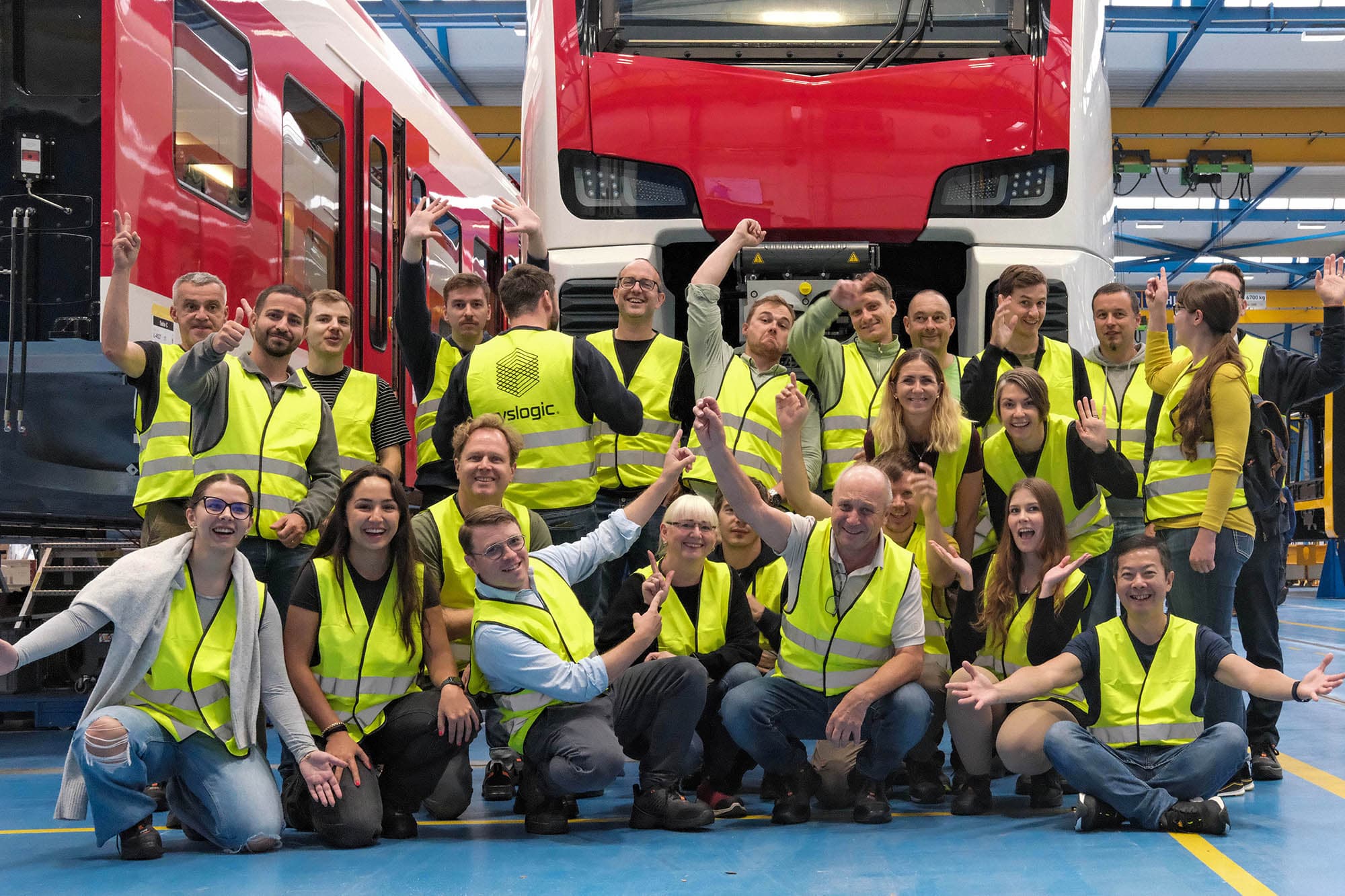
The Syslogic team visited Stadler Rail and toured the production site, with a special focus on where Syslogic’s railway computers are installed in the trains.
“It’s fascinating to see where the devices I build every day are actually used,” says Claudia, a production employee at Syslogic. She’s standing in the driver’s cab of a Stadler train that’s just receiving its finishing touches. The Stadler team is completing the final electronic installations. Soon, this FLIRT trainset will be moved from Bussnang to nearby Erlen for commissioning.
Syslogic invited its employees from Germany and Switzerland to a multi-day team event in Eastern Switzerland. Alongside sports and cultural activities, the agenda included a special highlight: a visit to Stadler Rail. At its headquarters in Bussnang, Stadler develops and manufactures a wide range of rail vehicles, including trains, trams, narrow-gauge railcars, and rack-and-pinion trains.
Stadler and Syslogic have been partners for many years. “We’re delighted to give the whole team the chance to see Stadler’s production up close,” says Raphael, CEO of Syslogic. Stadler is an important customer, and everyone at Syslogic knows the company well, he adds.
The group is greeted by Rolf Waldvogel. At seventy, he knows Stadler inside out – he joined the company back in 2000. “I started in the bogie department and was employee number 154,” he explains. Today, he’s one of 16,600 colleagues. Although he could have retired long ago, his passion for the company keeps him coming back once or twice a week to give tours.
After coffee and croissants, Rolf gives a brief overview of Stadler’s impressive growth. Under the leadership of Peter Spuhler, now Chairman of the Board, the company has grown over the last 25 years from a Swiss mid-sized firm into a global rolling-stock specialist. Since 2019, Stadler has been listed on the SIX Swiss Exchange. To date, the company has delivered more than 12,400 vehicles to 49 countries and serves 270 customers worldwide. Rolf is visibly proud to be part of this success story.
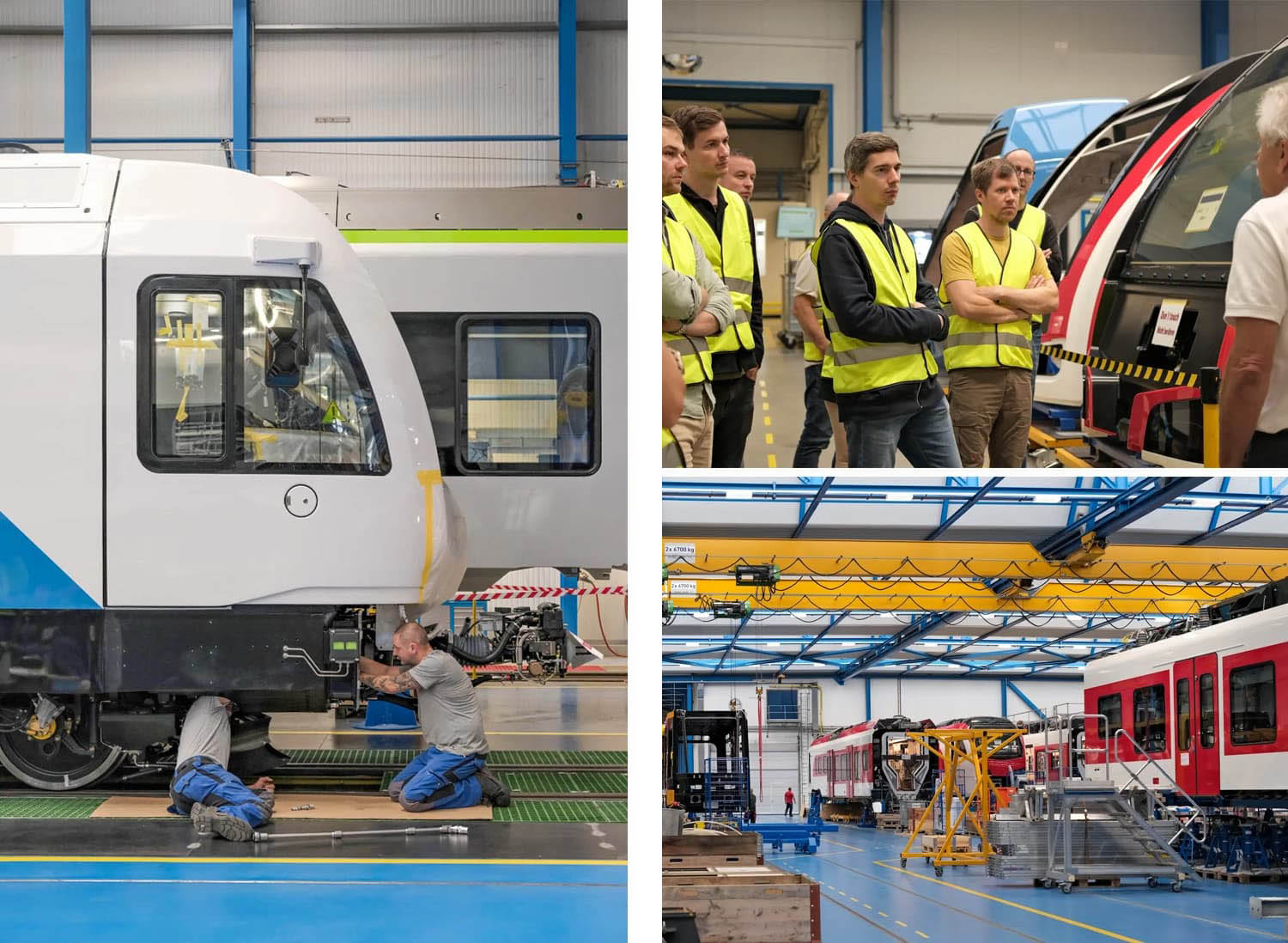
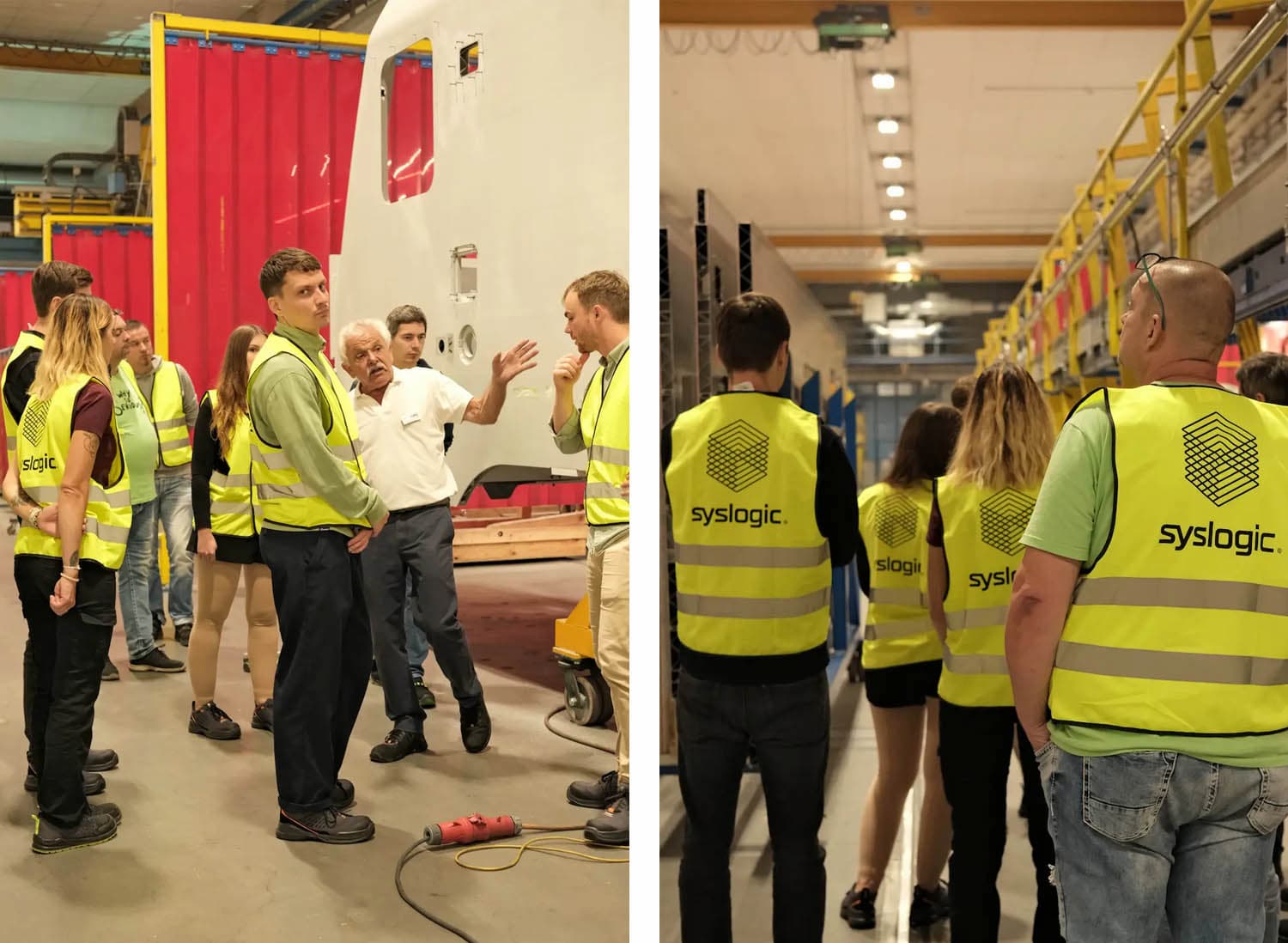
The tour begins. Rolf explains how aluminum car bodies are produced and painted, how the drive systems work, and how wheels are manufactured. It’s impressive to see the breadth of expertise concentrated in one place. Equally striking is the diversity of Stadler’s product portfolio. In addition to well-known multiple-unit trains, the company also manufactures electric and diesel locomotives, battery-powered vehicles, trams, and rack-and-pinion trains. Rolf also points out a hydrogen-powered trainset—another Stadler development that has gained international attention. The unit will soon be operating in Sicily, and Stadler already has hydrogen trains running in the United States. One of them even set a world record: 2,803 kilometers without refueling.
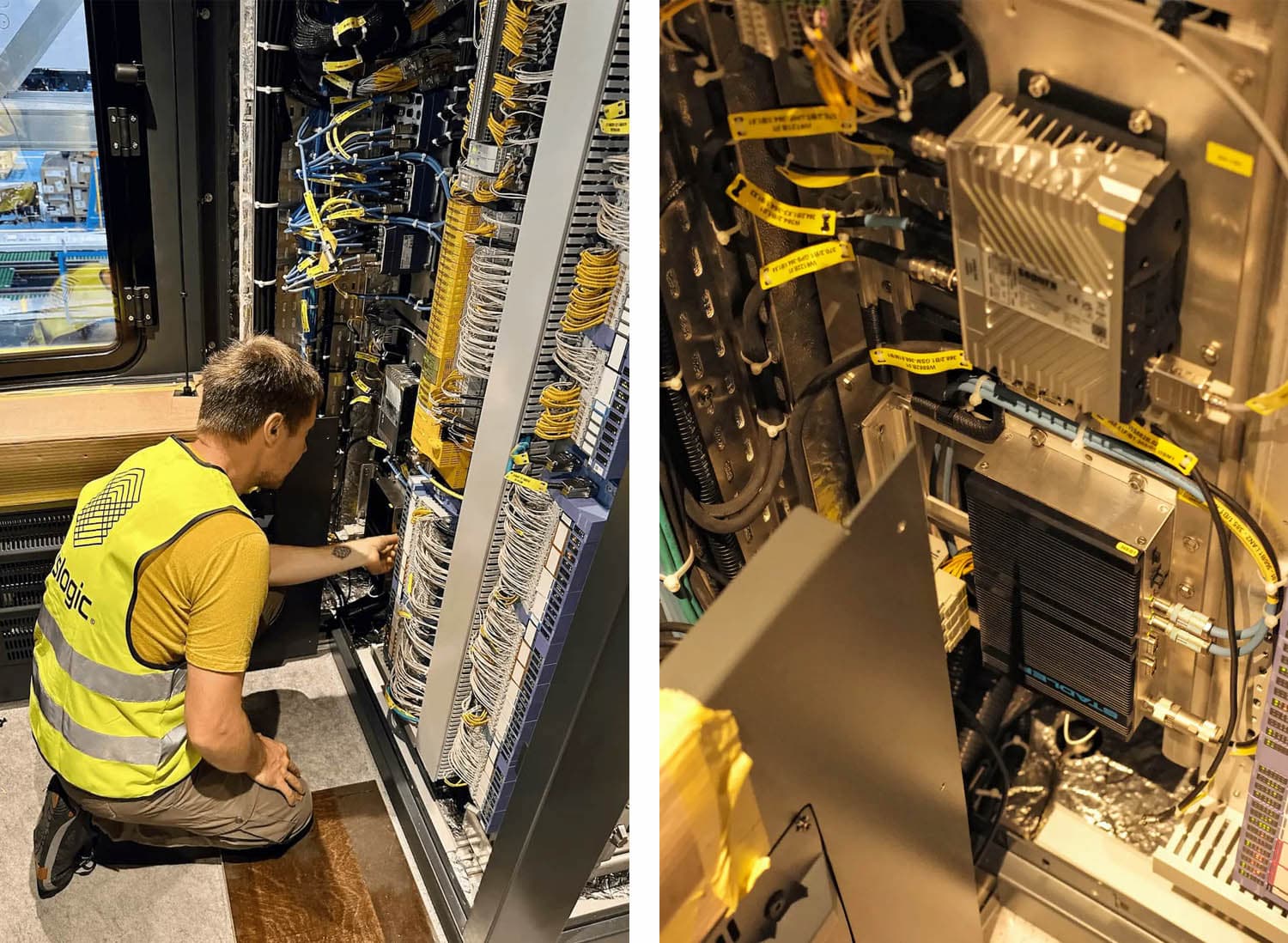
For the Syslogic team, the real highlight awaits inside an almost finished FLIRT train. In the driver’s cab, technicians are currently connecting the Syslogic embedded computer. Many Syslogic employees work daily in electronics production but have never seen where the devices end up. Naturally, nobody wants to miss the chance to take a look inside the cab.
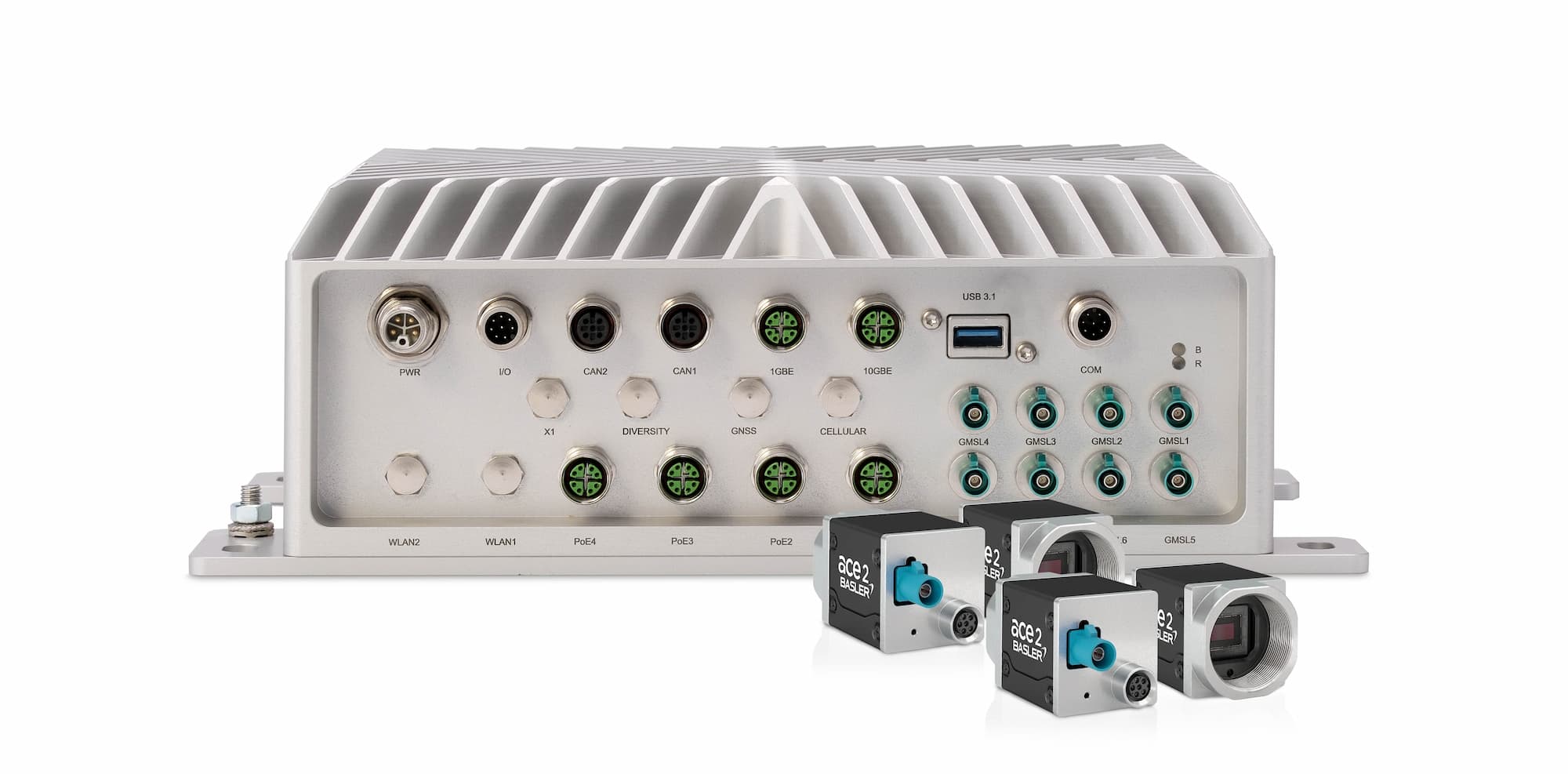
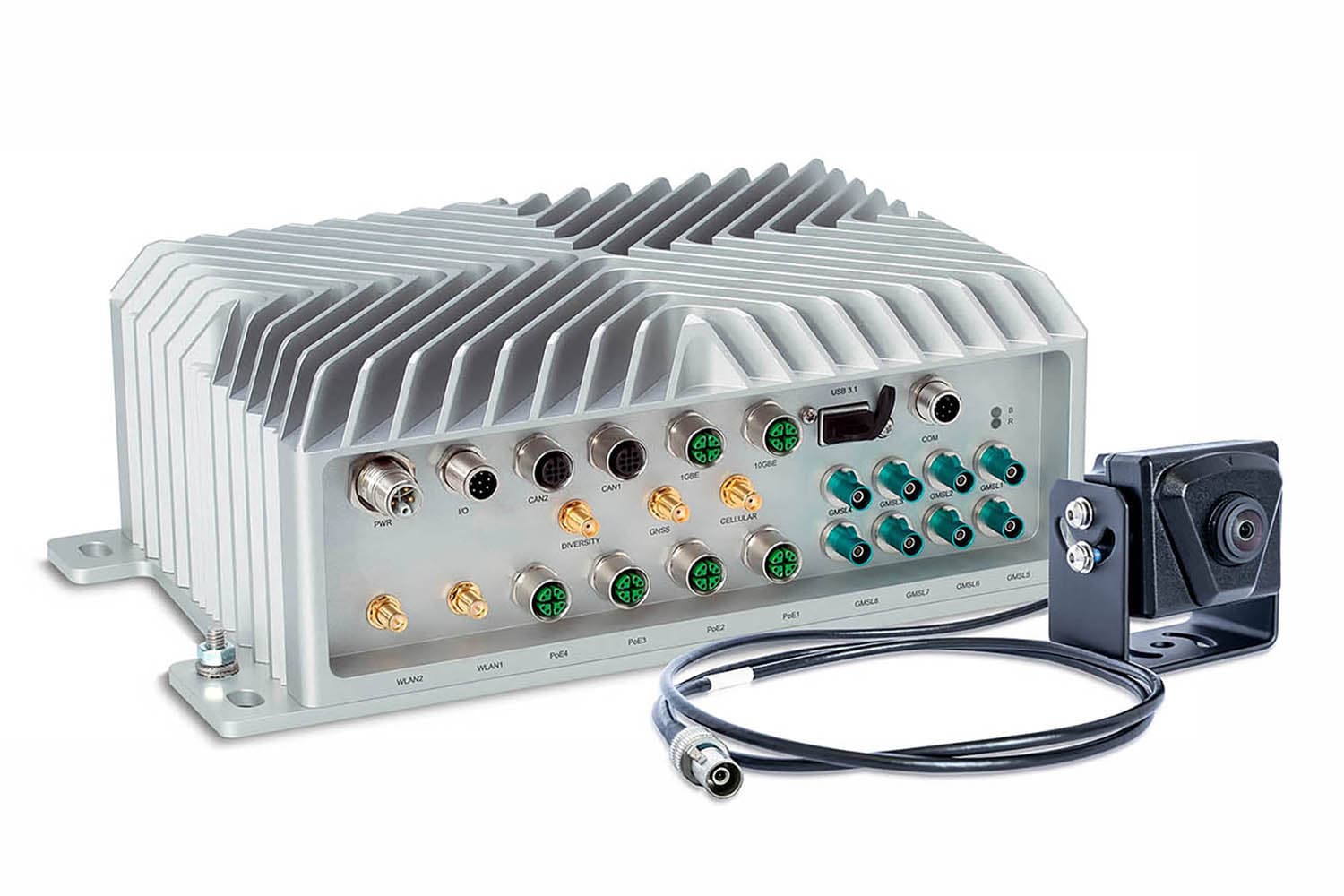
Stadler uses Syslogic systems as RCUs (Rail Communication Units). These form the hardware basis for Stadler’s own RDS (Rail Data Service), which collects diagnostic, operational, and process data and transmits it to the fleet database. This information allows precise monitoring of vehicle condition and early detection of potential issues. Maintenance can be planned more effectively, downtime is reduced, and Stadler gains valuable insights to continuously improve its vehicles.
The visit was absolutely worthwhile, the team agrees. “It’s impressive to see how our devices become part of such a complex system,” says Benjamin, Product Manager at Syslogic. It’s a strong source of motivation, he adds.
After bidding farewell to Rolf, the Syslogic group moves on – by train, of course, thanks to the factory’s own rail stop. Over lunch by Lake Constance, the team looks back on the day’s many impressions.
Syslogic is a leading tech company in the embedded industry and is pioneering digitalization. Syslogic’s embedded computers are the hardware base for making tomorrow’s trends reality and to tackle fundamental challenges of our time. We value flat hierarchies, long-term perspectives, and the courage to make an impact. Ready to achieve great things with us?
Discover current career opportunities

Railway electronics must adhere to rigorous regulations to guarantee safety, reliability, and long-term performance in rail environments. Core standards include EN 50155 for electronic equipment used on rolling stock, EN 61373 for shock and vibration resistance, EN 45545-2 for fire safety, as well as EMC requirements such as EN 55022 and EN 55024. Syslogic’s railway computers are certified according to all major norms, ensuring robust and fully compliant solutions for rail operators worldwide.
With more than three decades of experience in railway technology, Syslogic develops embedded systems tailored to the demanding conditions of rail operations. Their devices are certified to EN 50155 and engineered to withstand shock, vibration, and other environmental stresses in line with standards such as EN 61373 and EN 45545-2. Syslogic works with manufacturers of rolling stock — including trains, trams, and locomotives — and also supports rail operators around the world. Thanks to long-term availability, optional wireless features, and integrated real-time diagnostics, Syslogic’s railway computers deliver robust, reliable, and future-ready solutions for both rolling stock and rail infrastructure.
Railway computers are key components in today’s rolling stock, handling a broad spectrum of essential functions. They manage and supervise systems such as traction control, braking, passenger information, lighting, climate control, ticketing and payment processes, onboard surveillance, and secure communication with the control center. Syslogic railway computers are engineered for dependable operation in demanding rail environments, ensuring safe system performance, operational efficiency, and continuous access to real-time data across the entire train.
Syslogic railway computers are suitable not only for use on rolling stock but also for a variety of off-train tasks. They can be deployed for trackside monitoring, signaling systems, track vacancy detection, tunnel surveillance, and station-based CCTV. Their rugged construction, adherence to key railway standards, and dependable connectivity make them well suited for remote data collection, real-time processing, and seamless integration with cloud-driven rail management platforms.
Syslogic railway computers are used by leading rail vehicle manufacturers and prominent rail operators worldwide. While many customer relationships are covered by NDAs, publicly known users include Stadler Rail and the Swiss Federal Railways (SBB). Syslogic also serves companies that develop software for the rail industry, such as the Danish firm Cubris. This extensive customer base highlights Syslogic’s expertise and trusted solutions for rolling stock and rail infrastructure worldwide